
Opallionectes

Opallionectes is a large, around 5 m long, derived cryptoclidid plesiosauroid from the Early Cretaceous of South Australia. It is known from a partial opalised skeleton, which is mounted for display in the South Australian Museum. The holotype specimen lacks a skull. It is diagnosed by the following unique combination of characters: small needle-like teeth with a distinct ovoid cross-section...
Plesionectes

Under construction...
Umoonasaurus

Umoonasaurus is a small (~2.5 m long) leptocleidid that lived during the Early Cretaceous in Southern Australia. The holotype specimen (AM F99374), a spectacular opalised skeleton including the skull, is nicknamed ‘Eric’. It is the most complete opalised plesiosaur skeleton (and fossil vertebrate) known. It was originally described briefly as Leptocleidus sp. by Kear (2006) who figured the skull and...

The Return of the Blockley Plesiosaur
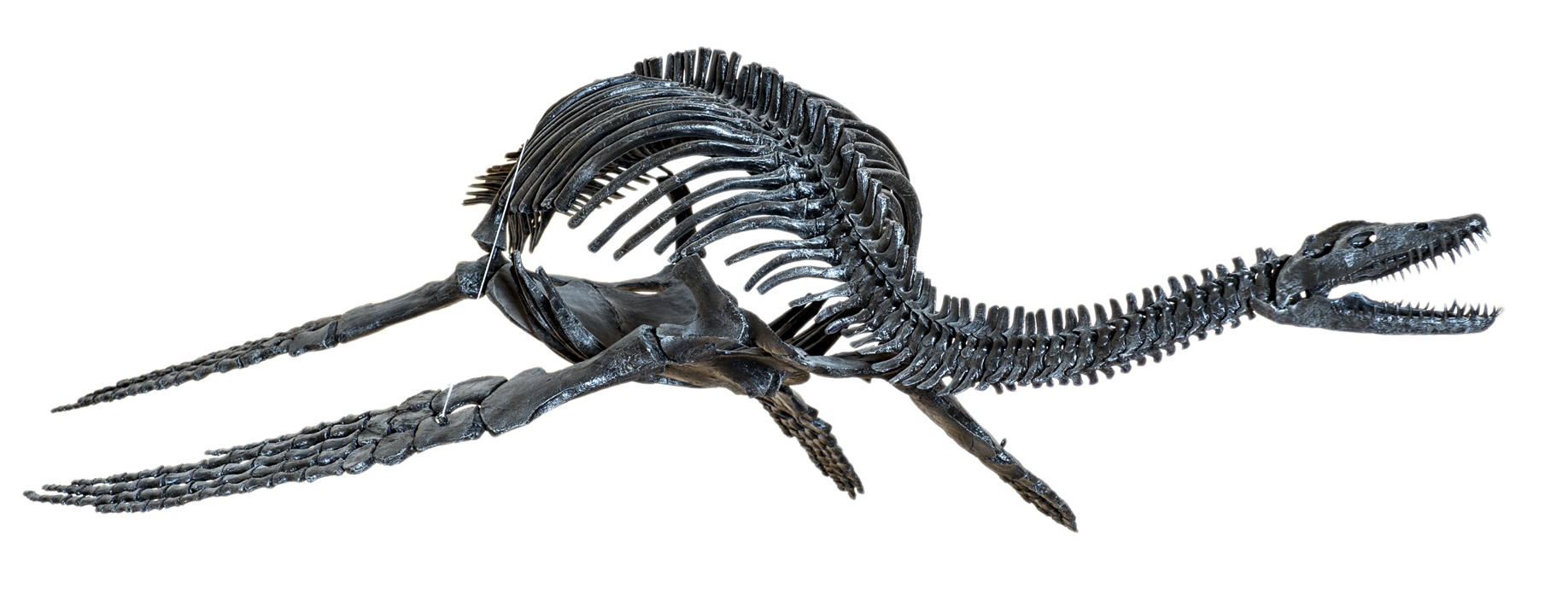
In summer 2023 a plesiosaur skeleton was offered at auction by Sotheby’s that may have looked familiar. This notable specimen is the ‘Blockley Plesiosaur’, originally offered at auction by Sotheby’s in 2010. This is a potentially significant specimen so I’m flagging it up to briefly discuss the provenance, history, and taxonomic identity of this curious skeleton. The Blockley Plesiosaur 2,...
Monquirasaurus

Monquirasaurus is a giant pliosaurid from Colombia, South America. Originally named by Hampe (1992) as a species of Kronosaurus (K. boyacensis), the skeleton was later allocated to the new genus Monquirasaurus by Noè and Gómez-Pérez (2021). The genus name derives from ‘Monquira’, the administrative division in which the holotype was discovered. Monquirasaurus skeleton. From Hampe (1992). Monquirasaurus reconstruction. From Hampe (1992)...
Nakonanectes
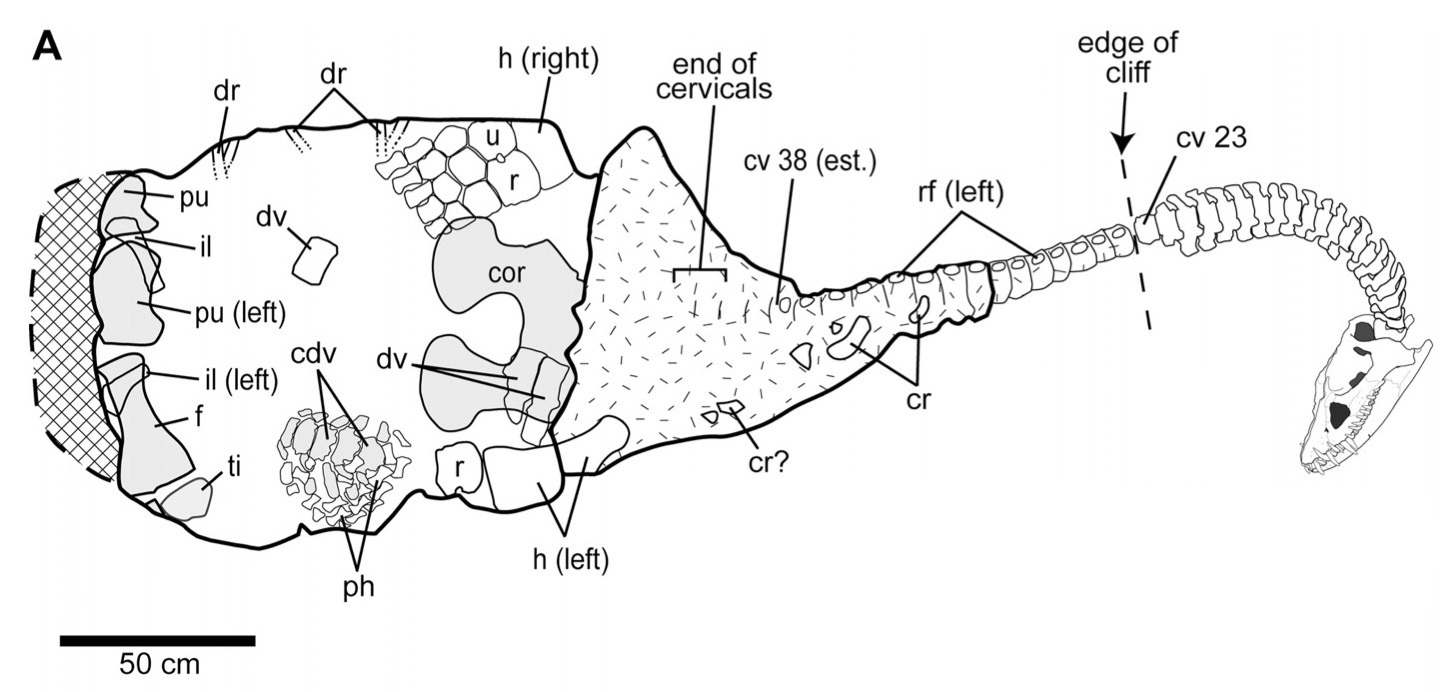
Nakonanectes is a small elasmosaurid plesiosaur from the Bearpaw Shale of Montana, USA. It is known from a single moderately complete specimen including a particularly fine skull. It has a relatively short neck for an elasmosaur consisting of ‘only’ 39-42 neck vertebrae. However, 16–19 of the neck vertebrae were lost in a “heavy spring runoff that occurred between the time...
Woolungasaurus
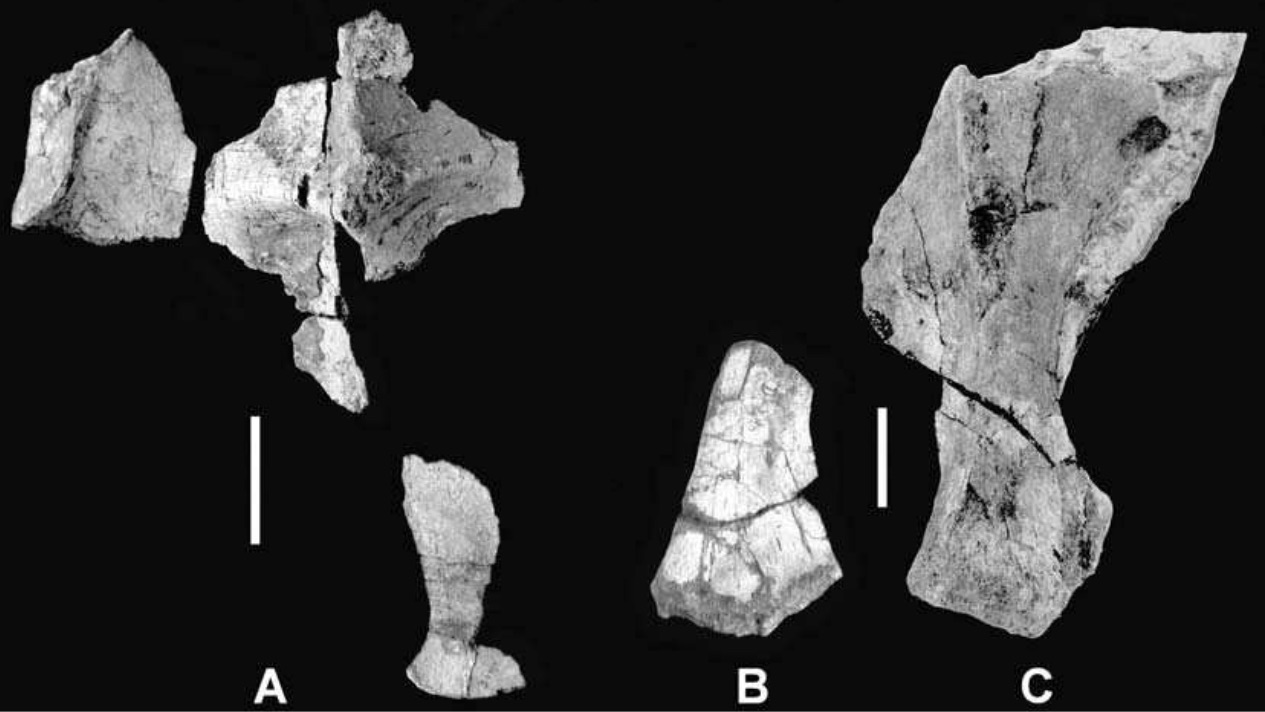
Sachs (2004) regarded ‘Woolungasaurus‘ as a junior synonym of Styxosaurus and assigned the type species (‘W. glendowerensis‘) to that genus under the new combination ‘Styxosaurus glendoweresnis‘. However, this placement was unsupported by unambiguous apomorphic characters (Kear 2007). Since ‘Woolungasaurus‘ has no unique diagnostic characters, Kear (2005) reassigned all specimens of it to Elasmosauridae indet. (indeterminate elasmosaurid). The genus ‘Woolungasaurus‘ is...
Vectocleidus
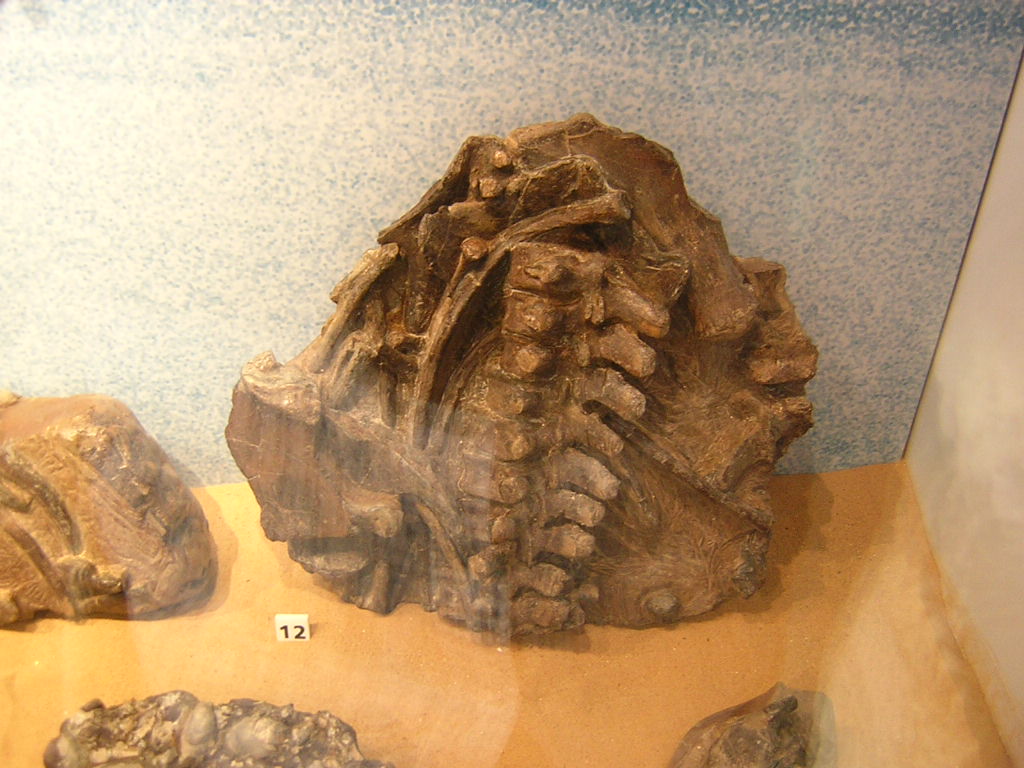
The name Vectocleidus was erected by Benson et al. (2012b) for a leptocleidid from the Early Cretaceous of the Isle of Wight, UK. The type specimen was previously referred to Leptocleidus sp. Vectocleidus can be confidently identified as a leptocleidid but its position within the clade is unstable (Benson et al. (2012b). Vectocleidus material on display in the Dinosaur Isle...
Gronausaurus
‘Gronausaurus‘ was named in 2013 (Hampe 2013). It is now regarded as a junior synonym of Brancasaurus (Sachs et al. 2016). Under construction...
Anguanax
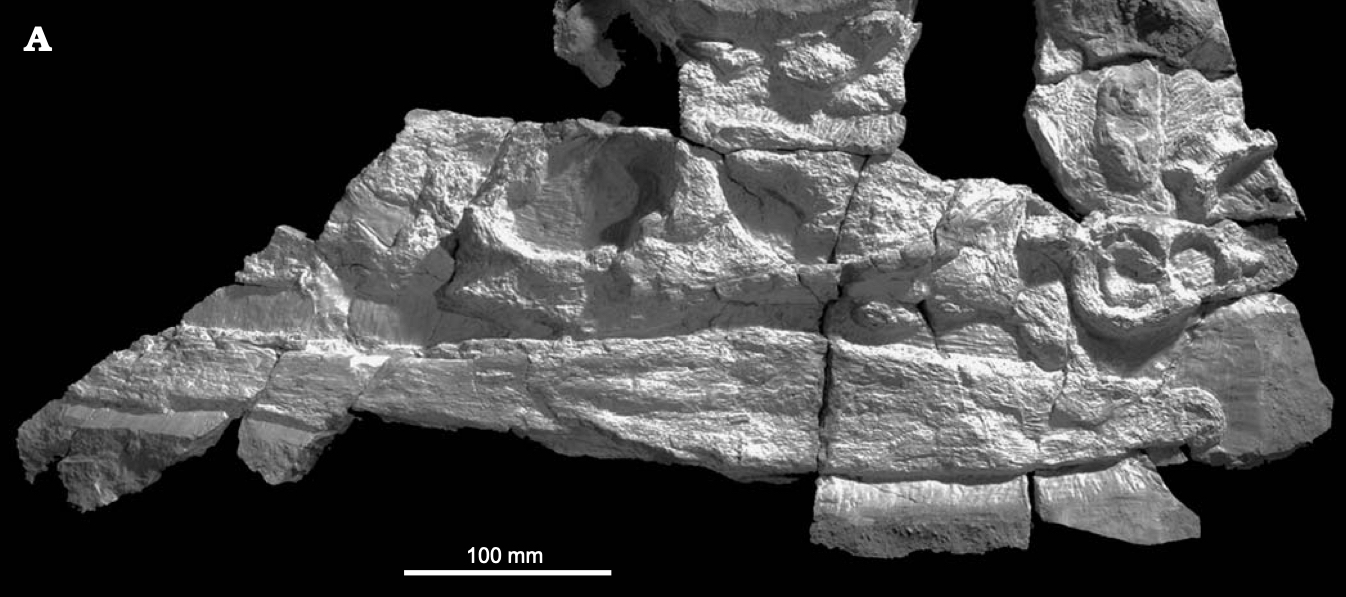
Anguanax is the first articulated plesiosaur ever found in Italy. It is a basal thalassophonean pliosaur from the Late Jurassic (middle Oxfordian). The type and only known specimen (MPPL 18797) of Anguanax was originally described as an indeterminate pliosaurid (Cau and Fanti 2014), but was subsequently named after reanalysis by the same authors the following year (Cau and Fanti 2015)....
- 1
- 2
- 3
- 4
- 5
- Go to the next page