
Pliosaurus

Under construction Skull of Pliosaurus kevani in right lateral view. From Benson et al. (2013). The ‘Westbury Pliosaur 1’ specimen of Pliosaurus brachyspondylus, skull on display in the Bristol Museum and Art Gallery. Photo by Chris Crump. The ‘Westbury Pliosaur 1’ specimen of Pliosaurus brachyspondylus, skull on display in the Bristol Museum and Art Gallery. Photo by Chris Crump. Holotype...
Colymbosaurus
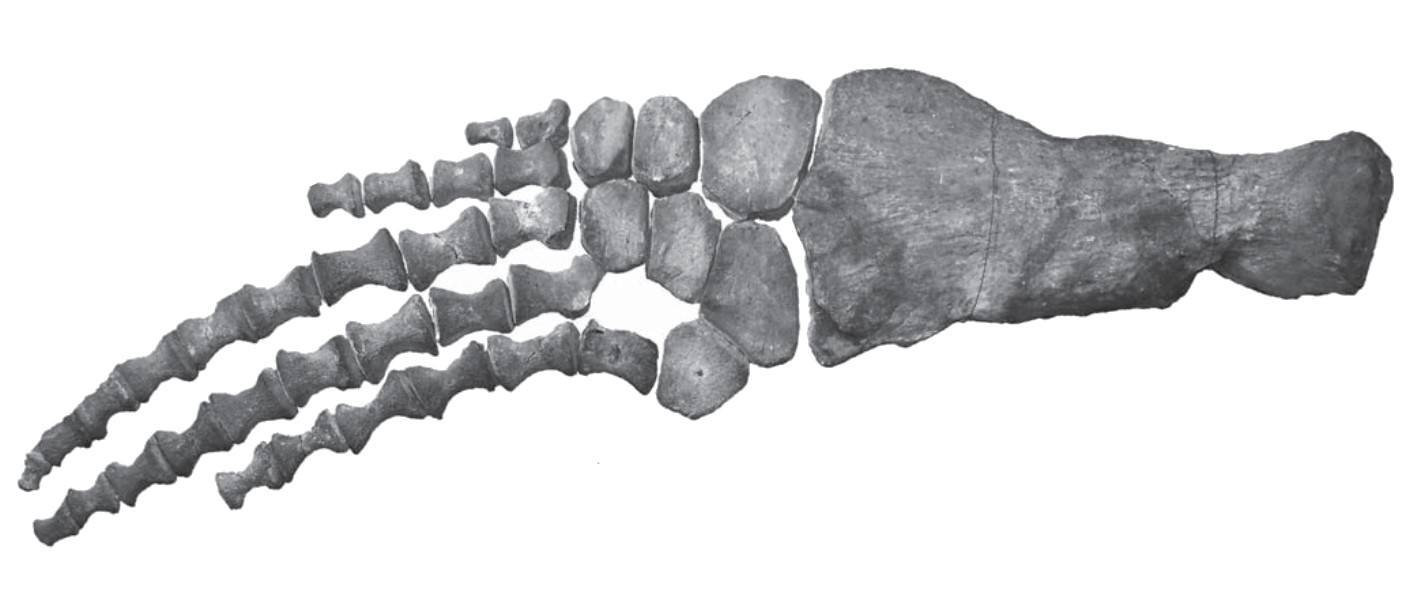
Colymbosaurus is a colymbosaurine (derived cryptoclidid) from the Late Jurassic of the UK and Svalbard, Norway. Two valid species are known, C. megadeirus from the UK, and C. svalbardensis from Svalbard, Norway. The genus is known from the Kimmeridgian, Tithonian, and possibly early Berriasian (Late Jurassic–possibly Early Cretaceous). Benson and Bowdler (2014) revised the genus Colymbosaurus and summarised its complicated...

Muraenosaurus
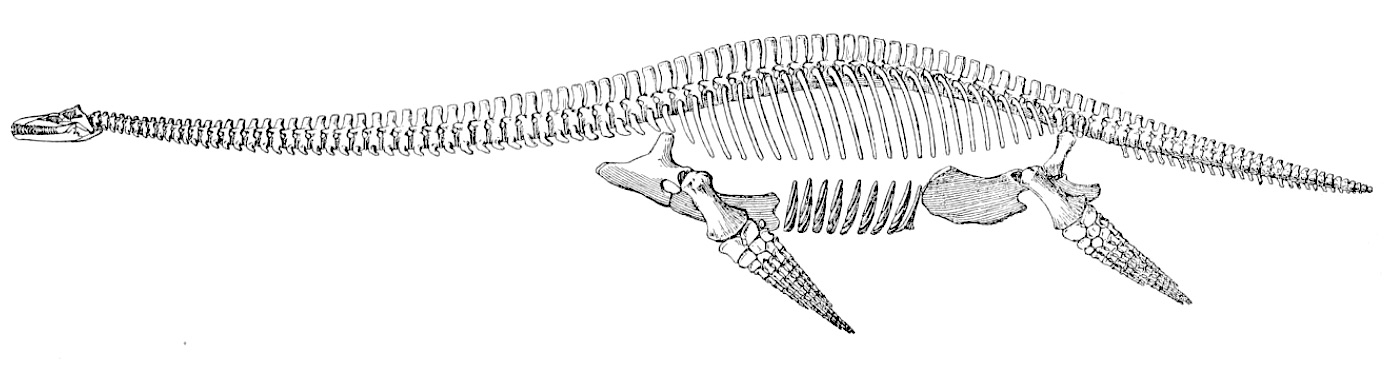
Brown (1981) diagnosed Muraenosaurus as follows: “Plesiosauroids in which the teeth are ornamented with many longitudinal ridges; the dentary bears 19 to 22 teeth on each ramus; the premaxillae bear 5 teeth each, of which the 1st and 5th are small, and the 2nd to 4th are large; the most anterior maxilliary tooth (6th upper tooth) is small and the...
Marmornectes
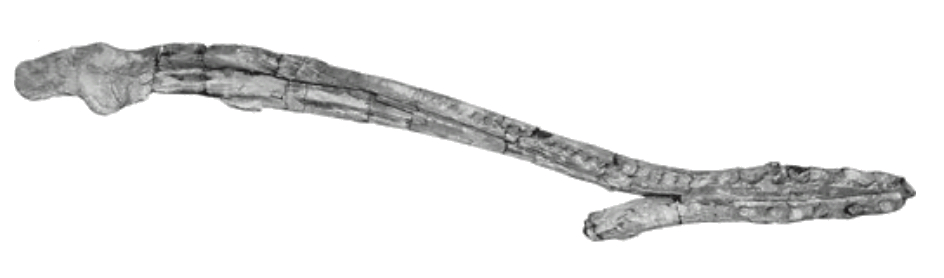
Marmornectes is a pliosaur with a long and narrow snout from the Oxford Clay. It was described and named by Ketchum and Benson (2011a). The type and only specimen (BEDFM 1999.201) comprises a substantially complete skeleton including a partial skull. Marmornectes is similar to Peloneustes but possesses some basal characters that were lost in Peloneustes and other more derived pliosaurids...
Lusonectes
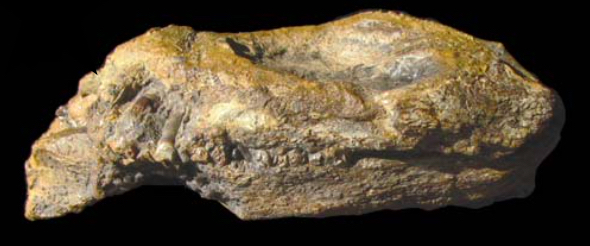
Lusonectes is a poorly known microcleidid the Toarcian (Lower Jurassic) of Portugal. It is known from a single holotype specimen (MG33), a partial skull in the Museu Geológico, Lisbon, Portugal. It was described and named by Smith et al. (2012) as the first diagnostic plesiosaur species from Portugal, and the westernmost occurrence of a plesiosaur in Europe. The genus name...
Bishanopliosaurus
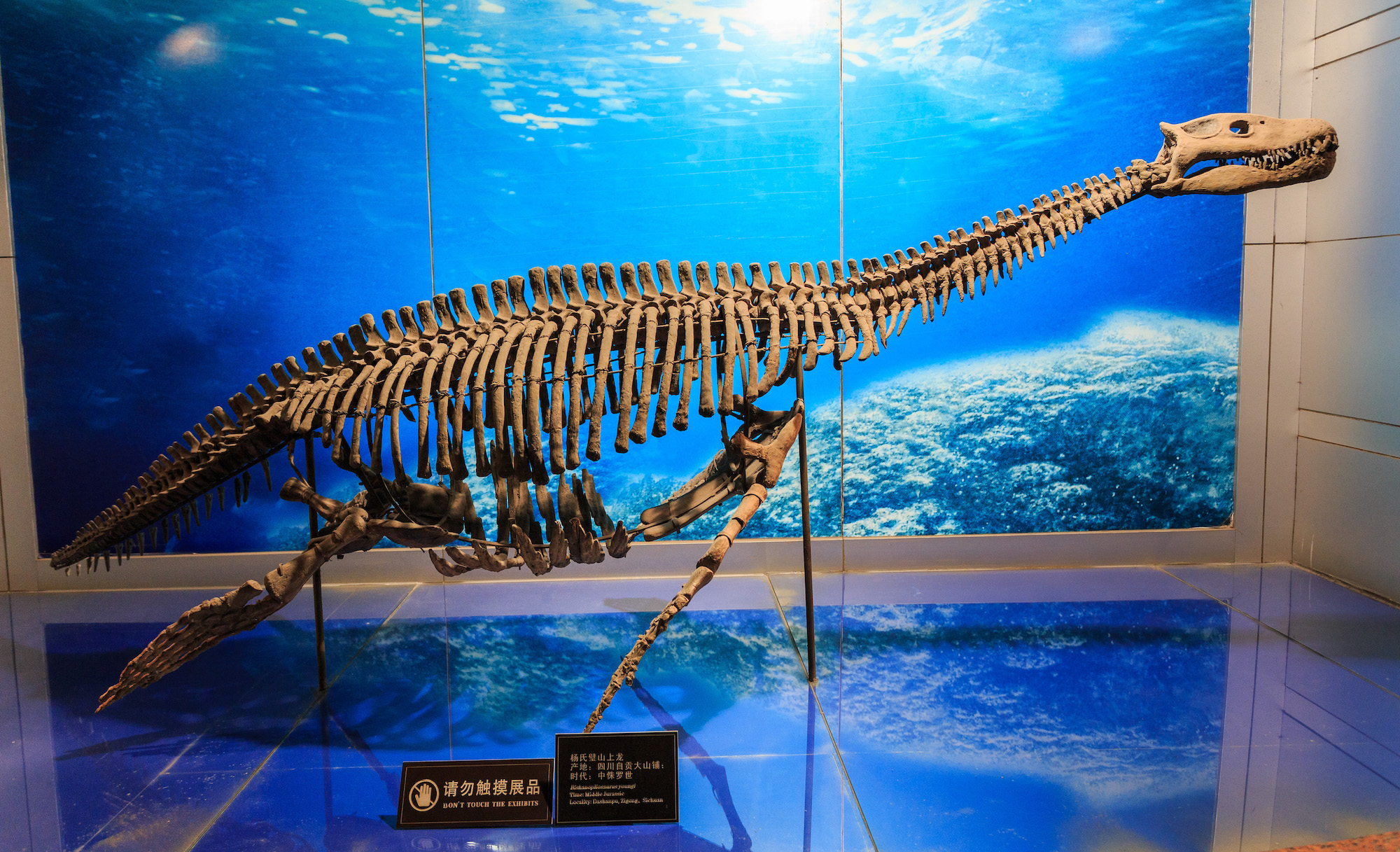
Bishanopliosaurus is the most complete plesiosaur known from the Jurassic of Asia (Sato et al. 2003). The holotype specimen of the type species, B. youngi, is a partial postcranial skeleton of a juvenile individual from the Dongyuemiao Member of the Ziliujing Formation (Lower or Mid Jurassic) of Bishan County, Chongqing, China. It was first described and named by Dong (1980),...
Microcleidus

Microcleidus is a medium (4.27 m) to large (5.03 m) plesiosauroid with a small head and a long neck containing 38–39 cervical vertebrae. Watson (1909) erected Microcleidus to accommodate fossil material belonging to ‘P.’ homalospondylus and ‘P.’ macropterus (Watson 1911). Both species were considered valid by Seeley (1865), Blake (1876) and Watson (1911) on the basis of slight differences in the limbs,...