

Hauffiosaurus
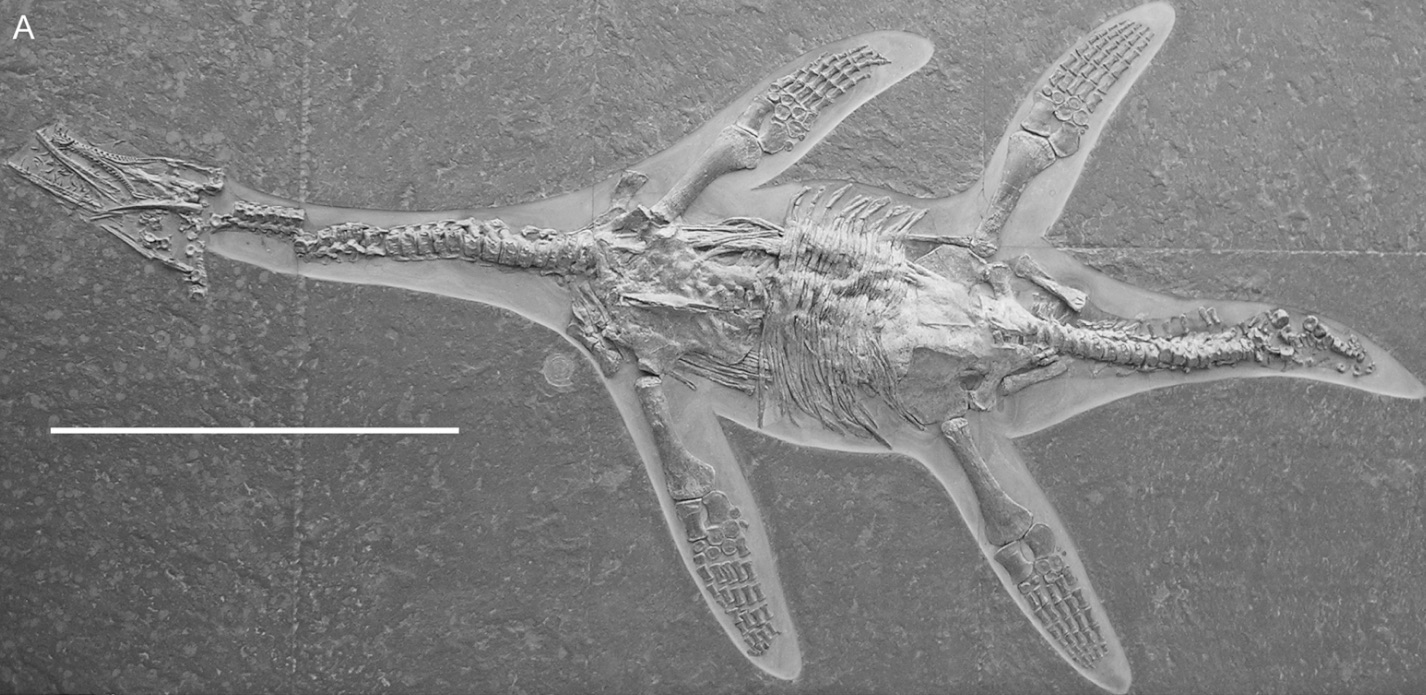
Hauffiosaurus is a basal pliosaurid known from the Lower Jurassic (Toarcian) of the UK and Germany. Hauffiosaurus is a medium to large sized plesiosaur (H. zanoni = 3.4 m, H. tomistomimus, 4.23 m, H. longirostris = 4.83 m) (Smith and Lomax 2019), with a relatively long neck for a pliosaur, and an elongate narrow snout. The genus Hauffiosaurus was named...

Westphaliasaurus
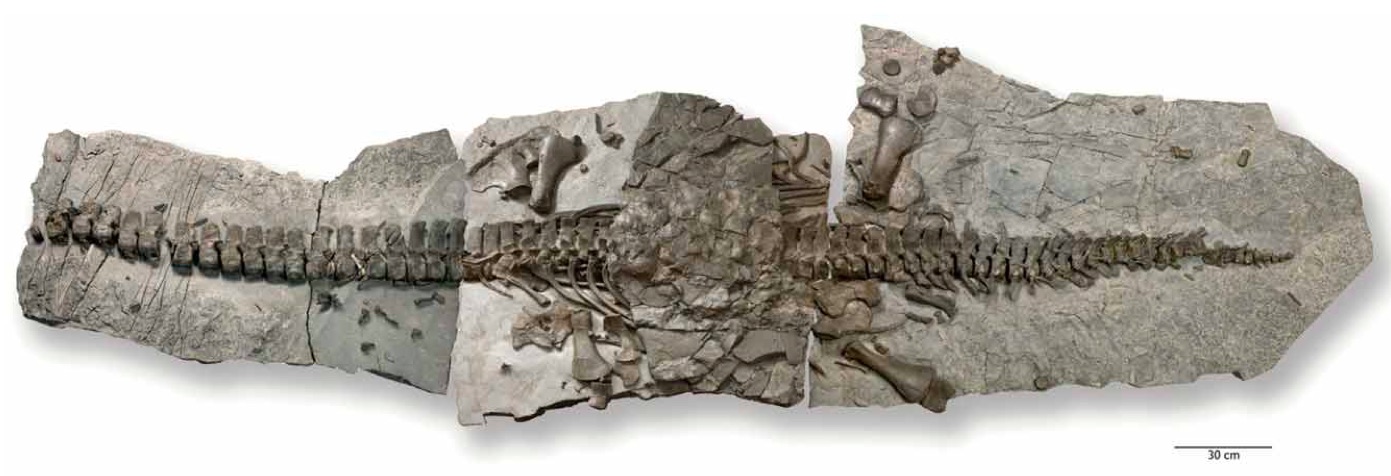
Under construction Skeleton of Westphaliasaurus. The central slab of the skeleton was awaiting preparation at the time of this photograph, but was subsequently prepared. From Schwermann & Sander (2011)....
Anningasaura
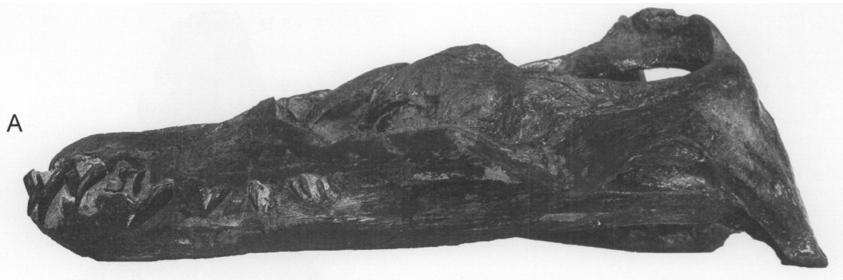
Anningasaura is a basal plesiosaur from the Lower Jurassic of Lyme Regis, UK, known from a single three-dimensionally preserved skull. The specimen, NHMUK OR49202, was originally described and figured by Andrews (1896), who referred it to ‘Plesiosaurus‘ macrocephalus. It was redescribed and named as the holotype of Anningasaura lymense by Vincent and Benson (2012). Cast of the holotype skull of...
Styxosaurus
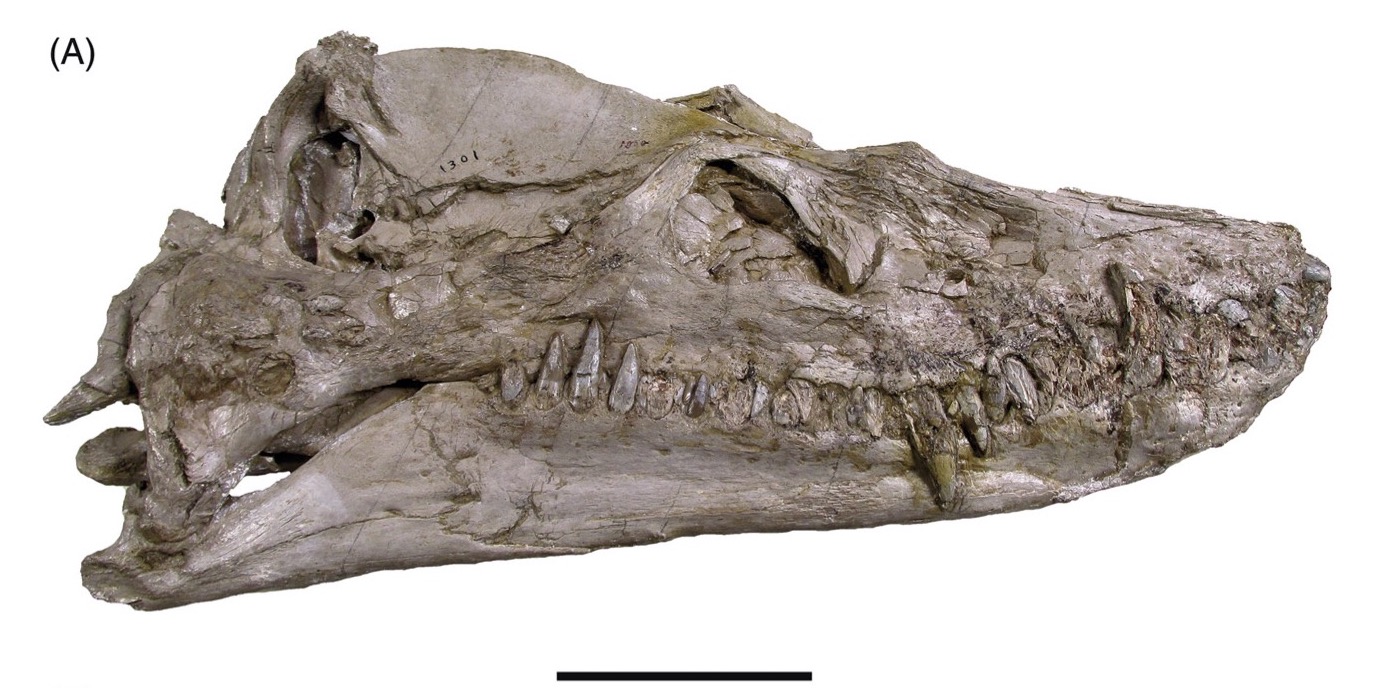
The holotype specimen (KUVP 1301) of Styxosaurus is an articulated skull and anterior portion of the neck. It was found in the Niobrara Chalk near Hell Creek, Logan County, Western Kansas in 1890. It was described later that year as a new species Cimoliosaurus snowii by Williston (1890a) (and in more detail soon after by Williston 1890b), who subsequently...
Thaumatodracon
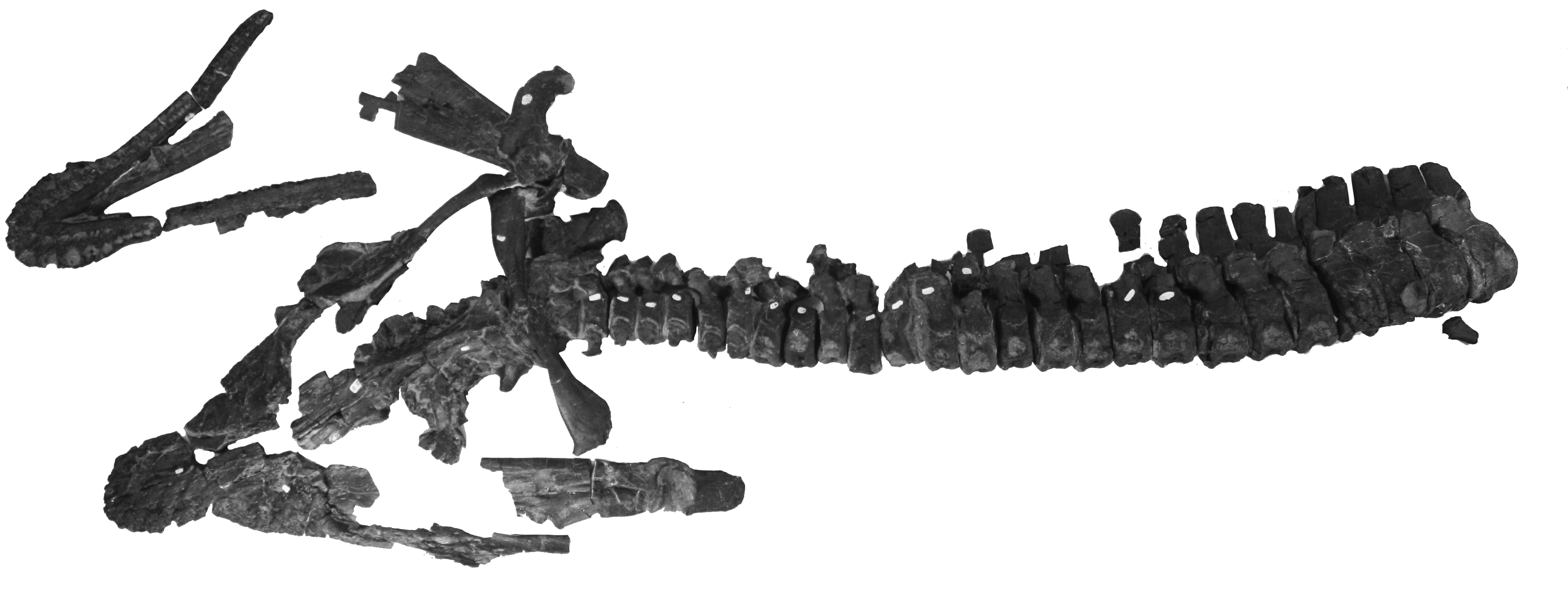
Thaumatodracon is a relatively large rhomaleosaurid from the Lower Jurassic (Sinemurian) of Lyme Bay – the coast between Lyme Regis and Charmouth – UK. The holotype specimen (NLMH 106.058) is an almost complete skull and cervical (neck) series. It has a 60 cm long skull, and based on comparison with other rhomaleosaurids I estimate its total body length to be 6.5...
Avalonnectes
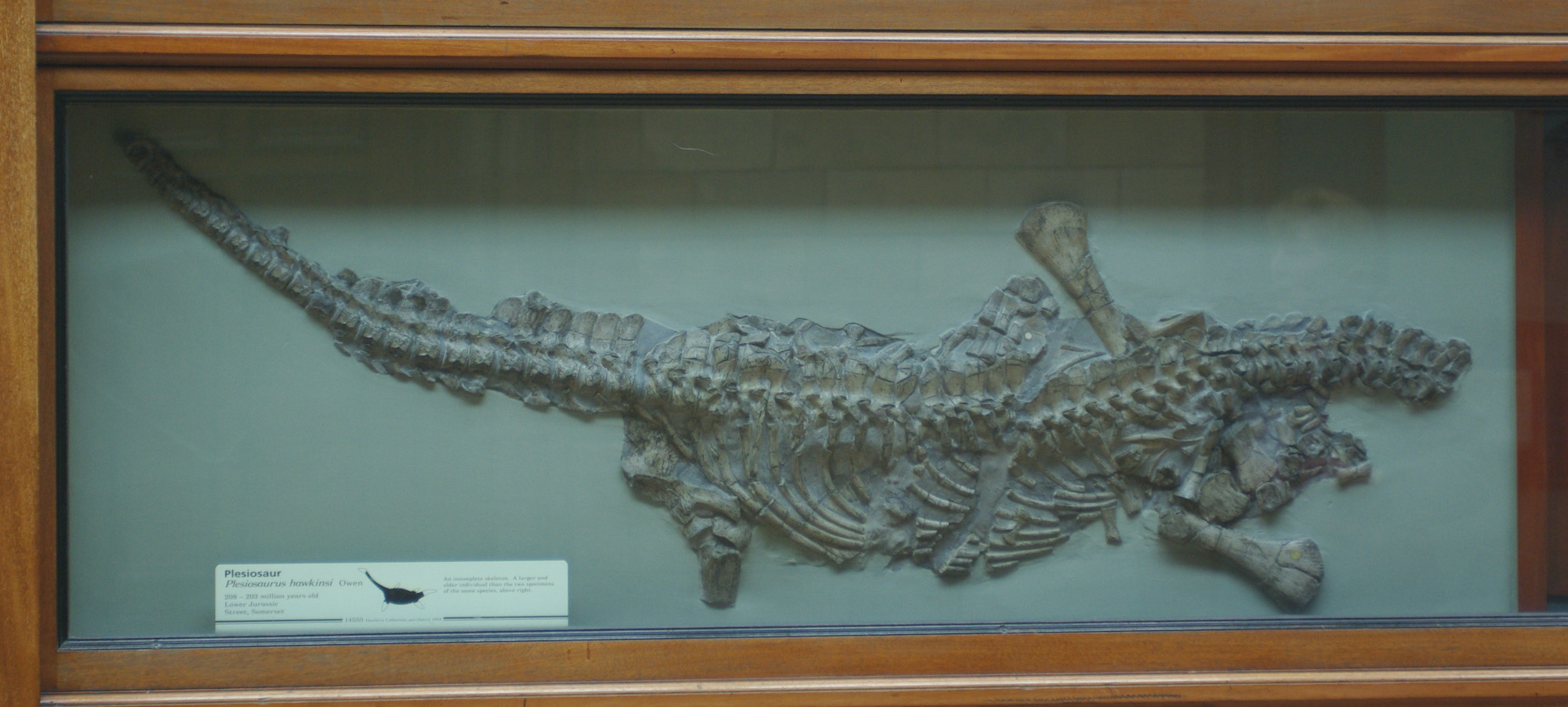
Avalonnectes is a small-bodied basal rhomaleosaurid. Avalonnectes was named by Benson, Evans and Druckenmiller (2012) for a partial skeleton including the rear part of the skull from the lowermost Jurassic of Street, Somerset, UK. The specimen (NHMUK PV OR 14550) was previously referred to Thalassiodracon hawkinsii and is one of many historical plesiosaur skeletons preserved on slabs on display in...
Ogmodirus

The type skeleton of ‘Ogmodirus’ was collected in 1909 by C. Boyce from the upper Greenhorn Limestone Formation (Lower Turonian, Upper Cretaceous) of Cloud County (near Aurora), Kansas (Storrs 1999, Schumacher and Everhart 2005). The specimen, KUVP 441, is a partial skeleton consisting of partial vertebral column (51 cervical vertebrae, 18 caudal vertebrae), limb, and girdle elements. Originally named...
Maresaurus
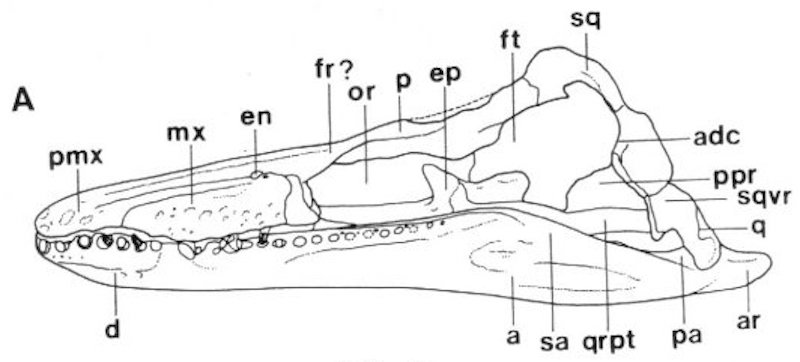
M. coccai (Gasparini 1997) type material: MOZ 4386 V articulated skull and mandible, atlas-axis and first cervical vertebrae. From the upper part of the Los Molles Formation, Cuyo Group, Emileia giebeli and Emileia multiformis subzone. Skull of Maresaurus in lateral, dorsal and ventral view. From Gasparini (1997)....
Tricleidus

Tricleidus is a cryptoclidid from the Oxford Clay Formation of the UK. The holotype specimen (NHMUK R 3539) consists of disarticulated elements including most of skull and half the postcranium, from the Kosmoceras jasoni – Peltoceras athleta zones from the lowest deposits of the Oxford Clay Formation. The type and only species of Tricleidus is T. seeleyi. Persson (1962) erected...