
Opallionectes

Opallionectes is a large, around 5 m long, derived cryptoclidid plesiosauroid from the Early Cretaceous of South Australia. It is known from a partial opalised skeleton, which is mounted for display in the South Australian Museum. The holotype specimen lacks a skull. It is diagnosed by the following unique combination of characters: small needle-like teeth with a distinct ovoid cross-section...
Colymbosaurus
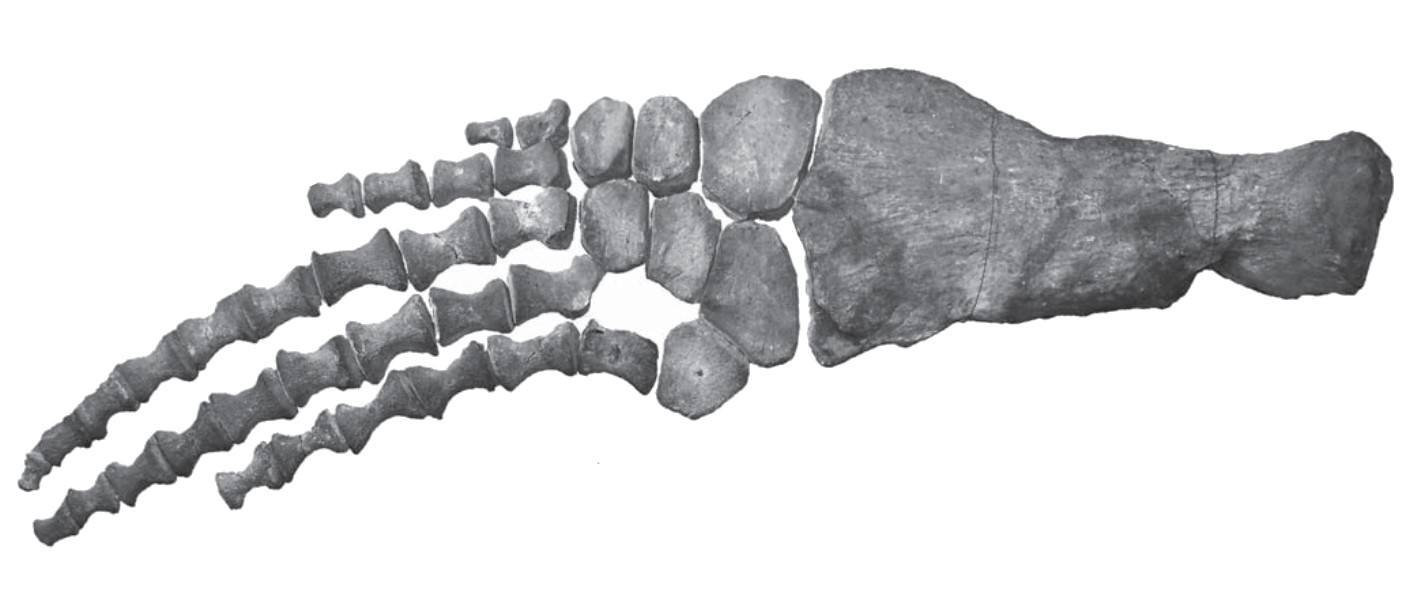
Colymbosaurus is a colymbosaurine (derived cryptoclidid) from the Late Jurassic of the UK and Svalbard, Norway. Two valid species are known, C. megadeirus from the UK, and C. svalbardensis from Svalbard, Norway. The genus is known from the Kimmeridgian, Tithonian, and possibly early Berriasian (Late Jurassic–possibly Early Cretaceous). Benson and Bowdler (2014) revised the genus Colymbosaurus and summarised its complicated...

Muraenosaurus
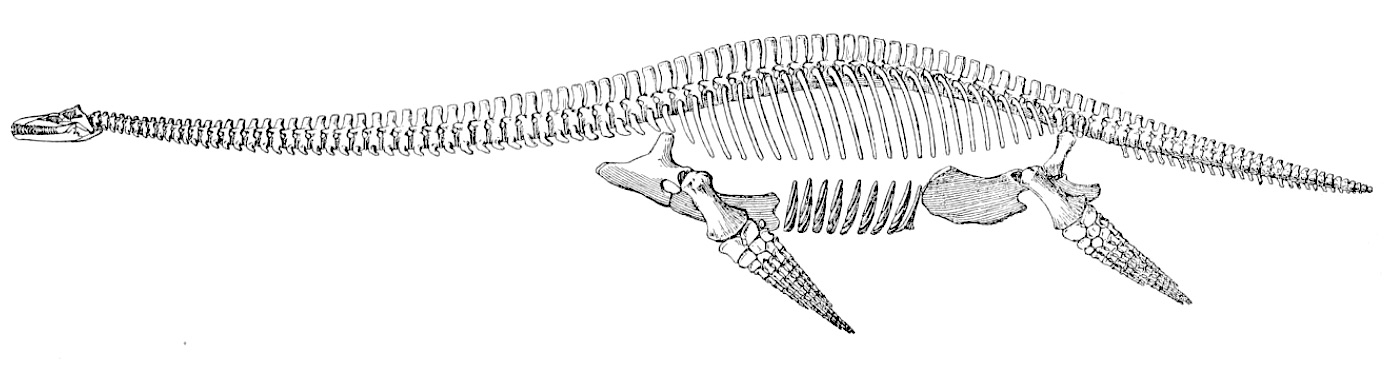
Brown (1981) diagnosed Muraenosaurus as follows: “Plesiosauroids in which the teeth are ornamented with many longitudinal ridges; the dentary bears 19 to 22 teeth on each ramus; the premaxillae bear 5 teeth each, of which the 1st and 5th are small, and the 2nd to 4th are large; the most anterior maxilliary tooth (6th upper tooth) is small and the...
Cryptoclididae
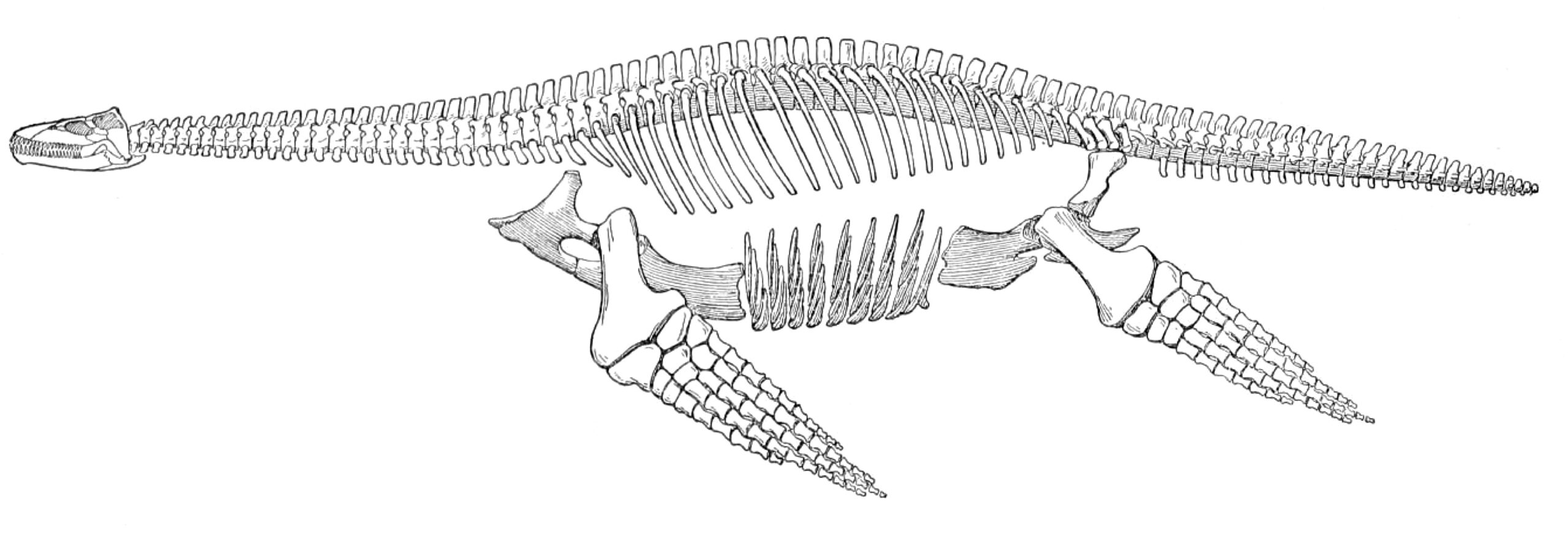
The family Cryptoclididae contains a variety of moderately sized long-necked plesiosaurs. Genera included in this family vary depending on the classification, but the family is now well established with Cryptoclidus, Tricleidus, Pantasaurus, Tatenectes, Kimmerosaurus, Vinialesaurus, Muraenosaurus, and Colymbosaurus included within this group. Some authors have included the derived Cretaceous plesiosaurs Aristonectes and Kaiwhekea within the Cryptoclididae (Cruickshank and Fordyce 2002)....
Tricleidus

Tricleidus is a cryptoclidid from the Oxford Clay Formation of the UK. The holotype specimen (NHMUK R 3539) consists of disarticulated elements including most of skull and half the postcranium, from the Kosmoceras jasoni – Peltoceras athleta zones from the lowest deposits of the Oxford Clay Formation. The type and only species of Tricleidus is T. seeleyi. Persson (1962) erected...
Kimmerosaurus

Kimmerosaurus is a poorly known cryptoclidid plesiosaur known only from skull and neck material (Brown 1981, Brown et al. 1986). It differs from other plesiosaurs in the large number of needle-like teeth in its jaws, and in the form of its teeth, which are completely smooth and lack the longitidinal ridges present in other plesiosaurs. Brown et al. (1986) compared...
Cryptoclidus

Cryptoclidus, often wrongly spelled ‘Cryptocleidus’ after Andrews (1909), is a moderately sized plesiosaur with adults about four metres long (Brown 1981). It is known from a large number of individual specimens from the Oxford Clay Formation. Fossils of Cryptoclidus are relatively common, and provide a complete ontogenetic sequence from very young to old adult individuals. This makes Cryptoclidus one of...
Apractocleidus

The genus and species ‘Apractocleidus teretipes‘ was erected by Smellie (1916). Smellie (1915) provided a preliminary account of the specimen before he named it. The specimen is now regarded as an old-adult individual of Cryptoclidus. The taxon ‘Apractocleidus‘ is therefore considered a junior synonym of Cryptoclidus. The specimen was collected by Alfred Leeds and acquired by the Hunterian Museum, Glasgow....