Umoonasaurus

Read more about the article Umoonasaurus
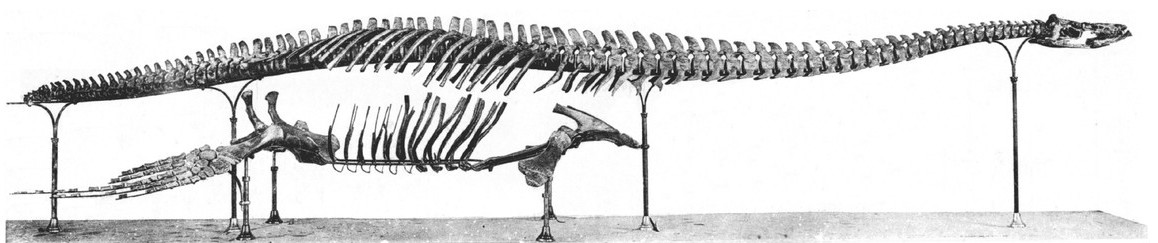
Skeleton of Umoonasaurus. (Image copyright Australian Museum: https://australian.museum/blog/museullaneous/a-national-treasure/)

Umoonasaurus is a small (~2.5 m long) leptocleidid that lived during the Early Cretaceous in Southern Australia. The holotype specimen (AM F99374), a spectacular opalised skeleton including the skull, is nicknamed 'Eric'. It is the most complete opalised plesiosaur skeleton (and fossil vertebrate) known. It was originally described briefly as Leptocleidus sp.…

Continue ReadingUmoonasaurus

Vectocleidus

Read more about the article Vectocleidus
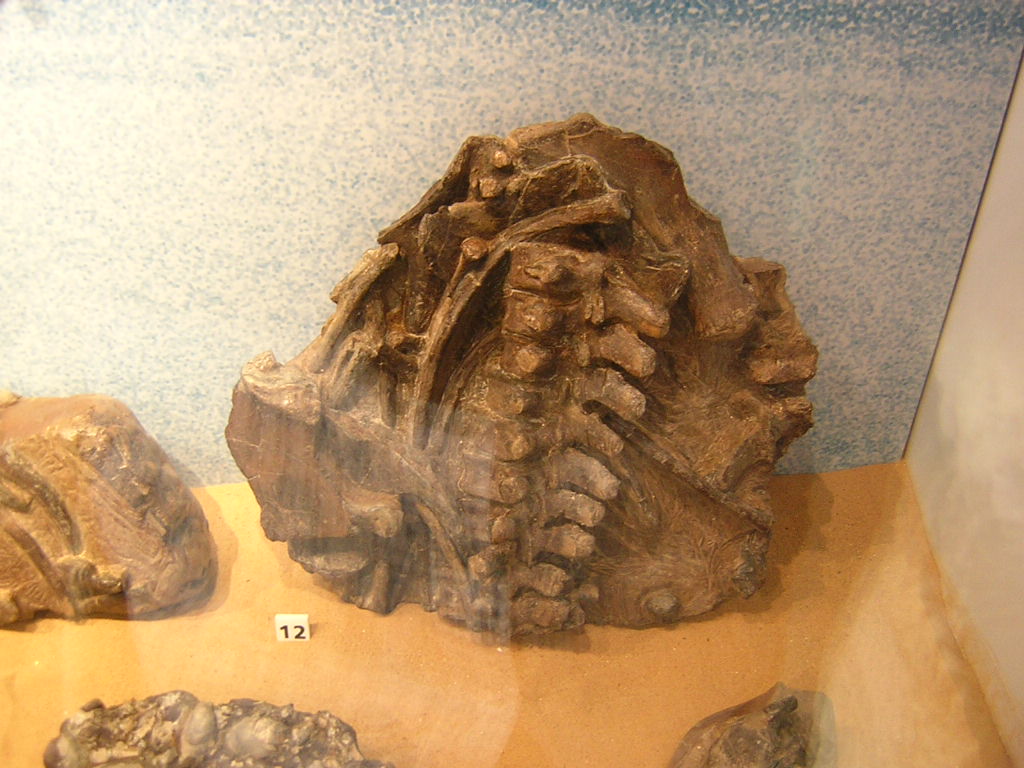
Vectocleidus material on display in the Dinosaur Isle Museum, Isle of Wight, UK.

The name Vectocleidus was erected by Benson et al. (2012b) for a leptocleidid from the Early Cretaceous of the Isle of Wight, UK. The type specimen was previously referred to Leptocleidus sp. Vectocleidus can be confidently identified as a leptocleidid but its position within the clade is unstable (Benson et al. (2012b).…

Continue ReadingVectocleidus

Leptocleidus

Read more about the article Leptocleidus
Skull of Leptocleidus capensis in lateral view (from Cruickshank, 1997)

Lower Cretaceous plesiosaurs are rare, so Leptocleidus is important because it fills a gap in the fossil record of plesiosaurians. Leptocleidus was once considered to be a late surviving member of the family Rhomaleosauridae but it has recently been reidentified as a close relative of polycotylids. The fossils of all known species…

Continue ReadingLeptocleidus