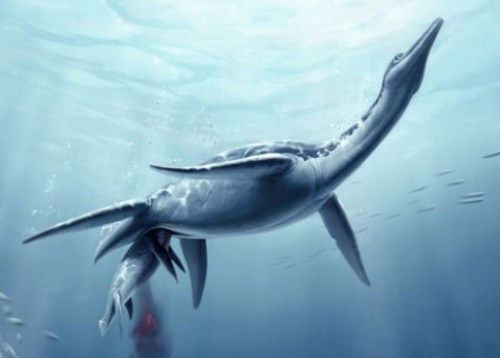
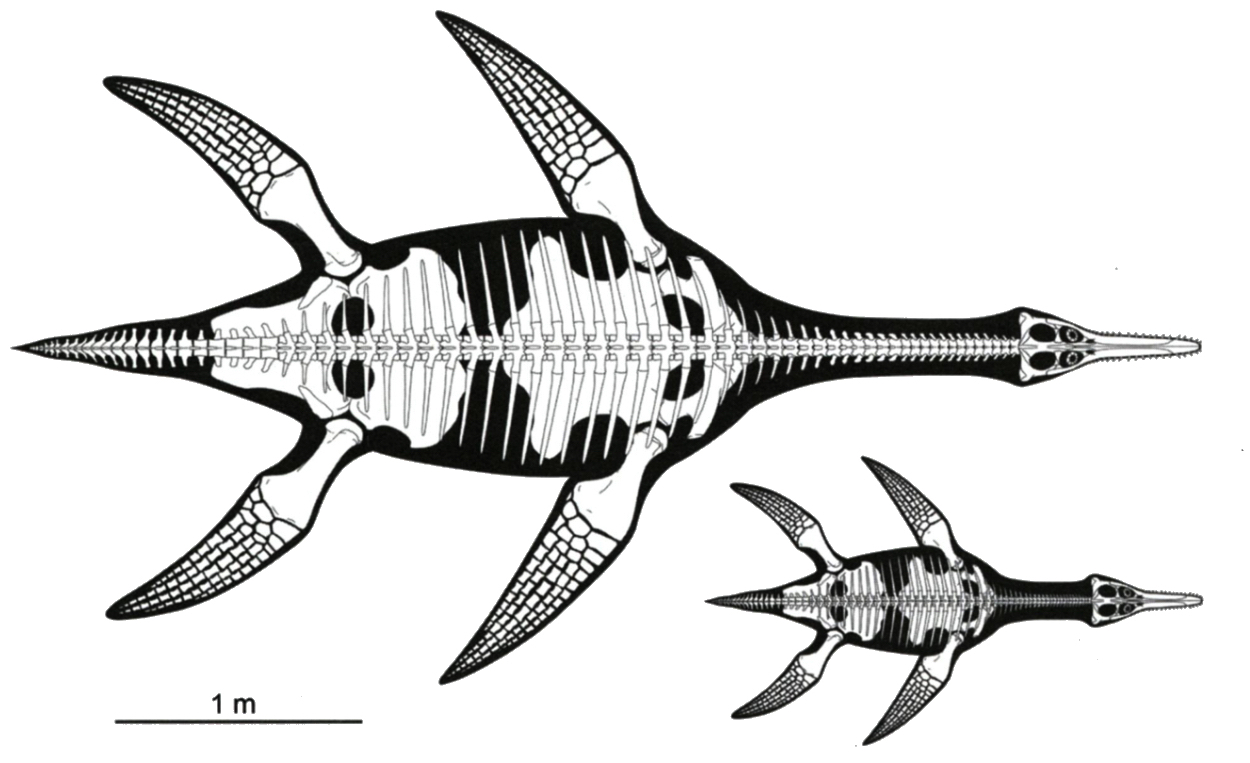
Polycotylus latipinnis was the first short-necked plesiosaur to be recognised in North America (Carpenter 1996), and the first polycotylid to be described and named (Cope 1869). It was established in the same volume that coined the name Elasmosaurus and contained the infamous ‘head on the wrong end’ reconstruction (Cope 1869).
Category «Polycotylidae»
Polycotylidae
Polycotylids are a clade of relatively small-bodied, typically snort-necked, long-snouted plesiosauroids, from the Cretaceous Period.
Martinectes bonneri
They were traditionally classified as pliosaurs because of their short necks and relatively large heads. However, cladistic analyses taking into account a broader suite of anatomical characters have shown they are plesiosauroids, more closely related to long-necked elasmosaurids and cryptoclidids than to pliosaurs.
Thililua
Edgarosaurus
An old debate settled – plesiosaurs gave birth to live young
‘Pickstown plesiosaur’ unearthed in South Dakota
The discovery of a new plesiosaur specimen was recently announced by the South Dakota School of Mines and Technology, South Dakota, USA. 11-year-old Devon Zimmerman noticed the skull and part of the backbone on the bank of the Missouri River, near Pickstown, South Dakota, during a vacation with parents Duane and DeeAnn Zimmerman of Sioux City, Iowa.
‘Sea Monsters’ movie released
The newest film offering from National Geographic opened to 78 IMAX theaters across the United States, the largest ever opening for an IMAX movie. ‘Sea Monsters’ is set in the Late Cretaceous Western Interior Sea, and follows the journey of a growing Dolichorhynchops.
Two new species of polycotylid plesiosaurs
The second paper in the two-part report on by Albright et al. on plesiosaurs from the Upper Cretaceous Tropic Shale of southern Utah (Journal of Vertebrate Palaeontology, Volume 27(1) p. 41-58), introduces two new genera and species of polycotylid plesiosaur and contributes to the systematics of polycotylid plesiosaurs.