CAMSM J.63919
A partial postcranial skeleton. One of two syntype skeletons of Colymbosaurus megadeirus. The other is CAMSM J.29596etc....

A partial postcranial skeleton. One of two syntype skeletons of Colymbosaurus megadeirus. The other is CAMSM J.29596etc....
A partial postcranial skeleton with elements numbered CAMSM J.29596–29691 and J.59736–59743 (shortened in the literature to just “CAMSM J.29596etc). One of two syntype skeletons of Colymbosaurus megadeirus, the other being CAMSM J.63919....
A partial postcranial skeleton from Street, Somerset, UK (likely lowermost Hettangian)....
A partial skeleton including a damaged skull. Suffering from pyrite decay....
A partial skeleton including the skull (but no mandible) (Smith 2007a, Benson et al. 2012)...
A substantially complete skeleton exposed in dorsal view. The specimen was proposed as a neotype for Rhomaleosaurus megacephalus (= Atychodracon megacephalus) (Cruickshank 1994b). This fossil, nicknamed the ‘Barrow Kipper’ after Barrow-upon-Soar where it was discovered (Taylor and Martin 1990), is on display at the New Walk Museum in Leicester, UK. This specimen has since become a referred specimen (Smith 2015)....
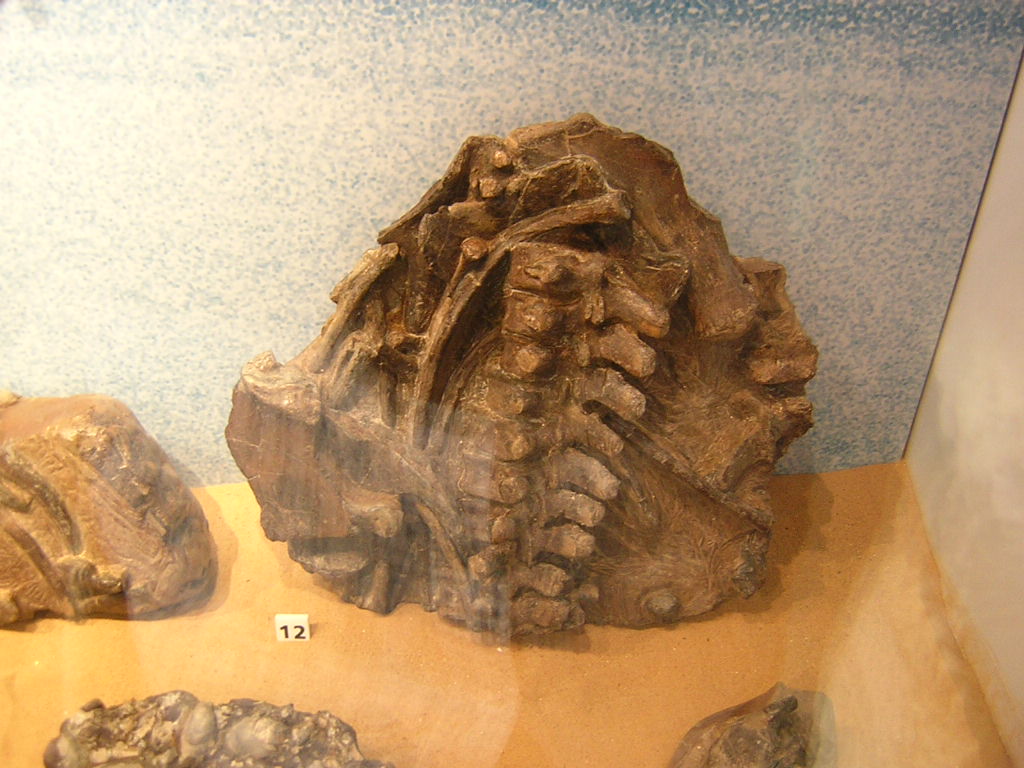
The name Vectocleidus was erected by Benson et al. (2012b) for a leptocleidid from the Early Cretaceous of the Isle of Wight, UK. The type specimen was previously referred to Leptocleidus sp. Vectocleidus can be confidently identified as a leptocleidid but its position within the clade is unstable (Benson et al. (2012b). Vectocleidus material on display in the Dinosaur Isle...
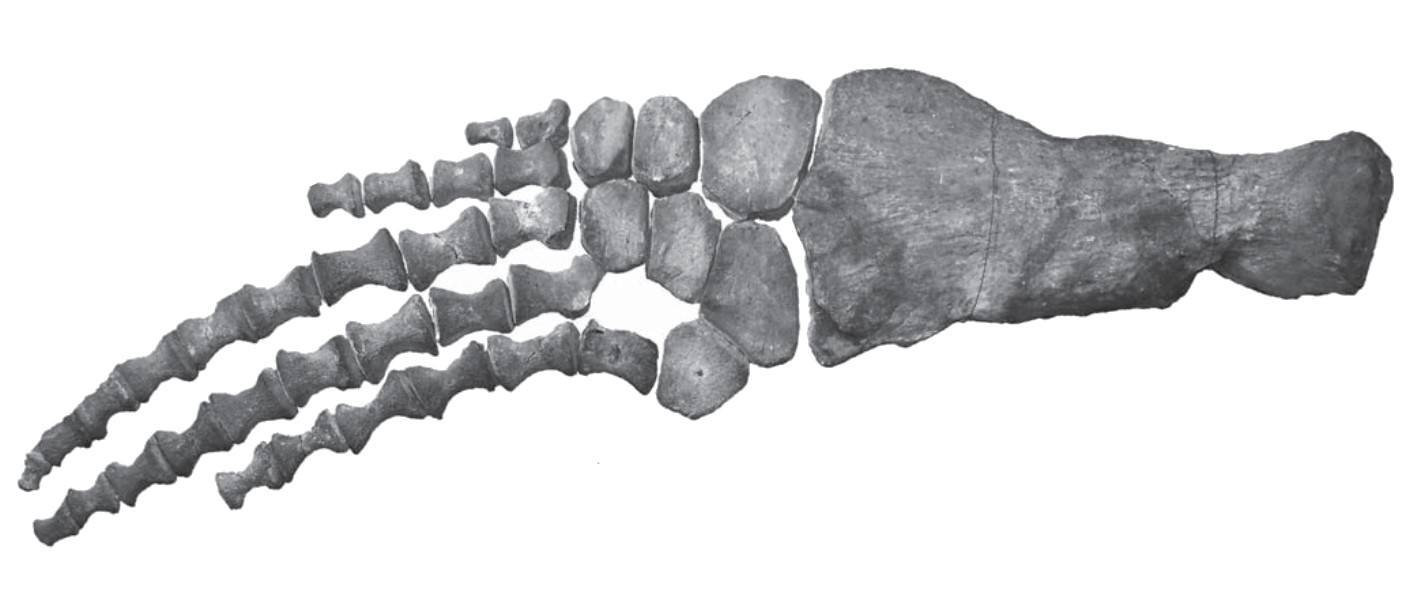
Colymbosaurus is a colymbosaurine (derived cryptoclidid) from the Late Jurassic of the UK and Svalbard, Norway. Two valid species are known, C. megadeirus from the UK, and C. svalbardensis from Svalbard, Norway. The genus is known from the Kimmeridgian, Tithonian, and possibly early Berriasian (Late Jurassic–possibly Early Cretaceous). Benson and Bowdler (2014) revised the genus Colymbosaurus and summarised its complicated...
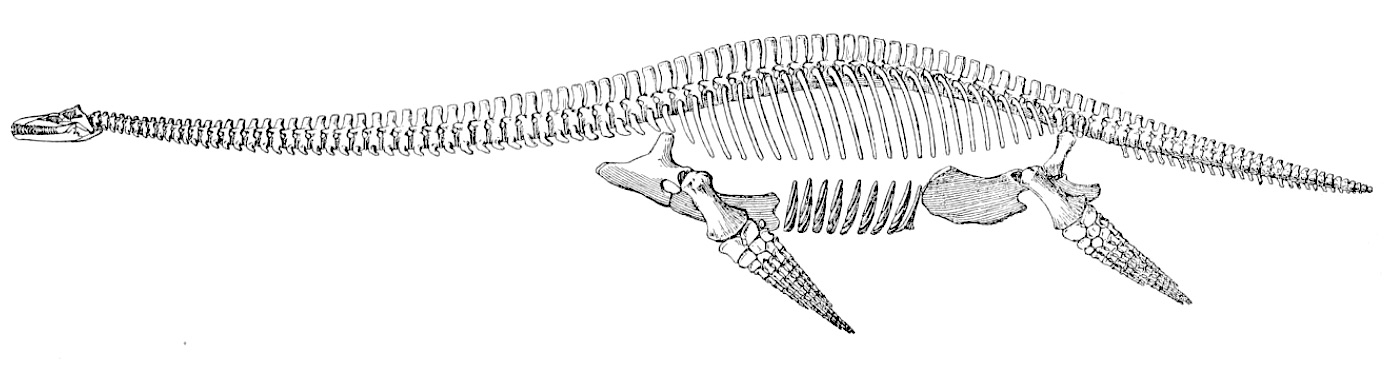
Brown (1981) diagnosed Muraenosaurus as follows: “Plesiosauroids in which the teeth are ornamented with many longitudinal ridges; the dentary bears 19 to 22 teeth on each ramus; the premaxillae bear 5 teeth each, of which the 1st and 5th are small, and the 2nd to 4th are large; the most anterior maxilliary tooth (6th upper tooth) is small and the...
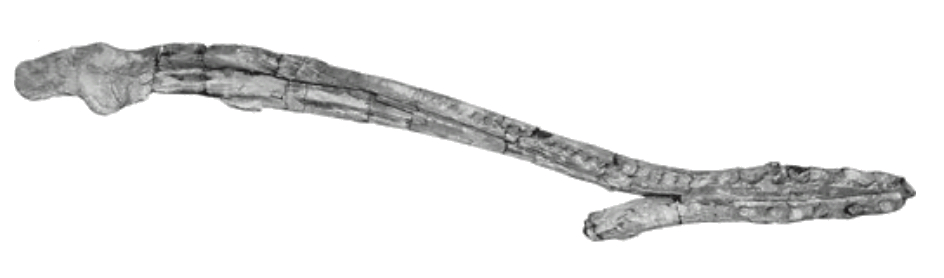
Marmornectes is a pliosaur with a long and narrow snout from the Oxford Clay. It was described and named by Ketchum and Benson (2011a). The type and only specimen (BEDFM 1999.201) comprises a substantially complete skeleton including a partial skull. Marmornectes is similar to Peloneustes but possesses some basal characters that were lost in Peloneustes and other more derived pliosaurids...

Microcleidus is a medium (4.27 m) to large (5.03 m) plesiosauroid with a small head and a long neck containing 38–39 cervical vertebrae. Watson (1909) erected Microcleidus to accommodate fossil material belonging to ‘P.’ homalospondylus and ‘P.’ macropterus (Watson 1911). Both species were considered valid by Seeley (1865), Blake (1876) and Watson (1911) on the basis of slight differences in the limbs,...