Leptocleidus

Read more about the article <i>Leptocleidus</i>
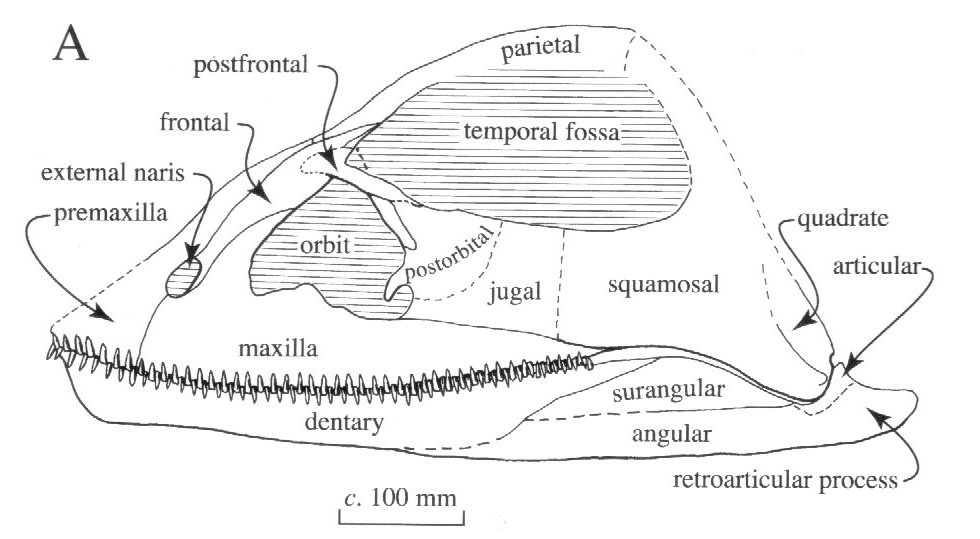
Skull of Leptocleidus capensis in lateral view (from Cruickshank, 1997)

Lower Cretaceous plesiosaurs are rare, so Leptocleidus is important because it fills a gap in the fossil record of plesiosaurians. Leptocleidus was once considered to be a late surviving member of the family Rhomaleosauridae but it has recently been reidentified as a close relative of polycotylids. The fossils of all known species…

Continue ReadingLeptocleidus

Kronosaurus

Read more about the article <i>Kronosaurus</i>
Kronosaurus queenslandicus skeleton in lateral view.

Due to its large size and ferocious appearance, Kronosaurus is one of the most famous plesiosaurs. The iconic skeleton referred to Kronosaurus on display in the Museum of Comparative Zoology in Harvard is nicknamed 'plasterosaurus' because so much of it is reconstructed in plaster. About a third of the skeleton is plaster…

Continue ReadingKronosaurus

Kimmerosaurus

Read more about the article <i>Kimmerosaurus</i>
Skull of Kimmerosaurus. From Brown (1981).

Kimmerosaurus is a poorly known cryptoclidid plesiosaur known only from skull and neck material (Brown 1981, Brown et al. 1986). It differs from other plesiosaurs in the large number of needle-like teeth in its jaws, and in the form of its teeth, which are completely smooth and lack the longitidinal ridges present…

Continue ReadingKimmerosaurus

Kaiwhekea

Kaiwhekea, also known as the 'Shag Point Plesiosaur', was classified as a cryptoclidid by Cruickshank and Fordyce (2002). More recent classifications regard it as an aristonectid. It has an unusually large number of small needle-like teeth and a shortened snout, much like the closely related Aristonectes. Kaiwhekea katiki is the type and…

Continue ReadingKaiwhekea

Hydrotherosaurus

Read more about the article <i>Hydrotherosaurus</i>
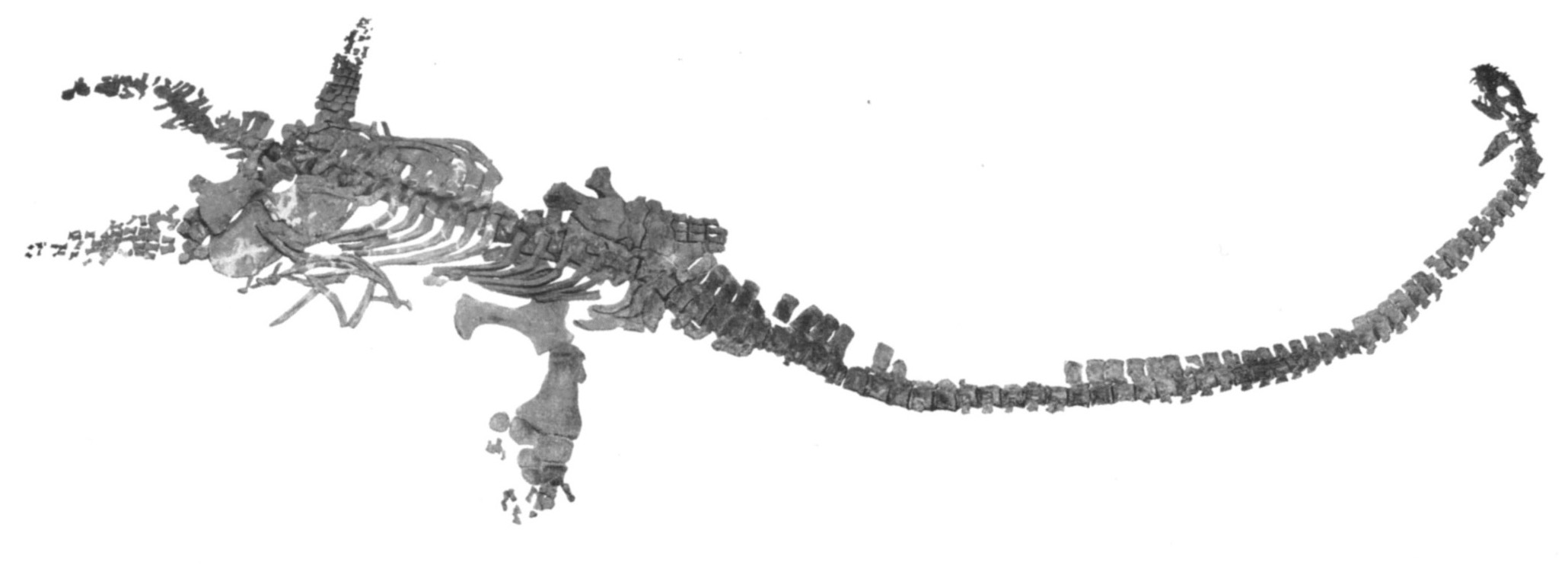
Articulated skeleton of Hydrotherosaurus. From Welles 1943.

Hydrotherosaurus is a long-necked elasmosaurid from California, USA. It is represented by one of the most complete elasmosaurid skeletons ever discovered, so Hydrotherosaurus is one of the best known members of this family. The almost complete type skeleton of Hydrotherosaurus was discovered in the Panoche Hills by Mr. Frank C. Paiva in…

Continue ReadingHydrotherosaurus

Eretmosaurus

Read more about the article <i>Eretmosaurus</i>
Skeleton of Eretmosaurus. Lithograph from Owen (1865).

The genus Eretmosaurus was erected for 'Plesiosaurus' rugosus by Seeley (1874). Eretmosaurus is a rogue taxon in cladistic analyses and researchers have been in disagreement about its taxonomic affinity. Eretmosaurus has been included in several different families: the Rhomaleosauridae based on the anatomy of its girdles (Persson 1963); the Pliosauridae (Brown 1981), the…

Continue ReadingEretmosaurus

Elasmosaurus

Read more about the article <i>Elasmosaurus</i>
Skeleton of Elasmosaurus from Cope (1869, revised version)

Elasmosaurus is one of the most widely recognised plesiosaur names and has become a stereotype for all elasmosaurids. However, it is relatively poorly known. The type and only known specimen of Elasmosaurus platyurus (ANSP 10081) includes the tip of the snout, occipital condyle, and the majority of the vertebral column. It is…

Continue ReadingElasmosaurus