Pachycostasaurus

Read more about the article <i>Pachycostasaurus</i>
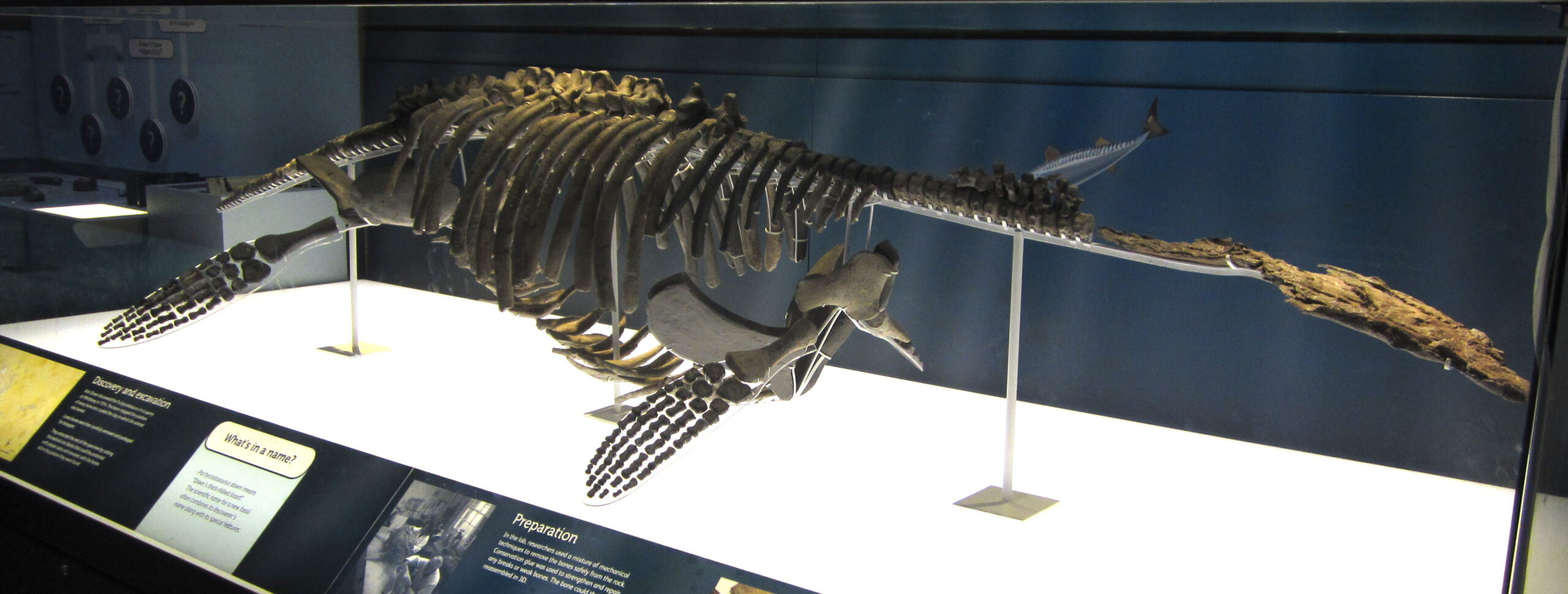
Mounted skeleton of Pachycostasaurus in the Peterborough Museum. Photo by Adam Smith.

Pachycostasaurus is approximately 3.1 meters long. Its rib cage and vertebrae exhibit thickened bone (Cruickshank et al. 1996) a condition termed pachyostosis. This heavy ossification is unusual in plesiosaurs (another exception may include Kronosaurus), although it is common in basal sauropterygians, especially pachypleurosaurs. Pachycostasaurus probably used the extra ballast provided by its…

Continue ReadingPachycostasaurus

Occitanosaurus

Read more about the article <i>Occitanosaurus</i>
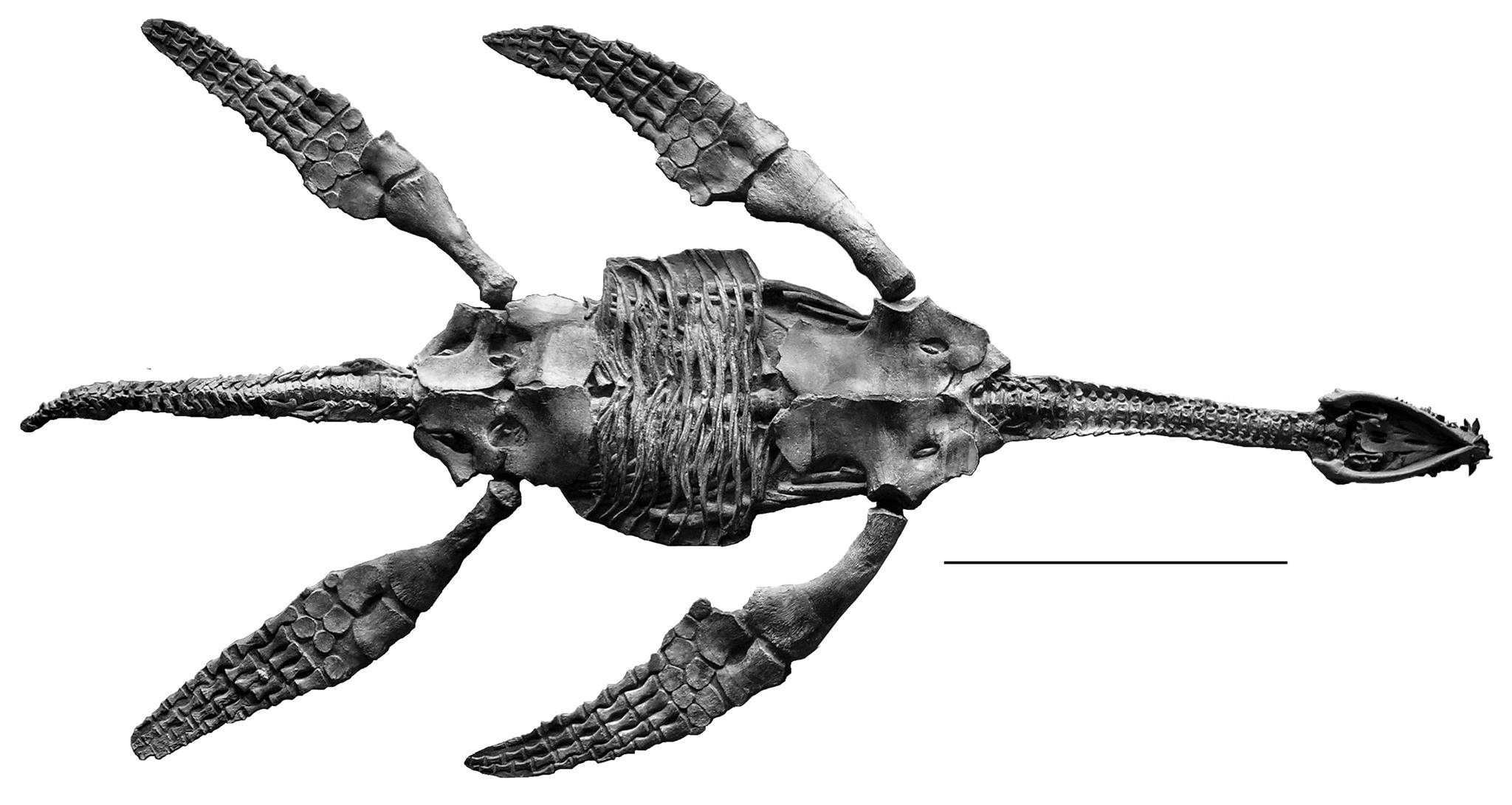
Mounted skeleton of 'Occitanosaurus'. From a postcard.

'Occitanosaurus' was described by Sciau et al. (1990) and Bardet et al. (1999). The genus name was erected for 'Plesiosaurus' tournemirensis by Bardet et al. (1999). The taxon was originally regarded as an early elasmosaurid but is now considered a member of the Microcleididae. 'Occitanosaurus' was approximately 3.9 meters long. The type…

Continue ReadingOccitanosaurus

Morturneria

Read more about the article <i>Morturneria</i>
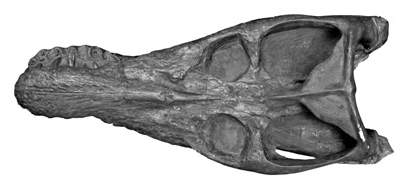
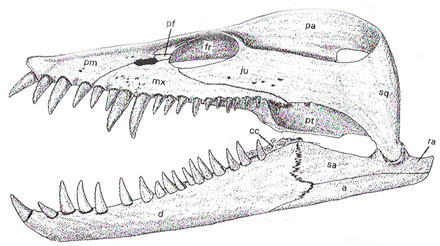
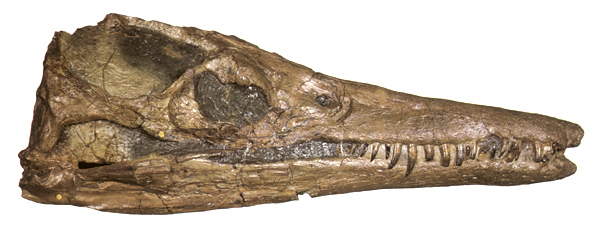
Skull of Morturneria in lateral view. From Chaterjee and Small (1989).

The taxon was originally named 'Turneria seymourensis' by Chatterjee and Small (1989) but this genus was preoccupied and so Chatterjee and Creisler (1994) later revised the name to Morturneria seymourensis. The holotype specimen is TTU P 9219, an incomplete skull and mandible plus associated cervical vertebrae, from the Lopez de Bertodano Formation…

Continue ReadingMorturneria

Meyerasaurus

Read more about the article <i>Meyerasaurus</i>
The holotype specimen of Meyerasaurus (SMNS 12478) from the Posidonia-Schiefer, Holzmaden, Germany.

M. victor was originally described and figured by Fraas (1910). Historically, M. victor has been regarded as a species of Rhomaleosaurus and is often associated in the literature under the defunct name 'Thaumatosaurus'. See my article about this history of 'Thaumatosaurus' here. Smith and Vincent (2010) identified M. victor as generically distinct from…

Continue ReadingMeyerasaurus

Macroplata

Macroplata is a rhomaleosaurid plesiosaur from the Lower Jurassic of Warwickshire, UK. Macroplata was named and briefly described by Swinton (1930a) based on a single skeleton from Harbury, Warwickshire, and the skeleton was redescribed in detail by Ketchum and Smith (2010). Photograph of Macroplata tenuiceps in situ in Harbury, Warwickshire. White (1940)…

Continue ReadingMacroplata

Liopleurodon

Read more about the article <i>Liopleurodon</i>
Mounted skeleton of Liopleurodon ferox in the Tubingen Museum, Germany (from Martill and Naish, 2000).

Liopleurodon is a pliosaur that hardly needs introduction since appearing as the villain in the BBC's 'Walking with Dinosaurs' TV series. This led to popular misconceptions about the size of Liopleurodon, which is known to have reached adult sizes in the region of seven metres long, nowhere near the gargantuan 25m estimate…

Continue ReadingLiopleurodon