Naming Meyerasaurus – a guest article by Marc Vincent

I’m pleased to present a guest article by journalism student Marc Vincent. The subject is the naming of Meyerasaurus, a topic that links in quite nicely with a previous post. Marc produced the article for his university course. The quotes from myself are the result of an interview Marc conducted as part of the project. I reproduce his article here...

Continue ReadingNaming Meyerasaurus – a guest article by Marc Vincent

Whatever happened to ‘Thaumatosaurus’ – the wonder reptile?

Read more about the article Whatever happened to ‘Thaumatosaurus’ – the wonder reptile?
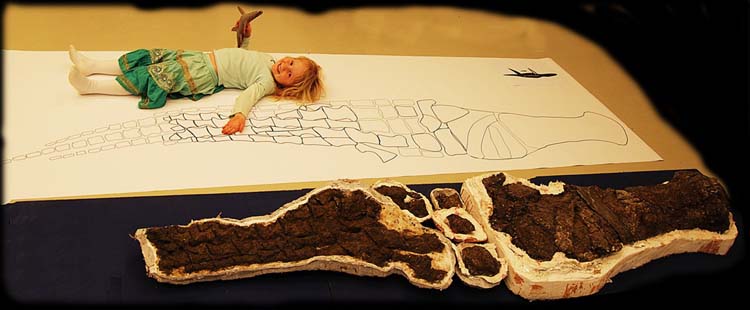
Meyerasaurus model in the SMNS.

This article might be considered a bit of a cheat, as it’s mostly lifted from a section of my recent paper describing the new genus Meyerasaurus, formerly ‘Thaumatosaurus’/Rhomaleosaurus victor (Smith and Vincent 2010). However, I think the topic is interesting and might be appreciated by a wider audience. Especially those who think, as I do, that the name ‘Thaumatosaurus’ is...

Continue ReadingWhatever happened to ‘Thaumatosaurus’ – the wonder reptile?

The name game: Plesiosaur-ia, -oidea, -idae, or -us?

Read more about the article The name game: Plesiosaur-ia, -oidea, -idae, or -us?
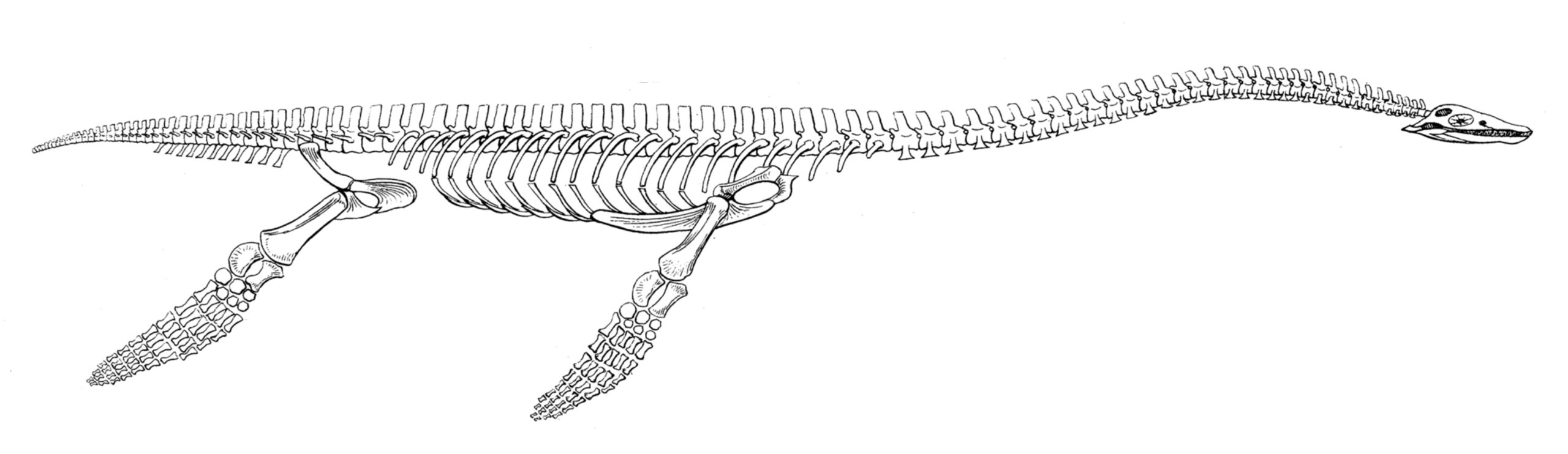
Reconstruction of Plesiosaurus dolichodeirus in lateral view. From Conybeare (1824).

Proper taxonomic names, with formal suffixes, can be confusing at the best of times. But when they include identical prefixes their meaning can be further complicated. For example, to what taxonomic group does the colloquial term ‘plesiosaur’ refer: Plesiosauria, Plesiosauroidea, Plesiosauridae, or Plesiosaurus? With all these similar sounding names it is not surprising that laypersons...

Continue ReadingThe name game: Plesiosaur-ia, -oidea, -idae, or -us?

Monstertalk Podcast – The Plesiosaur Hypothesis

Monstertalk is a new sceptical podcast focussing on all things cryptozoological. The most recent episode (episode 004) delves into the idea that plesiosaurs may still be alive today, lurking in lochs and lakes around the world – the so called Plesiosaur Hypothesis.  I was interviewed as a guest on this episode and took part in a long discussion about...

Continue ReadingMonstertalk Podcast – The Plesiosaur Hypothesis

Sea Dragons of Avalon – Palaeontological Association Review Seminar

Well, my flight, hotel and annual leave (!) are booked and I’m looking forward to attending the upcoming Palaeontological Association Review Seminar: Sea Dragons of Avalon, taking place next week (Friday 31st July) in Street, Somerset, UK. Although I posted details on my website months ago  and despite my best intentions, I never got around to plugging it here....

Continue ReadingSea Dragons of Avalon – Palaeontological Association Review Seminar

Trinity College Attenborosaurus to go on exhibit

There are several casts of fossil marine reptiles in the collection of the Geological Museum of Trinity College, Dublin. The majority of these are currently on display but the largest specimen, a cast of the holotype of Attenborosaurus conybeari, has spent the last half a century in the basement store of the Museum Building. It was originally exhibited but...

Continue ReadingTrinity College Attenborosaurus to go on exhibit

Recent plesiosaur papers – a round up

So far, 2008 has seen a healthy number of new papers on plesiosaurs and a few new taxa too. Way back in February, Druckenmiller and Russell (2008a) introduced Nichollsia borealis, a plesiosaur of uncertain affinity, based on a beautifully preserved specimen from Alberta, Canada. More recently, Druckenmiller and Russell (2008b) published a large scale cladistic analysis of plesiosauria to try...

Continue ReadingRecent plesiosaur papers – a round up

Plesiosaurs from Svalbard – February 2008 update

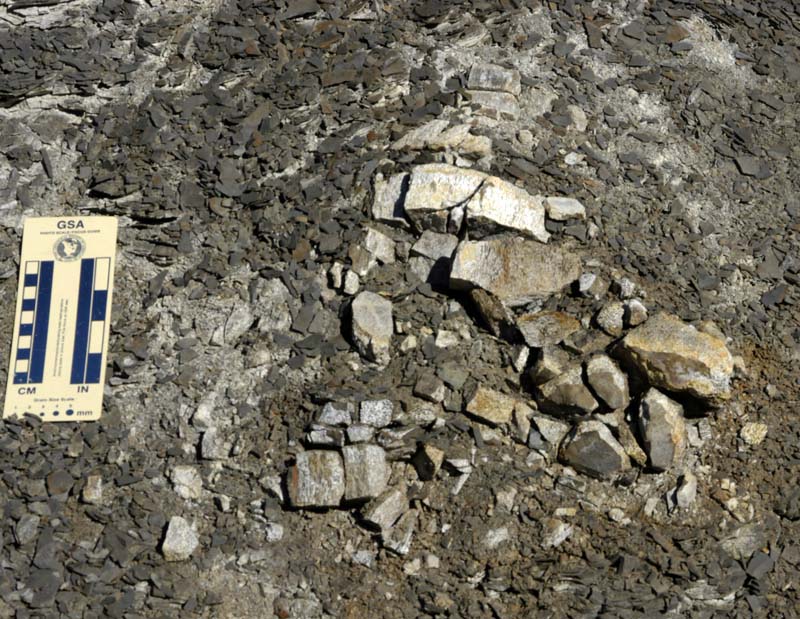
A press release on the finds from the 2007 season has been released by the University of Oslo. You can find more information, and images from the expeditions on the University web site. The news is, of course, dominated by the large pliosaur, which is reliably estimated as 15 meters long. The paddle alone is 3 meters long. This makes it much the same size as...

Continue ReadingPlesiosaurs from Svalbard – February 2008 update

Two new plesiosaur species and new data on Brachauchenius

The most recent Journal of Vertebrate Palaeontology (Volume 27(1)) contains three new plesiosaur papers. A short communication by Ben Kear (Kear 2007, p. 241-246) clarifies the taxonomy of what has become a very confusing taxon – Eromangasaurus (Kear 2005). The confusion originated because two separate researchers (Ben Kear and Sven Sachs) simultaneously published separate descriptions and names for the...

Continue ReadingTwo new plesiosaur species and new data on Brachauchenius

The Lincoln Plesiosaur

A specimen found in Lincoln over a hundred years ago has recently been prepared and mounted for exhibition. It is now one of the most popular exhibits in the new Lincoln Museum. Childhood Memories This is a rather personal account of a specimen with which I have a particularly close connection. It starts with a vague childhood memory of going...

Continue ReadingThe Lincoln Plesiosaur

Plesiosaurs from Svalbard

There has been a spate of reports in the media recently about an important find of marine reptiles from the Svalbard, in the Norwegian arctic. The largest island in this archipelago is Spitzbergen. Fragmentary remains from this area have been reported for almost a century (Wiman 1914). However, these have been only of isolated elements. The number and fine preservation...

Continue ReadingPlesiosaurs from Svalbard

Dublin plesiosaur on the move

South Dublin City, 6.30am, Thursday 10th of August 2006. I clamber into the passenger seat of a 4×4 – destination London. My travelling companions are Colin in the driver’s seat, and two suspiciously large wooden crates. A monster lurks inside: the skull of the Dublin plesiosaur. The plan is to transport the fossil plesiosaur known as Rhomaleosaurus cramptoni to the...

Continue ReadingDublin plesiosaur on the move

How big was Liopleurodon ferox?

Read more about the article How big was Liopleurodon ferox?
Mounted skeleton of Liopleurodon ferox in the Tubingen Museum, Germany (from Martill and Naish, 2000).

There is an unofficial ‘Premier League’ in vertebrate palaeontology which consits of the animals which attract a lot of public attention. Its members include T. rex, Seismosaurus, Argentinosaurus, Giganotosaurus and so on – the biggest and fiercest extinct animals. When the BBC broadcast ‘Walking with Dinosaurs’ they moved Liopleurodon ferox firmly into the Premier League. Here was an animal that...

Continue ReadingHow big was Liopleurodon ferox?

Plesiosaurus at the James Mitchel Museum, Galway, Ireland

I finally found the time to visit the James Mitchel Museum at the University of Galway, Ireland. The main plesiosaur in the museum is on display, mounted high on the wall at the far end of the museum (figured below). The fossil is from Lyme Regis and is identified as Plesiosaurus dolichodeirus. Most unstudied plesiosaurs such as this are labelled...

Continue ReadingPlesiosaurus at the James Mitchel Museum, Galway, Ireland

The Speeton Plesiosaur

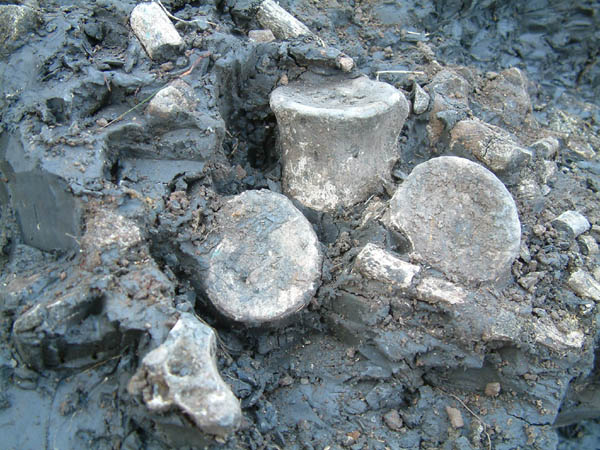
The substantially complete skeleton of a plesiosaur was found by an amateur collector, Nigel Armstrong, in 2001. He recognised the importance of the find and alerted the local museums who organised a scientific excavation led by Will Watts, Dinosaur Coast Officer and Phil Manning of the Yorkshire Museum. The specimen was found in this tangled jumble of clay on the...

Continue ReadingThe Speeton Plesiosaur