
Maresaurus
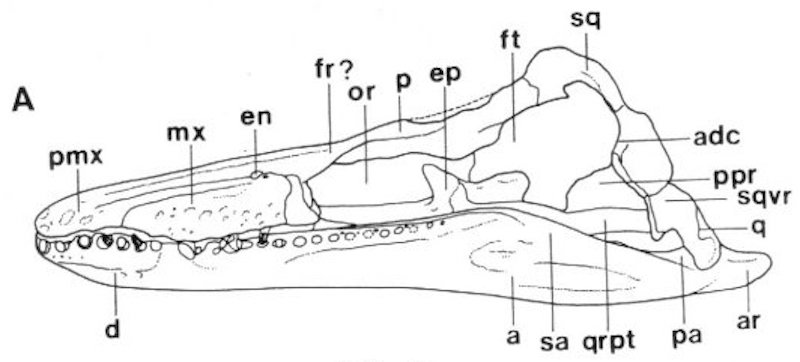
M. coccai (Gasparini 1997) type material: MOZ 4386 V articulated skull and mandible, atlas-axis and first cervical vertebrae. From the upper part of the Los Molles Formation, Cuyo Group, Emileia giebeli and Emileia multiformis subzone. Skull of Maresaurus in lateral, dorsal and ventral view. From Gasparini (1997)....
Tricleidus

Tricleidus is a cryptoclidid from the Oxford Clay Formation of the UK. The holotype specimen (NHMUK R 3539) consists of disarticulated elements including most of skull and half the postcranium, from the Kosmoceras jasoni – Peltoceras athleta zones from the lowest deposits of the Oxford Clay Formation. The type and only species of Tricleidus is T. seeleyi. Persson (1962) erected...
Thalassiodracon

The species Plesiosaurus hawkinsii was introduced in 1838 for a small plesiosaurian from Street, Somerset. The new genus name Thalassiodracon was erected decades later following an examination of a referred skull in Cambridge (CAMSM J.46986). Thalassiodracon is from the Rhaetian-Hettangian boundary, so it is latest Triassic or earliest Jurassic in age. Thalassiodracon means ‘Sea Dragon’, which “alludes to the colloquial...
Simolestes

Simolestes has variously been allied with the Pliosauridae and the Rhomaleosauridae. The most noticeable difference between Simolestes and the other pliosaur taxa from the Oxford Clay (Liopleurodon, Peloneustes, Pachycostasaurus), is its much shorter snout and mandibular symphysis, a character is shares with the Rhomaleosauridae. However, this is probably a convergent character. Older descriptions of this taxon note the spatulate symphysis...
Rhomaleosaurus
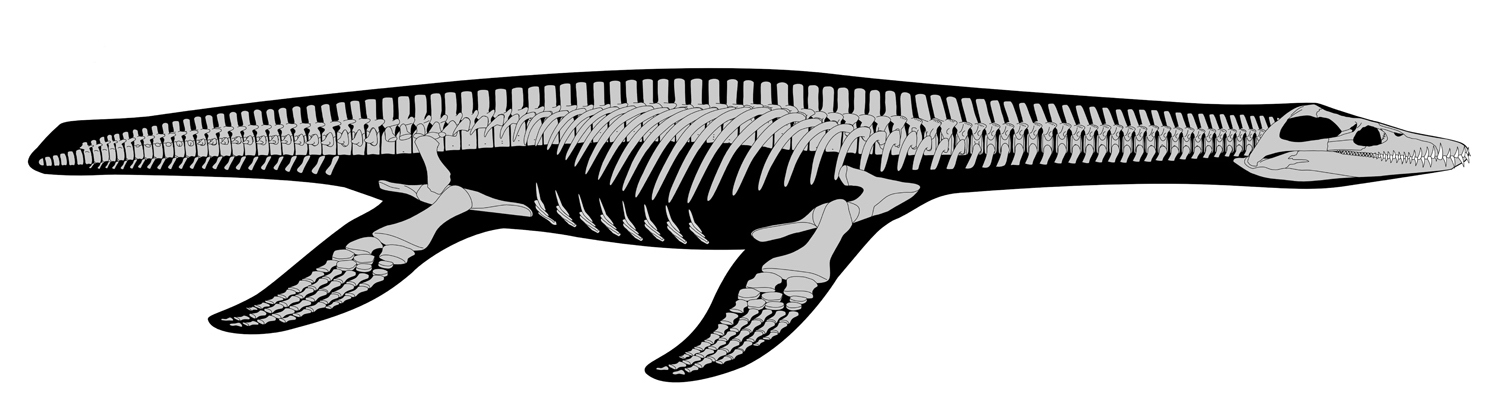
Rhomaleosaurus is the largest known Lower Jurassic pliosaur and was the top predator in early Jurassic marine ecosystems. It has a reinforced skull to help resist torsion and a ferocious set of teeth, a combination of characters perfect for snatching and killing cephalopods, fish, and other marine reptiles. Historically, the genus Rhomaleosaurus has been interchangeable with now invalid ‘Thaumatosaurus’. See...
Plesiosaurus
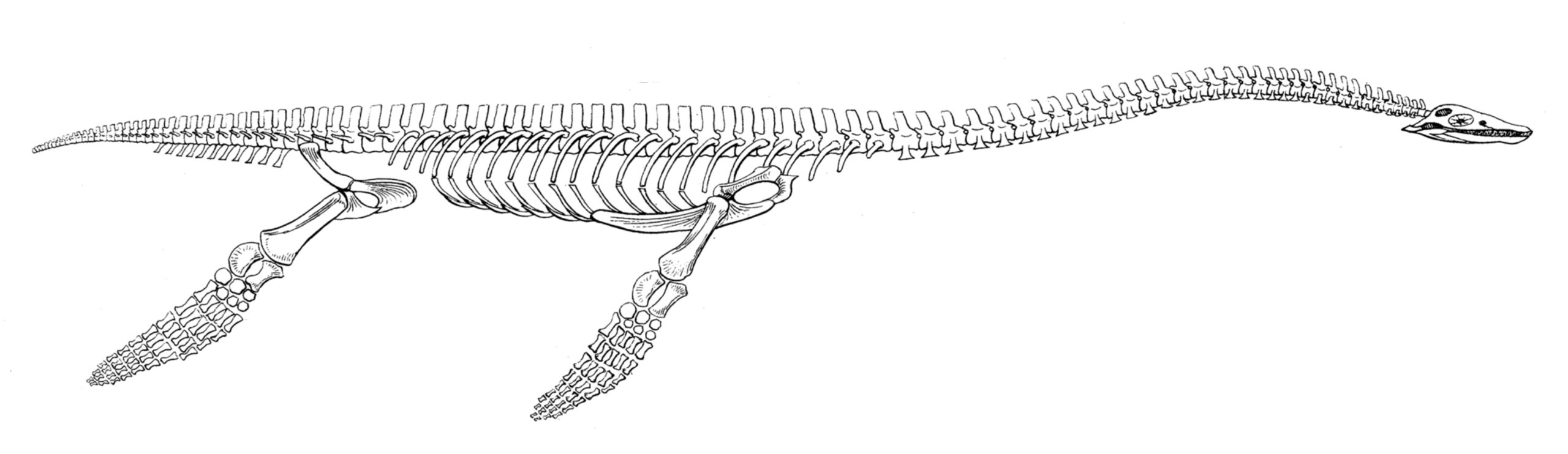
Plesiosaurus was the first plesiosaur discovered and named (De la Beche and Conybeare 1821). The first 1821 description was based on partial remains so the anatomy of Plesiosaurus – particularly the identity of the isolated bones and how they articulated together – involved some guesswork. An attempted reconstruction of the forelimb of Plesiosaurus by De la Beche and Conybeare (1821)....
Peloneustes
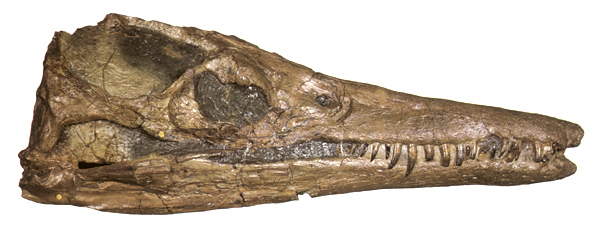
Peloneustes is one of several pliosaur genera from the Oxford Clay Formation in the UK. It is one of the better known pliosaurs from this horizon, represented by 12 nearly complete skulls and several skeletons. It is also the most abundant pliosaur from the Peterborough Member of the Oxford Clay Formation (Ketchum and Benson 2011b). Peloneustes is characterised by an...
Pachycostasaurus
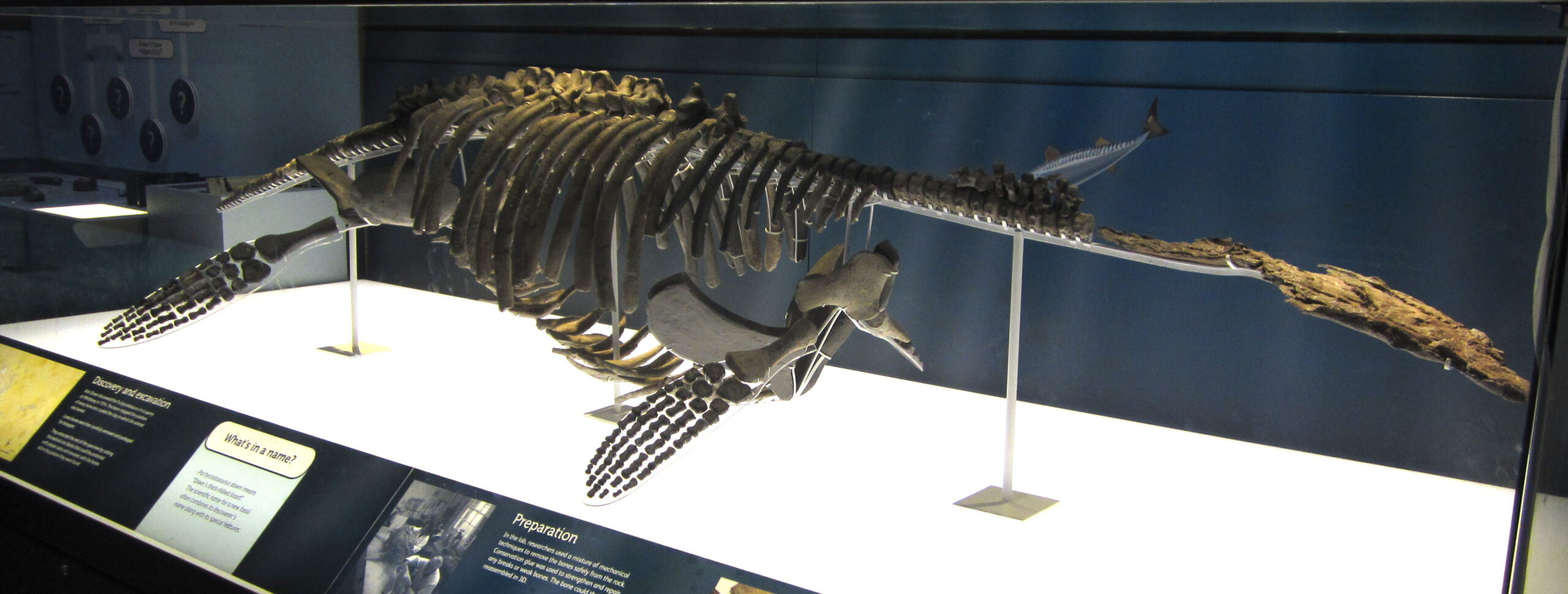
Pachycostasaurus is approximately 3.1 meters long. Its rib cage and vertebrae exhibit thickened bone (Cruickshank et al. 1996) a condition termed pachyostosis. This heavy ossification is unusual in plesiosaurs (another exception may include Kronosaurus), although it is common in basal sauropterygians, especially pachypleurosaurs. Pachycostasaurus probably used the extra ballast provided by its heavy bones to traverse the sea bed searching...
Occitanosaurus

‘Occitanosaurus’ was described by Sciau et al. (1990) and Bardet et al. (1999). The genus name was erected for ‘Plesiosaurus’ tournemirensis by Bardet et al. (1999). The taxon was originally regarded as an early elasmosaurid but is now considered a member of the Microcleididae. ‘Occitanosaurus’ was approximately 3.9 meters long. The type material (MMM J. T. 86-100), in the Musée...