Colymbosaurus

Read more about the article Colymbosaurus
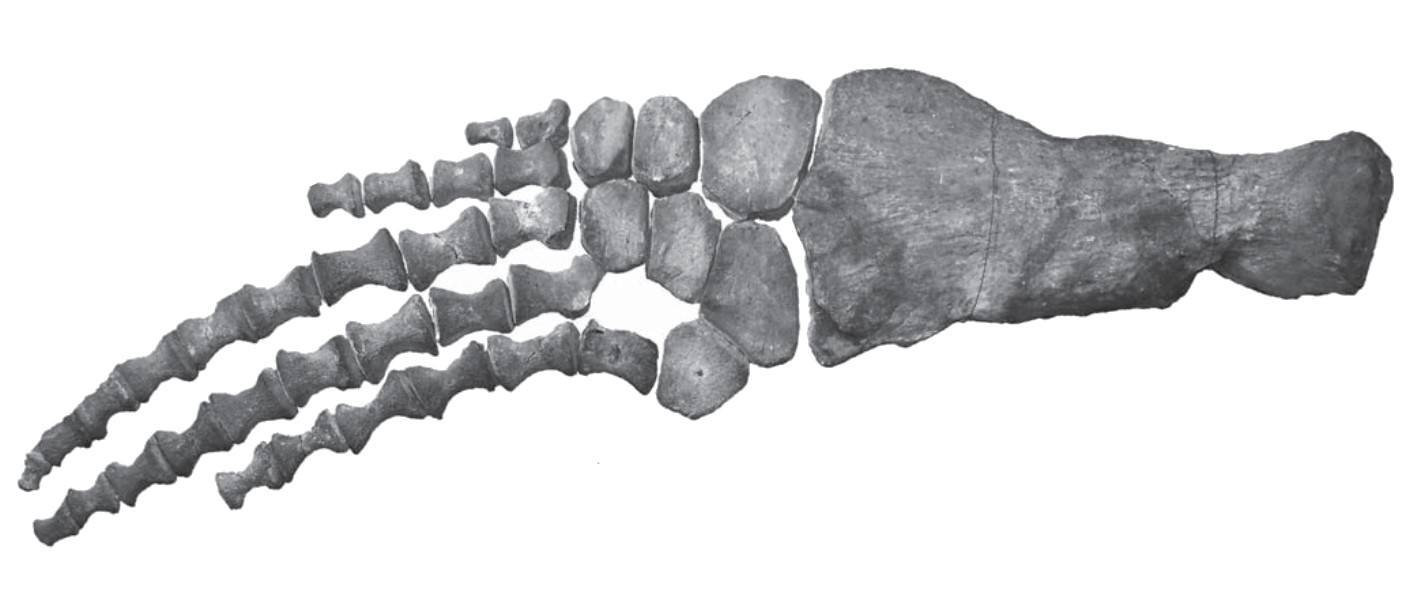
Left hindlimb of Colymbosaurus megadeirus (CAMSM J.29596etc), modified from Benson and Bowdler (2014)

Colymbosaurus is a colymbosaurine (derived cryptoclidid) from the Late Jurassic of the UK and Svalbard, Norway. Two valid species are known, C. megadeirus from the UK, and C. svalbardensis from Svalbard, Norway. The genus is known from the Kimmeridgian, Tithonian, and possibly early Berriasian (Late Jurassic–possibly Early Cretaceous). Benson and Bowdler (2014) revised the genus Colymbosaurus and summarised its complicated...
Continue ReadingColymbosaurus

Muraenosaurus

Read more about the article Muraenosaurus
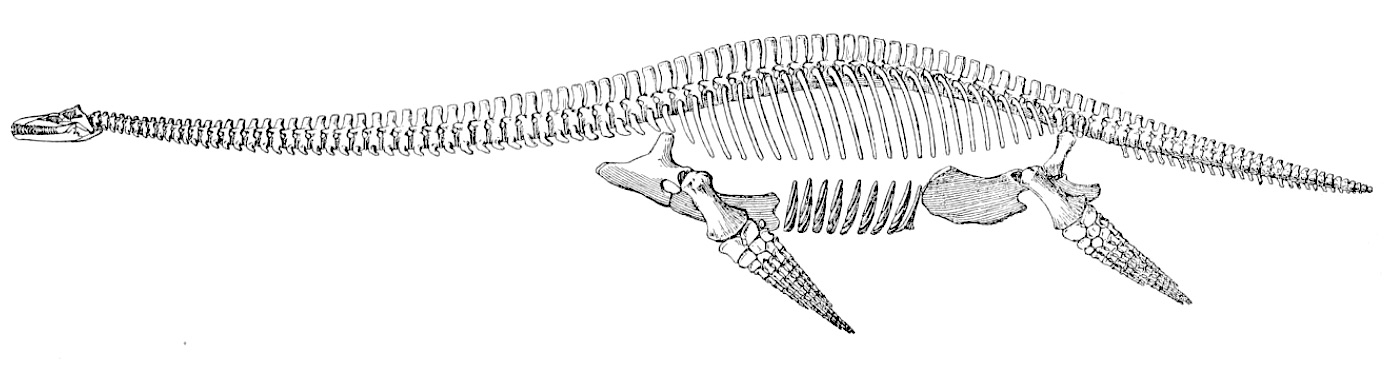
Restoration of the skeleton of Muraenosaurus in lateral view. From Andrews 1910.

Brown (1981) diagnosed Muraenosaurus as follows: “Plesiosauroids in which the teeth are ornamented with many longitudinal ridges; the dentary bears 19 to 22 teeth on each ramus; the premaxillae bear 5 teeth each, of which the 1st and 5th are small, and the 2nd to 4th are large; the most anterior maxilliary tooth (6th upper tooth) is small and the...

Continue ReadingMuraenosaurus

Marmornectes

Marmornectes is a pliosaur with a long and narrow snout from the Oxford Clay. It was described and named by Ketchum and Benson (2011a). The type and only specimen (BEDFM 1999.201) comprises a substantially complete skeleton including a partial skull. Marmornectes is similar to Peloneustes but possesses some basal characters that were lost in Peloneustes and other more derived pliosaurids...

Continue ReadingMarmornectes

Lusonectes

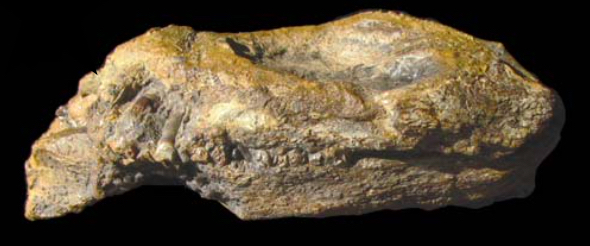
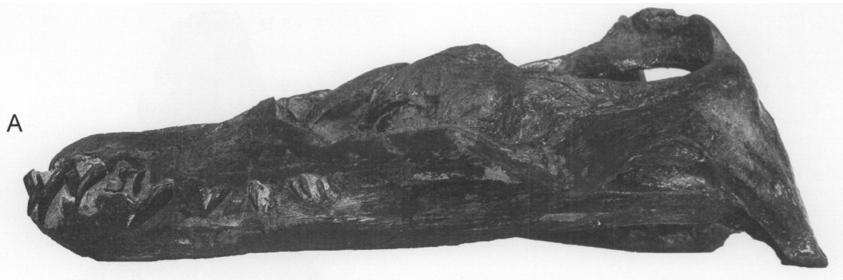
Lusonectes is a poorly known microcleidid the Toarcian (Lower Jurassic) of Portugal. It is known from a single holotype specimen (MG33), a partial skull in the Museu Geológico, Lisbon, Portugal. It was described and named by Smith et al. (2012) as the first diagnostic plesiosaur species from Portugal, and the westernmost occurrence of a plesiosaur in Europe. The genus name...

Continue ReadingLusonectes

Bishanopliosaurus

Read more about the article Bishanopliosaurus
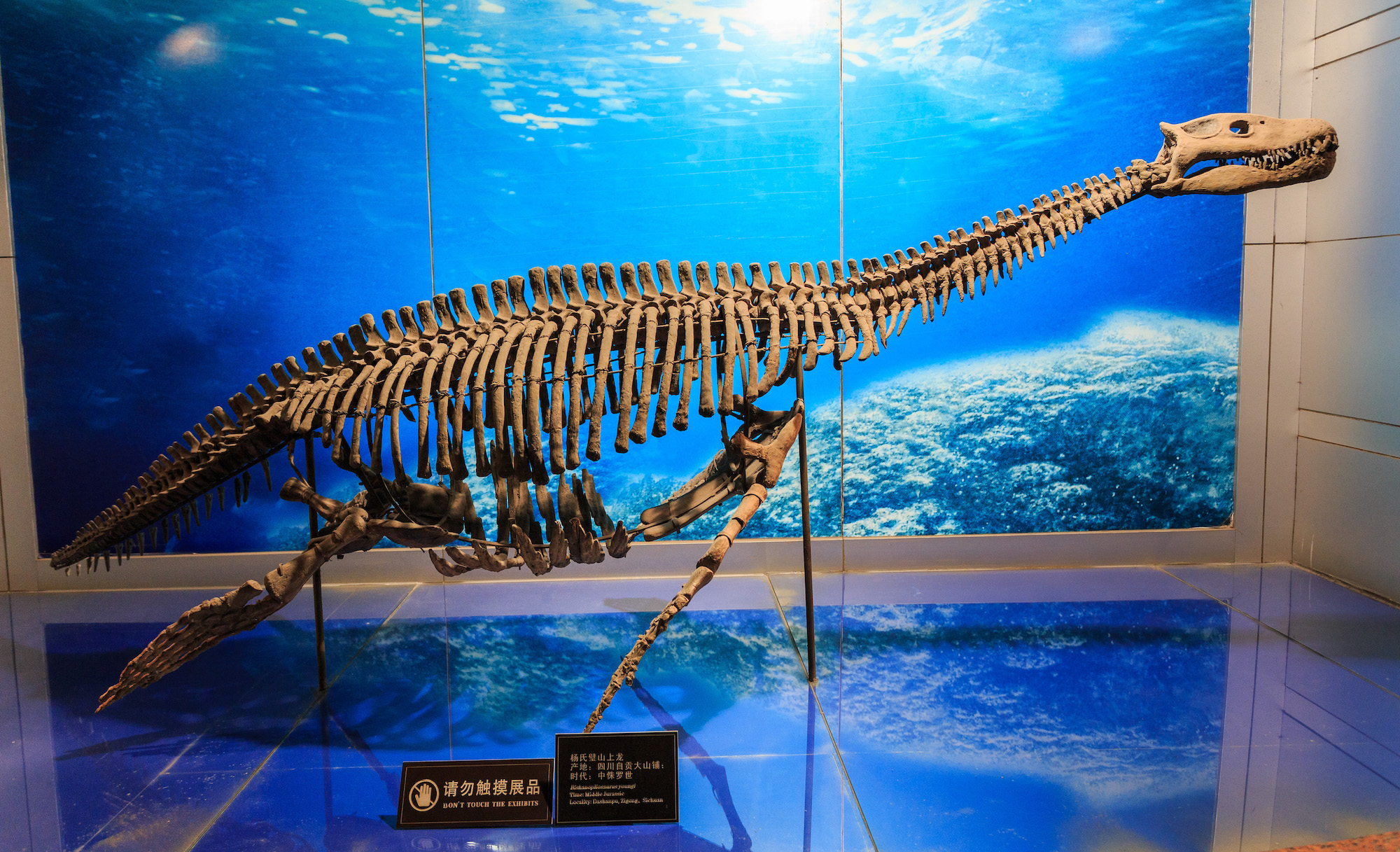
Photo of Bishanopliosaurus on display in the Zigong Dinosaur Museum. Photo by Zhangzhugang. Used here under a CC BY 4.0 licence. The label says it is from "Dashanpu, Zigong", suggesting it isn't the type specimen (from Bishan County, Chongqing), but this could be a mistake.

Bishanopliosaurus is the most complete plesiosaur known from the Jurassic of Asia (Sato et al. 2003). The holotype specimen of the type species, B. youngi, is a partial postcranial skeleton of a juvenile individual from the Dongyuemiao Member of the Ziliujing Formation (Lower or Mid Jurassic) of Bishan County, Chongqing, China. It was first described and named by Dong (1980),...

Continue ReadingBishanopliosaurus

Microcleidus

Read more about the article Microcleidus
Skeleton (lectotype specimen NHMUK PV OR 36184) of the Microcleidus homalospondylus. Lithograph from Owen (1865).

Microcleidus is a medium (4.27 m) to large (5.03 m) plesiosauroid with a small head and a long neck containing 38–39 cervical vertebrae. Watson (1909) erected Microcleidus to accommodate fossil material belonging to ‘P.’ homalospondylus and ‘P.’ macropterus (Watson 1911). Both species were considered valid by Seeley (1865), Blake (1876) and Watson (1911) on the basis of slight differences in the limbs,...

Continue ReadingMicrocleidus

Hauffiosaurus

Read more about the article Hauffiosaurus
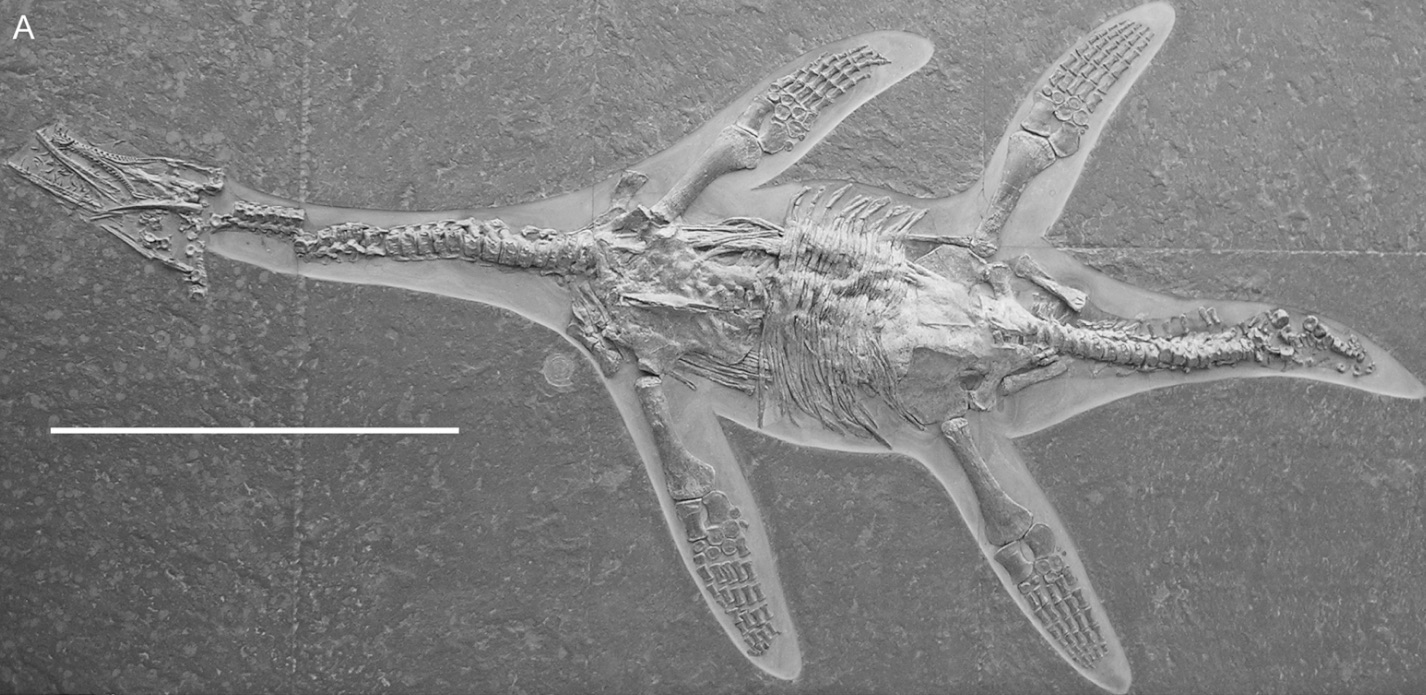
Holotype (Hauff Uncatalogued) of Hauffiosaurus zanoni as preserved in ventral view. Scale bar = 1 m. From Vincent (2011)

Hauffiosaurus is a basal pliosaurid known from the Lower Jurassic (Toarcian) of the UK and Germany. Hauffiosaurus is a medium to large sized plesiosaur (H. zanoni = 3.4 m, H. tomistomimus, 4.23 m, H. longirostris = 4.83 m) (Smith and Lomax 2019), with a relatively long neck for a pliosaur, and an elongate narrow snout. The genus Hauffiosaurus was named...

Continue ReadingHauffiosaurus

Anningasaura

Anningasaura is a basal plesiosaur from the Lower Jurassic of Lyme Regis, UK, known from a single three-dimensionally preserved skull. The specimen, NHMUK OR49202, was originally described and figured by Andrews (1896), who referred it to ‘Plesiosaurusmacrocephalus. It was redescribed and named as the holotype of Anningasaura lymense by Vincent and Benson (2012). Cast of the holotype skull of...

Continue ReadingAnningasaura

Thaumatodracon

Read more about the article Thaumatodracon
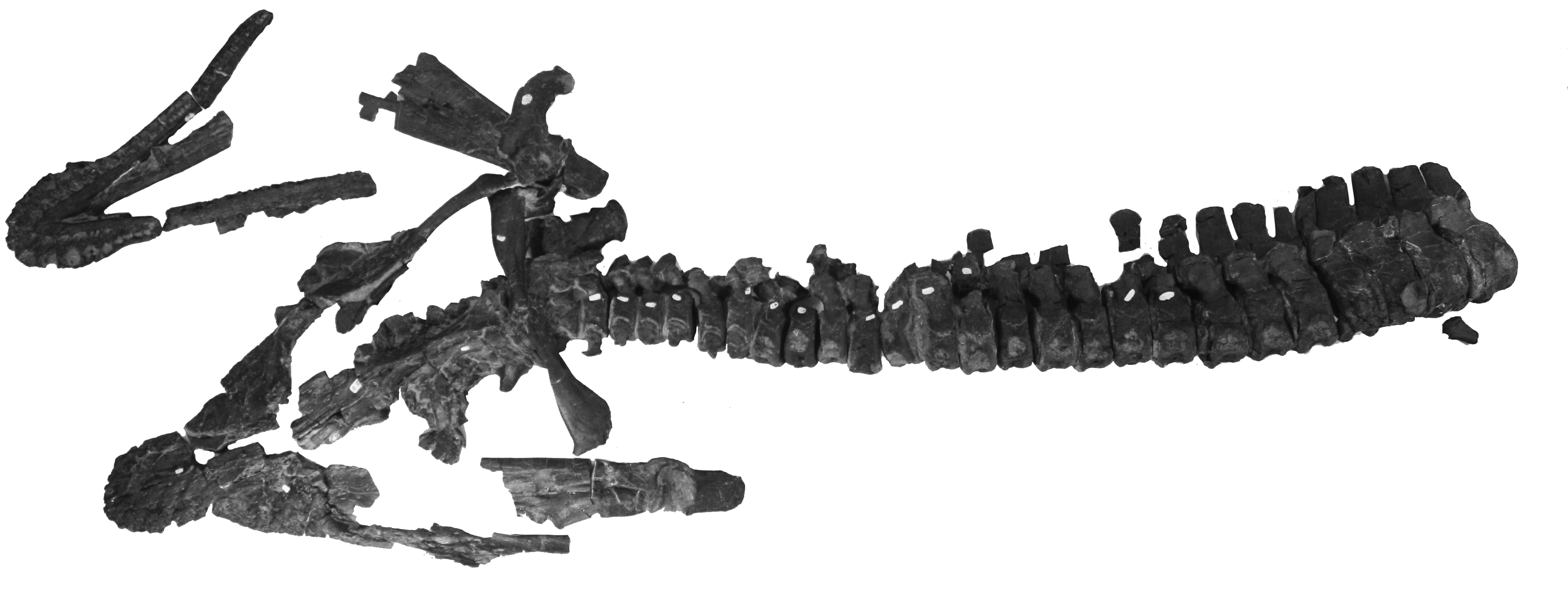
The holotype specimen, laid out in dorsal view.

Thaumatodracon is a relatively large rhomaleosaurid from the Lower Jurassic (Sinemurian) of Lyme Bay – the coast between Lyme Regis and Charmouth – UK. The holotype specimen (NLMH 106.058) is an almost complete skull and cervical (neck) series. It has a 60 cm long skull, and based on comparison with other rhomaleosaurids I estimate its total body length to be 6.5...

Continue ReadingThaumatodracon

Avalonnectes

Read more about the article Avalonnectes
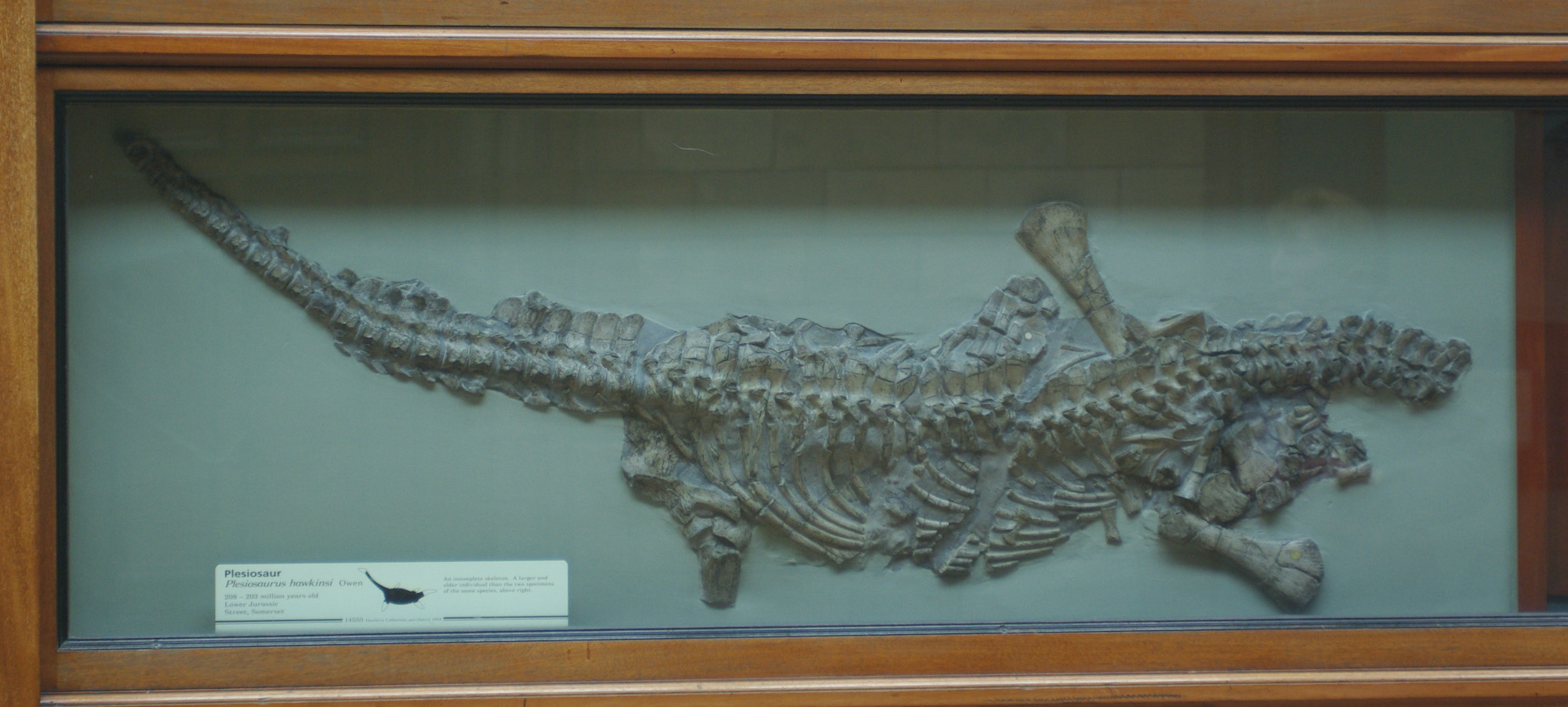
The holotype specimen of Avalonnectes (NHMUK OR 14550), on display in the Natural History Museum, London. Photo by Chris Crump.

Avalonnectes is a small-bodied basal rhomaleosaurid. Avalonnectes was named by Benson, Evans and Druckenmiller (2012) for a partial skeleton including the rear part of the skull from the lowermost Jurassic of Street, Somerset, UK. The specimen (NHMUK PV OR 14550) was previously referred to Thalassiodracon hawkinsii and is one of many historical plesiosaur skeletons preserved on slabs on display in...

Continue ReadingAvalonnectes

Stratesaurus

Read more about the article Stratesaurus
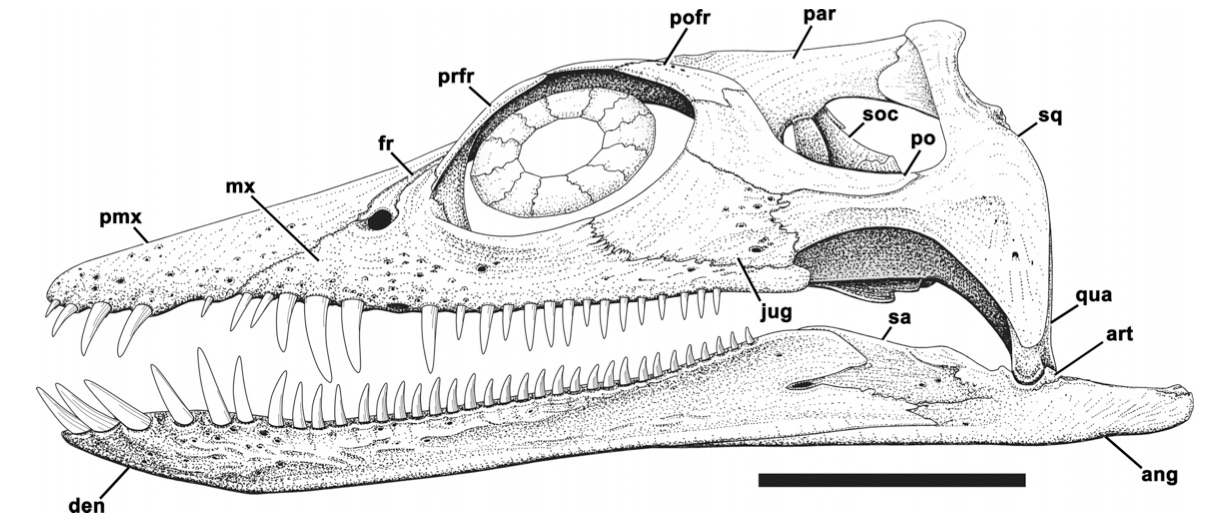
Stratesaurus skull reconstruction in lateral view. From Benson, Evans and Taylor (2015).

Stratesaurus is a very small-bodied basal plesiosaur known from the lowermost Jurassic (Blue Lias Formation) of Street, Somerset . Stratesaurus is represented by three specimens. The holotype specimen (OUMNH J.10337) was named and briefly described by Benson, Evans and Druckenmiller (2012), and later described in detail along with two referred specimens by Benson, Evans and Taylor (2015). The genus contains...

Continue ReadingStratesaurus