
Dolichorhynchops
Williston (1903) originally diagnosed Dolichorhynchops as follows: “Head elongate, the facial region much attenuated; teeth nearly uniform in size, small; prefrontals and postfrontal bones not joined; parietals extending into a high crest; supraocciptial bones separated; internal nares small, included between the vomer and the palatine only; palatines broadly separated throughout; a large vacuity between the pterygoids anteriorly; quadrate process of...
Opallionectes

Opallionectes is a large, around 5 m long, derived cryptoclidid plesiosauroid from the Early Cretaceous of South Australia. It is known from a partial opalised skeleton, which is mounted for display in the South Australian Museum. The holotype specimen lacks a skull. It is diagnosed by the following unique combination of characters: small needle-like teeth with a distinct ovoid cross-section...
Umoonasaurus

Umoonasaurus is a small (~2.5 m long) leptocleidid that lived during the Early Cretaceous in Southern Australia. The holotype specimen (AM F99374), a spectacular opalised skeleton including the skull, is nicknamed ‘Eric’. It is the most complete opalised plesiosaur skeleton (and fossil vertebrate) known. It was originally described briefly as Leptocleidus sp. by Kear (2006) who figured the skull and...
Polycotylus
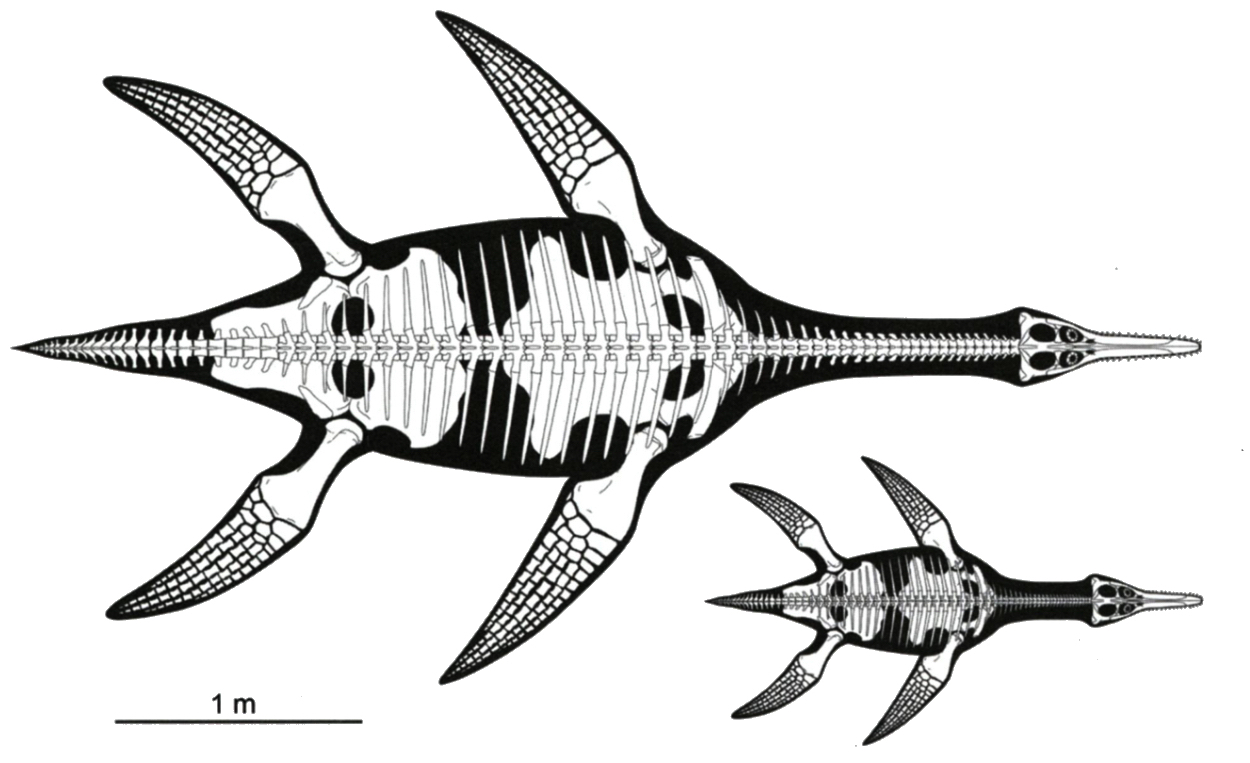
Polycotylus latipinnis was the first short-necked plesiosaur to be recognised in North America (Carpenter 1996), and the first polycotylid to be described and named (Cope 1869). It was established in the same volume that coined the name Elasmosaurus and contained the infamous ‘head on the wrong end’ reconstruction (Cope 1869). However, despite their equally long history, Polycotylus never achieved the...
Monquirasaurus

Monquirasaurus is a giant pliosaurid from Colombia, South America. Originally named by Hampe (1992) as a species of Kronosaurus (K. boyacensis), the skeleton was later allocated to the new genus Monquirasaurus by Noè and Gómez-Pérez (2021). The genus name derives from ‘Monquira’, the administrative division in which the holotype was discovered. Monquirasaurus skeleton. From Hampe (1992). Monquirasaurus reconstruction. From Hampe (1992)...
Nakonanectes
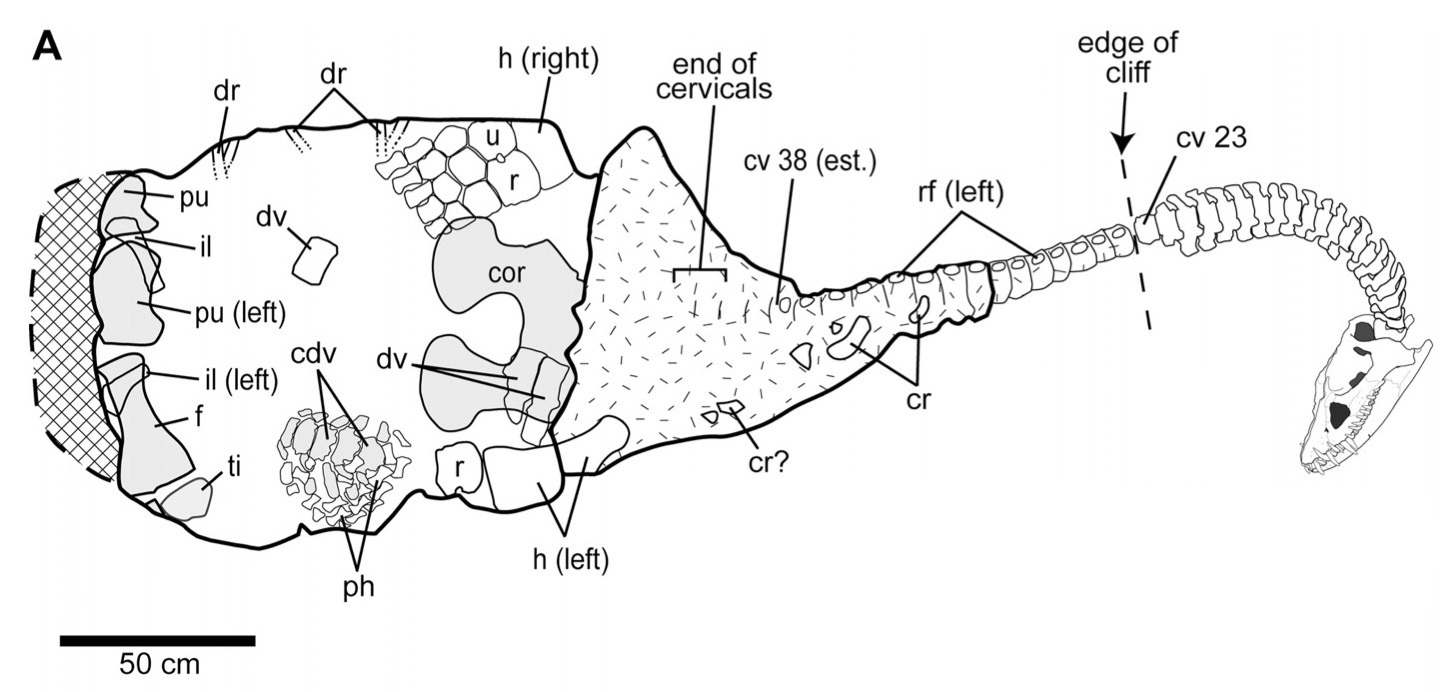
Nakonanectes is a small elasmosaurid plesiosaur from the Bearpaw Shale of Montana, USA. It is known from a single moderately complete specimen including a particularly fine skull. It has a relatively short neck for an elasmosaur consisting of ‘only’ 39-42 neck vertebrae. However, 16–19 of the neck vertebrae were lost in a “heavy spring runoff that occurred between the time...
Vectocleidus
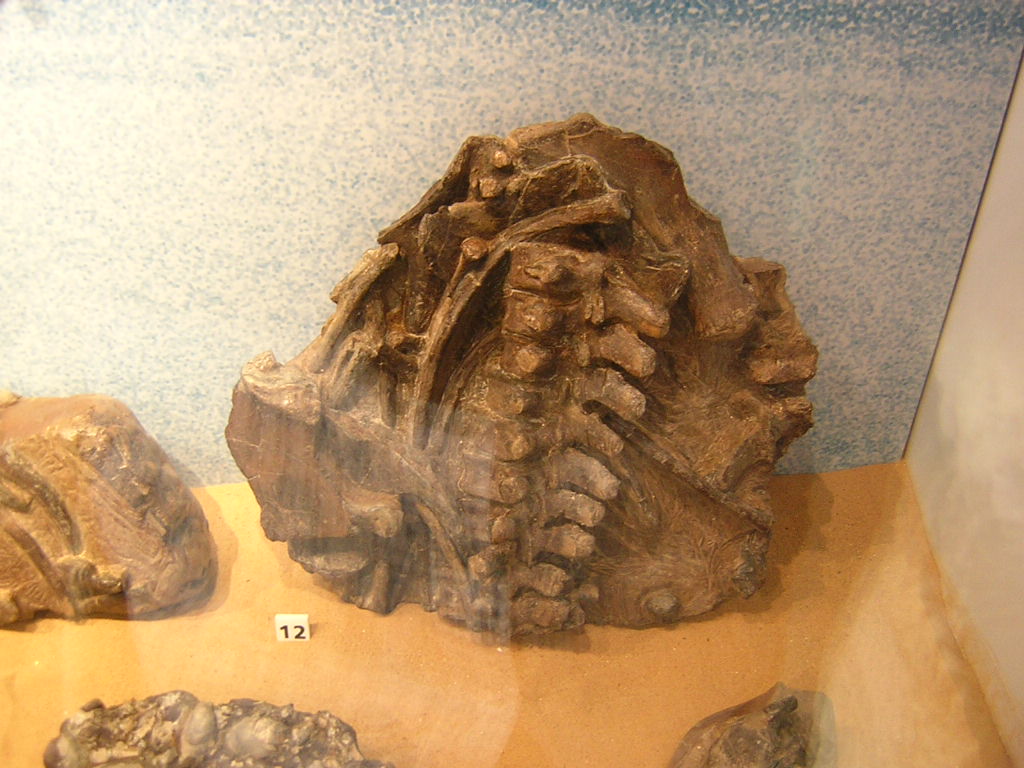
The name Vectocleidus was erected by Benson et al. (2012b) for a leptocleidid from the Early Cretaceous of the Isle of Wight, UK. The type specimen was previously referred to Leptocleidus sp. Vectocleidus can be confidently identified as a leptocleidid but its position within the clade is unstable (Benson et al. (2012b). Vectocleidus material on display in the Dinosaur Isle...
Abyssosaurus
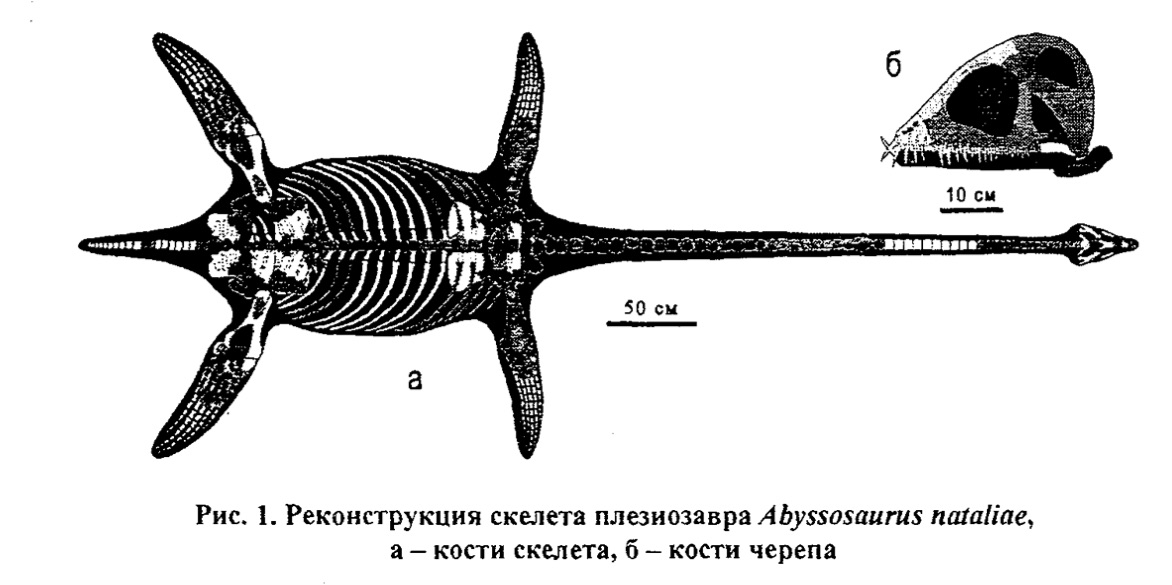
Abyssosaurus is a derived cryptoclidid plesiosaur from the Upper Hauterivian (Lower Cretaceous) of the Menya River, Chuvashia, Russia. It was named and described in 2011 by Alexander Yu Berezin (Berezin 2011). A partial skull associated with the holotype specimen (MChEIO no. PM/1 MChEIO no. PM.1) was not described in the original 2011 paper but was discovered later in a compact...
Styxosaurus
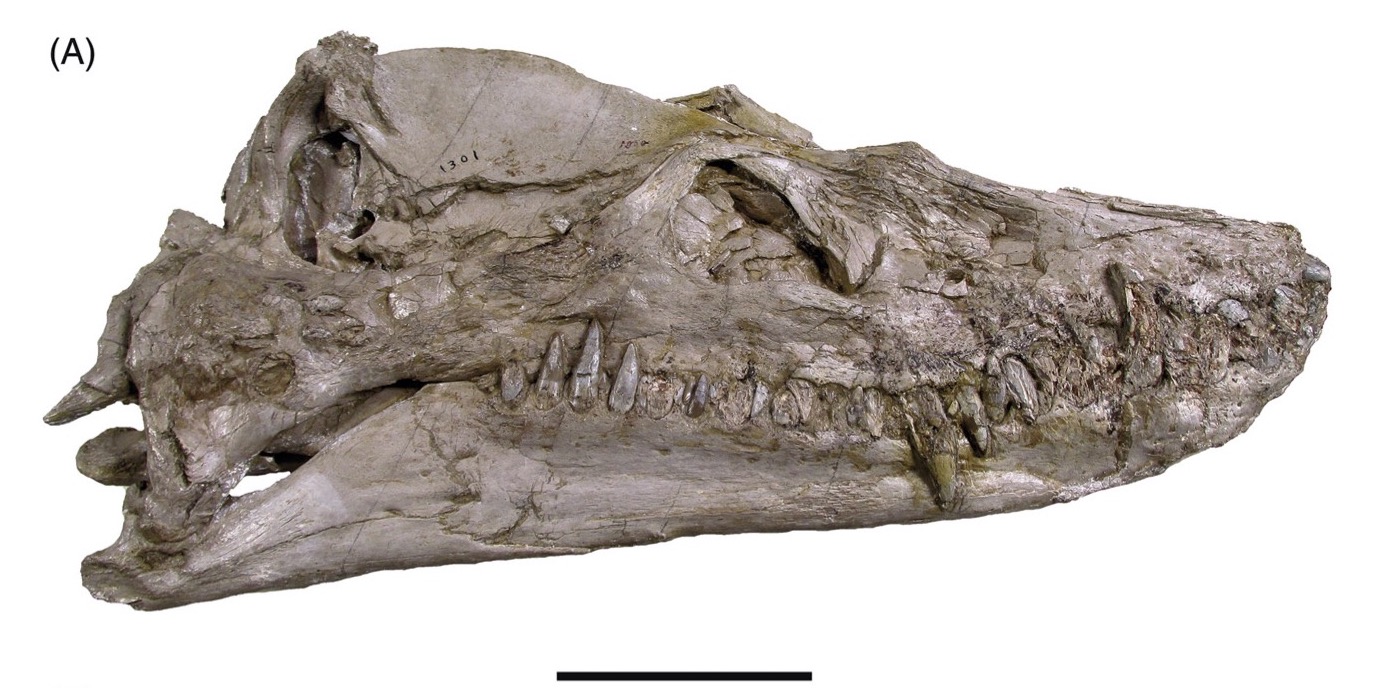
The holotype specimen (KUVP 1301) of Styxosaurus is an articulated skull and anterior portion of the neck. It was found in the Niobrara Chalk near Hell Creek, Logan County, Western Kansas in 1890. It was described later that year as a new species Cimoliosaurus snowii by Williston (1890a) (and in more detail soon after by Williston 1890b), who subsequently...