
Research suggests long-necked plesiosaurs fed on seabed

The long neck of the plesiosaur is a mysterious adaptation for which many hypotheses have been proposed. The most recent suggestion comes from Dr Leslie Noè of the University of Cambridge . After examining the neck vertebrae of the long-necked plesiosaur Muraenosaurus, whose name translates as 'Moray eel lizard', Dr Noè concluded…
Continue ReadingResearch suggests long-necked plesiosaurs fed on seabed

Plesiosaurs from Svalbard

There has been a spate of reports in the media recently about an important find of marine reptiles from the Svalbard, in the Norwegian arctic. The largest island in this archipelago is Spitzbergen. Fragmentary remains from this area have been reported for almost a century (Wiman 1914). However, these have been only…

Continue ReadingPlesiosaurs from Svalbard

New ‘monster’ pliosaur amongst arctic plesiosaur fossil bounty

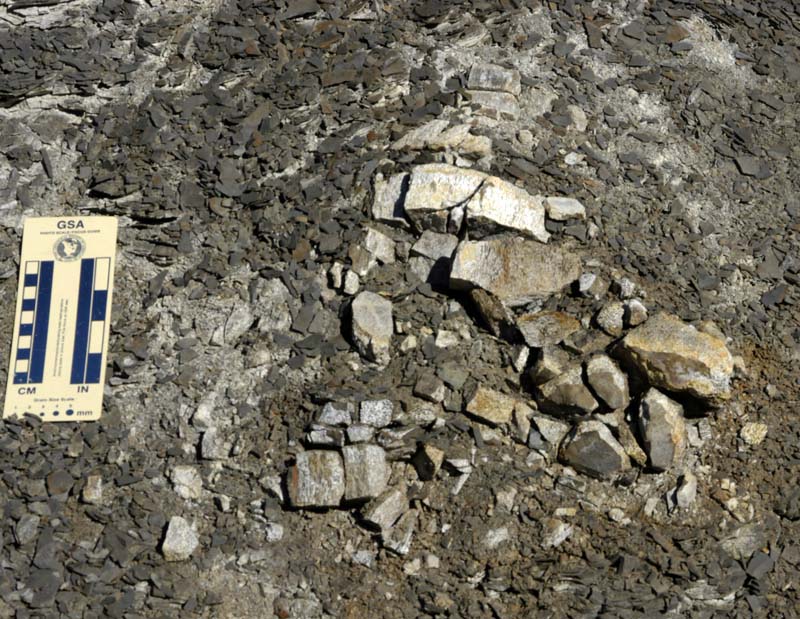
A total of 22 plesiosaurs have been discovered during an expedition to the Arctic island of Spitzbergen by the University of Oslo, Natural History Museum. The team led by Dr. Jørn Hurum and Hans Arne Nakrem also discovered ichthyosaurs - but the majority of the fossils await excavation when the team return…

Continue ReadingNew ‘monster’ pliosaur amongst arctic plesiosaur fossil bounty

The ‘Plesiosaur Directory’ recommended in Science journal’s Netwatch

I am honoured and not a little surprised to see this very site appear in leading science journal 'Science'. Every issue of the journal contains a section called 'Netwatch', featuring a crop of recommended online resources - the "best of the Web in Science". To see what 'Science' had to say about…

Continue ReadingThe ‘Plesiosaur Directory’ recommended in Science journal’s Netwatch

Dublin plesiosaur on the move

South Dublin City, 6.30am, Thursday 10th of August 2006. I clamber into the passenger seat of a 4x4 - destination London. My travelling companions are Colin in the driver's seat, and two suspiciously large wooden crates. A monster lurks inside: the skull of the Dublin plesiosaur. The plan is to transport the…

Continue ReadingDublin plesiosaur on the move

Plesiosaur to go on display in Scarborough

A four metre long plesiosaur from Yorkshire known as the 'Speeton Plesiosaur' after the place where it was discovered, is now fully prepared from the rock and ready to be displayed in the Rotunda Museum in Scarborough, once it opens in 2007. The specimen is unnamed but certainly represents a new species…

Continue ReadingPlesiosaur to go on display in Scarborough

How big was Liopleurodon ferox?

Read more about the article How big was Liopleurodon ferox?
Mounted skeleton of Liopleurodon ferox in the Tubingen Museum, Germany (from Martill and Naish, 2000).

There is an unofficial 'Premier League' in vertebrate palaeontology which consits of the animals which attract a lot of public attention. Its members include T. rex, Seismosaurus, Argentinosaurus, Giganotosaurus and so on - the biggest and fiercest extinct animals. When the BBC broadcast 'Walking with Dinosaurs' they moved Liopleurodon ferox firmly into…

Continue ReadingHow big was Liopleurodon ferox?

Plesiosaurus at the James Mitchel Museum, Galway, Ireland

I finally found the time to visit the James Mitchel Museum at the University of Galway, Ireland. The main plesiosaur in the museum is on display, mounted high on the wall at the far end of the museum (figured below). The fossil is from Lyme Regis and is identified as Plesiosaurus dolichodeirus.…

Continue ReadingPlesiosaurus at the James Mitchel Museum, Galway, Ireland