The Smallest Plesiosaur

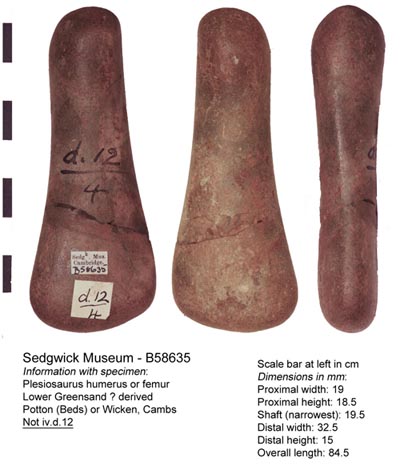
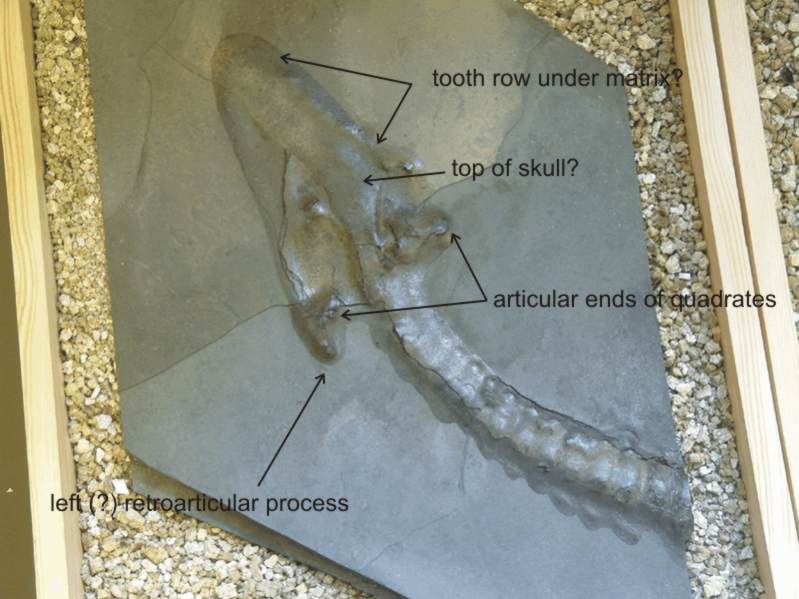
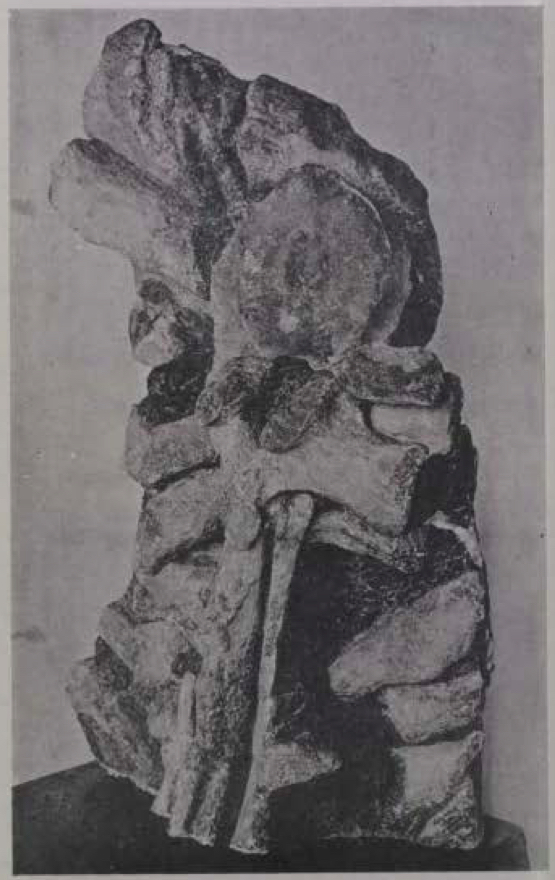
Some museum collections contain a few scraps of plesiosaur materal. Others have large quantities. Whatever the size of the collection, there are almost always odd specimens which are interesting in one way or another and usually encountered whilst engaged in some completely different project. We may make a mental note to come back to them, but usually either forget, or...
Continue ReadingThe Smallest Plesiosaur

Label found in the Oxford University Museum of Natural History

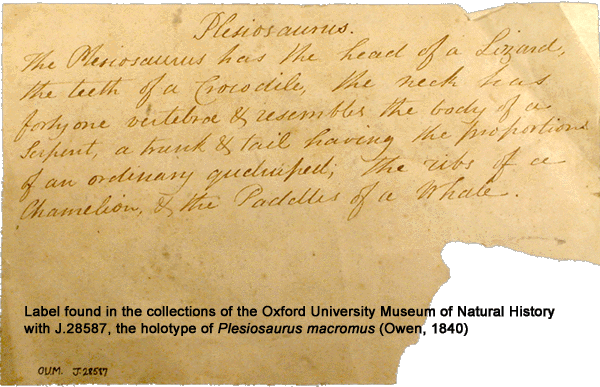
The following label was found by Richard Forrest “in the collections of the Oxford University Museum of Natural History with J.28587, the holotype of Plesiosaurus macromus (Owen 1840)” He added the annotated image to the front page of his ‘The Plesiosaur Site’ around May 2014. I’m reposting it here under Richard’s name for posterity, backdated to May 2014. The hand-written...

Continue ReadingLabel found in the Oxford University Museum of Natural History

The Science of the Weymouth Bay Pliosaur

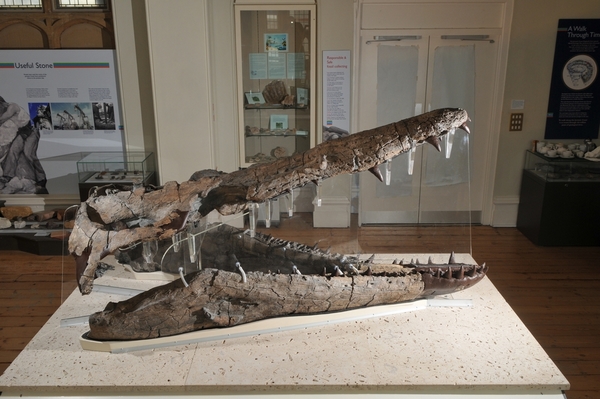
The announcement of the discovery of this spectacular specimen created a media frenzy in October of 2009 and was followed by another significant media event when the prepared skull was put on display and formally unveiled by Sir David Attenborough in June 2011. In many ways, this is when the hard work of the scientific investigation began The “Dream Team”...

Continue ReadingThe Science of the Weymouth Bay Pliosaur

The Weymouth Bay Pliosaur

The Lottery Heritage Fund has purchased an enormous pliosaur skull from the Kimmeridge Clay of the Dorset coast. On 8th July 2011 the pliosaur hits the media again! The new Pliosaur display in the Jurassic Coast Gallery of Dorchester County Museum will be formally opened, with David Attenborough as special guest. The purchase of the skull of an enormous pliosaur...

Continue ReadingThe Weymouth Bay Pliosaur

Plesiosaurs from Svalbard – February 2008 update

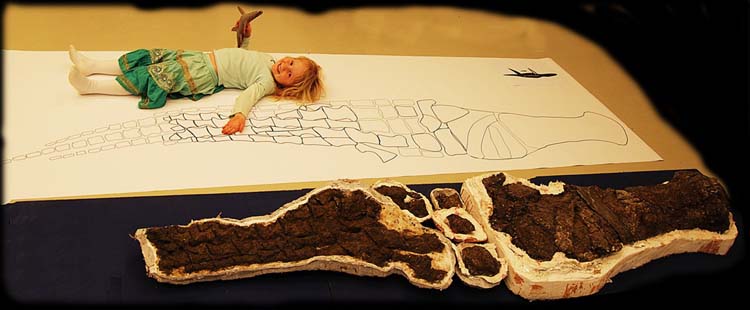
A press release on the finds from the 2007 season has been released by the University of Oslo. You can find more information, and images from the expeditions on the University web site. The news is, of course, dominated by the large pliosaur, which is reliably estimated as 15 meters long. The paddle alone is 3 meters long. This makes it much the same size as...

Continue ReadingPlesiosaurs from Svalbard – February 2008 update

The Lincoln Plesiosaur

A specimen found in Lincoln over a hundred years ago has recently been prepared and mounted for exhibition. It is now one of the most popular exhibits in the new Lincoln Museum. Childhood Memories This is a rather personal account of a specimen with which I have a particularly close connection. It starts with a vague childhood memory of going...

Continue ReadingThe Lincoln Plesiosaur

Plesiosaurs from Svalbard

There has been a spate of reports in the media recently about an important find of marine reptiles from the Svalbard, in the Norwegian arctic. The largest island in this archipelago is Spitzbergen. Fragmentary remains from this area have been reported for almost a century (Wiman 1914). However, these have been only of isolated elements. The number and fine preservation...

Continue ReadingPlesiosaurs from Svalbard

How big was Liopleurodon ferox?

Read more about the article How big was Liopleurodon ferox?
Mounted skeleton of Liopleurodon ferox in the Tubingen Museum, Germany (from Martill and Naish, 2000).

There is an unofficial ‘Premier League’ in vertebrate palaeontology which consits of the animals which attract a lot of public attention. Its members include T. rex, Seismosaurus, Argentinosaurus, Giganotosaurus and so on – the biggest and fiercest extinct animals. When the BBC broadcast ‘Walking with Dinosaurs’ they moved Liopleurodon ferox firmly into the Premier League. Here was an animal that...

Continue ReadingHow big was Liopleurodon ferox?

The Speeton Plesiosaur

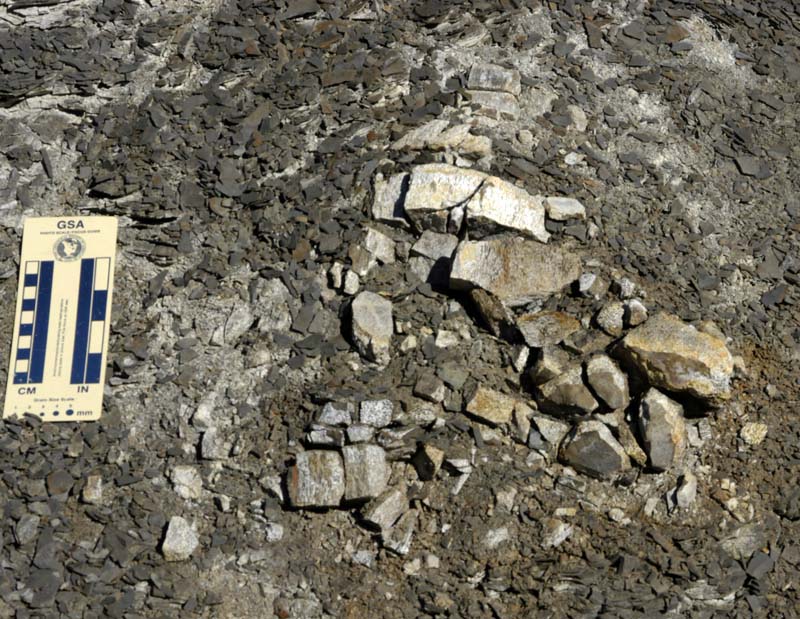
The substantially complete skeleton of a plesiosaur was found by an amateur collector, Nigel Armstrong, in 2001. He recognised the importance of the find and alerted the local museums who organised a scientific excavation led by Will Watts, Dinosaur Coast Officer and Phil Manning of the Yorkshire Museum. The specimen was found in this tangled jumble of clay on the...

Continue ReadingThe Speeton Plesiosaur

The Collard Plesiosaur

Press reports of the finding of a plesiosaur on the Somerset coast hit the news last year. Dennis Parsons of Somerset County Museum has given presentation on this remarkable specimen at the SPPC, and during our ‘Plesiosaur Day’ in November 2004. Arthur Cruickshank, Mark Evans and I (Richard Forrest) have visited the Somerset County Museum to have a close look....

Continue ReadingThe Collard Plesiosaur

The Loch Ness plesiosaur

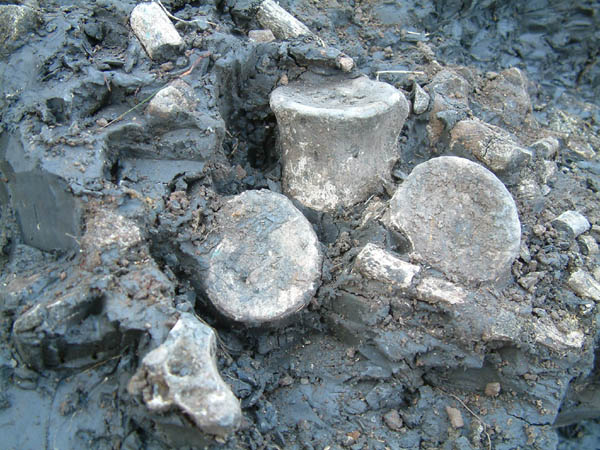
A series of plesiosaur vertebrae has been found on the shore of Loch Ness and hailed by some monster hunters as ‘proof’ of the existence of a living plesiosaur in the Loch. So what do we know about this find? Firstly, although it has been confirmed as plesiosaurian by staff of the National Museums of Scotland (NMS), it contributes nothing...

Continue ReadingThe Loch Ness plesiosaur

The ‘Monster of Aramberri’

Read more about the article The ‘Monster of Aramberri’
Some remains of the Monster of Aramberri (from Hähnel 1988)

The discovery of a huge and substantially complete pliosaur in Mexico hit the press on the 28th December 2002. I’ve heard from Marie-Celine Buchy, and I can put to rest some of the more obvious exagerations and mistakes made by the media. The monster comes from the La Casita Fm (Kimmeridgian), a few km north-west of the village of Aramberri,...

Continue ReadingThe ‘Monster of Aramberri’