
Opallionectes

Opallionectes is a large, around 5 m long, derived cryptoclidid plesiosauroid from the Early Cretaceous of South Australia. It is known from a partial opalised skeleton, which is mounted for display in the South Australian Museum. The holotype specimen lacks a skull. It is diagnosed by the following unique combination of characters: small needle-like teeth with a distinct ovoid cross-section...
Umoonasaurus

Umoonasaurus is a small (~2.5 m long) leptocleidid that lived during the Early Cretaceous in Southern Australia. The holotype specimen (AM F99374), a spectacular opalised skeleton including the skull, is nicknamed ‘Eric’. It is the most complete opalised plesiosaur skeleton (and fossil vertebrate) known. It was originally described briefly as Leptocleidus sp. by Kear (2006) who figured the skull and...
Monquirasaurus

Monquirasaurus is a giant pliosaurid from Colombia, South America. Originally named by Hampe (1992) as a species of Kronosaurus (K. boyacensis), the skeleton was later allocated to the new genus Monquirasaurus by Noè and Gómez-Pérez (2021). The genus name derives from ‘Monquira’, the administrative division in which the holotype was discovered. Monquirasaurus skeleton. From Hampe (1992). Monquirasaurus reconstruction. From Hampe (1992)...
Vectocleidus
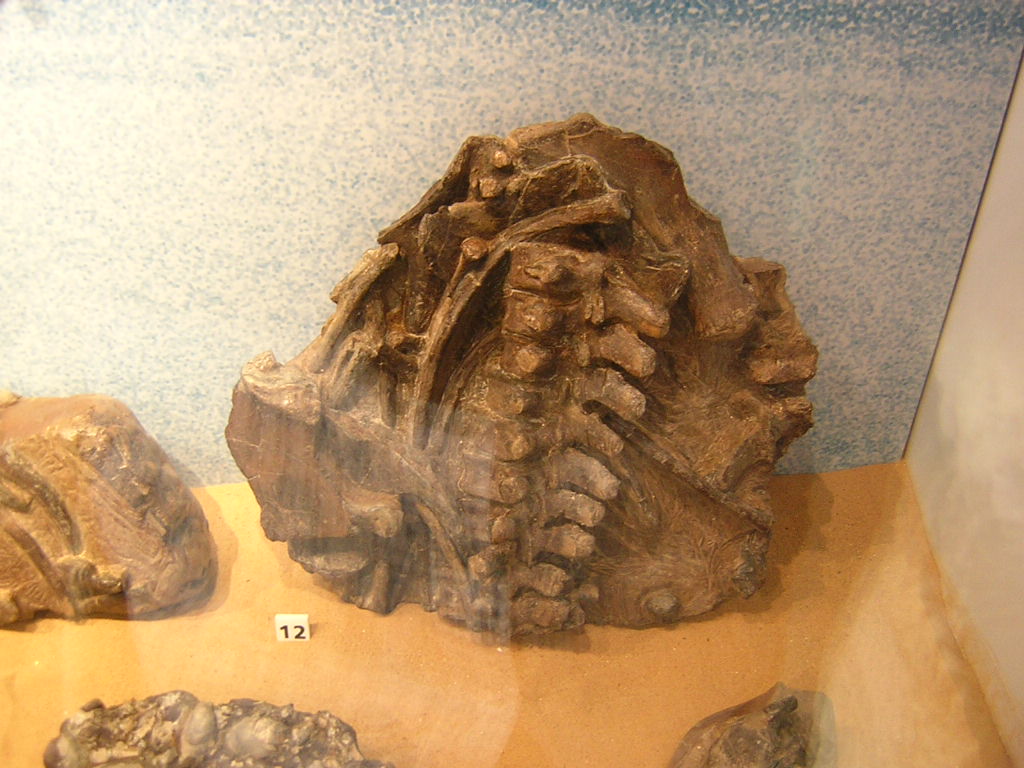
The name Vectocleidus was erected by Benson et al. (2012b) for a leptocleidid from the Early Cretaceous of the Isle of Wight, UK. The type specimen was previously referred to Leptocleidus sp. Vectocleidus can be confidently identified as a leptocleidid but its position within the clade is unstable (Benson et al. (2012b). Vectocleidus material on display in the Dinosaur Isle...
Abyssosaurus
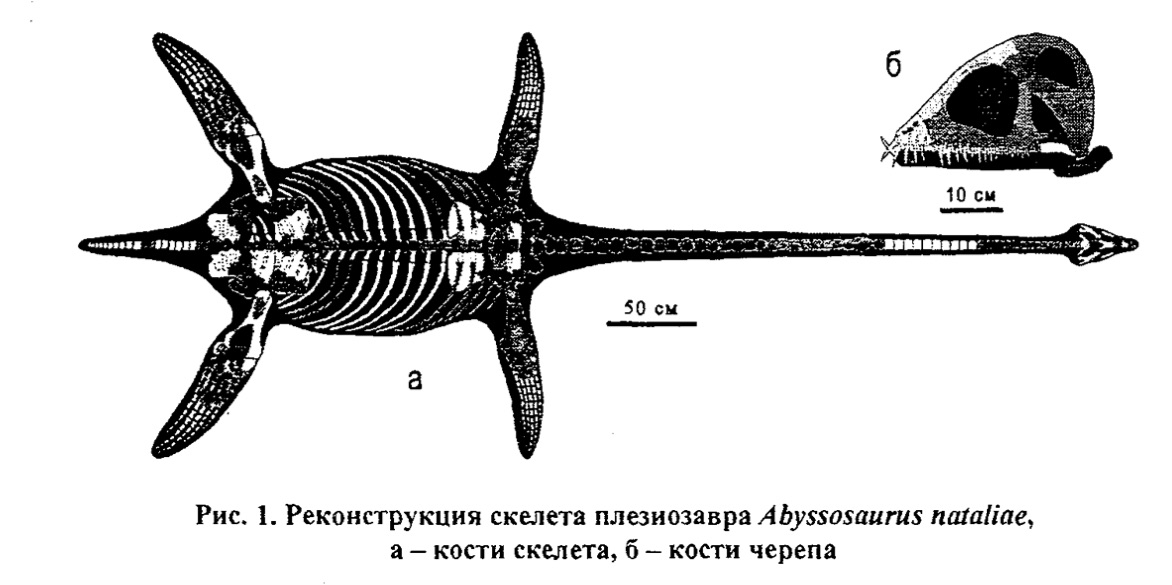
Abyssosaurus is a derived cryptoclidid plesiosaur from the Upper Hauterivian (Lower Cretaceous) of the Menya River, Chuvashia, Russia. It was named and described in 2011 by Alexander Yu Berezin (Berezin 2011). A partial skull associated with the holotype specimen (MChEIO no. PM/1 MChEIO no. PM.1) was not described in the original 2011 paper but was discovered later in a compact...
Leptocleidus

Lower Cretaceous plesiosaurs are rare, so Leptocleidus is important because it fills a gap in the fossil record of plesiosaurians. Leptocleidus was once considered to be a late surviving member of the family Rhomaleosauridae but it has recently been reidentified as a close relative of polycotylids. The fossils of all known species of Leptocleidus were preserved in inshore brackish or...
Kronosaurus

Due to its large size and ferocious appearance, Kronosaurus is one of the most famous plesiosaurs. The iconic skeleton referred to Kronosaurus on display in the Museum of Comparative Zoology in Harvard is nicknamed ‘plasterosaurus’ because so much of it is reconstructed in plaster. About a third of the skeleton is plaster and there are at least seven vertebrae too...
Edgarosaurus

Edgarosaurus is a basal polycotylid (Druckenmiller 2002) from the Thermopolis Shale...