
It is with great sadness that I take this personal look back at my friendship with fellow plesiosaur palaeontologist Richard Forrest.
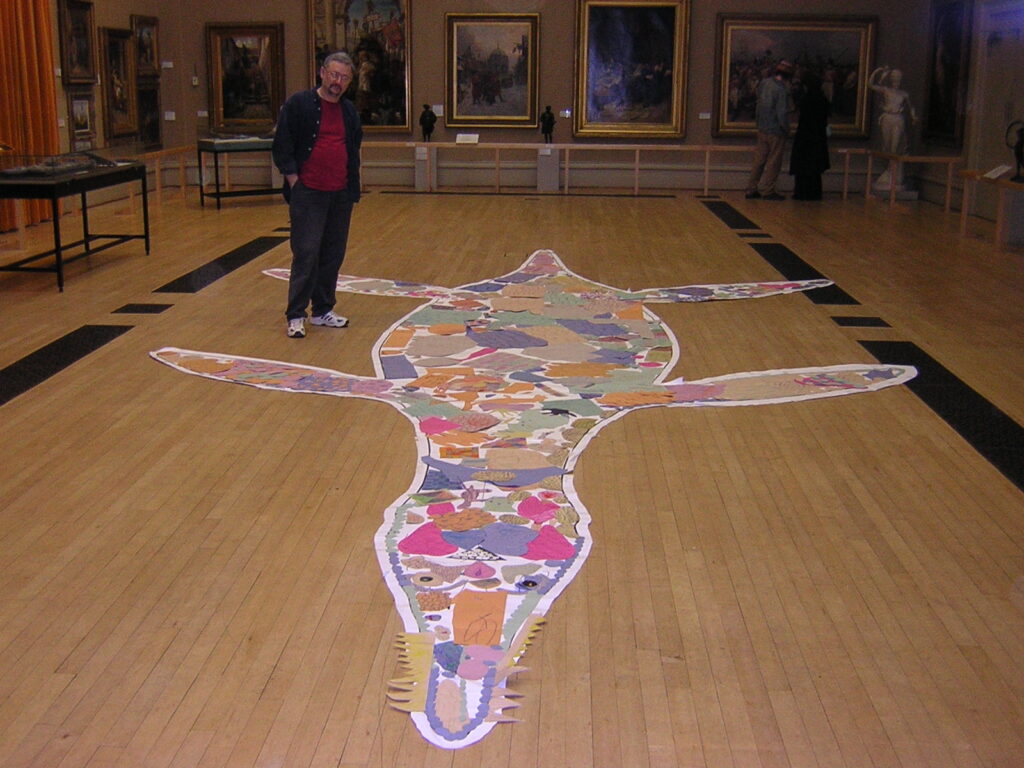
I think I first met Richard when I started to attend talks at the Leicester Literary and Philosophical Society in 2003. However, my strongest early memory of Richard is from March 2004 at a ‘Sea Monsters’ open day organised by the New Walk Museum, Leicester. We helped museum visitors contribute to a giant life size Liopleurodon pliosaur mosaic and I remember Richard’s natural enthusiasm.
Later that year, Richard was a memorable presence at my first ever Symposium of Vertebrate Palaeontology and Comparative Anatomy (SVPCA) in Leicester, a conference he co-organised (September 2004). And a few months after that he was part of a ‘Plesiosaur Day’ (December 2004) – a gathering of several plesiosaur palaeontologists at a mini-conference in Leicester. Having just finished my MSc student project on plesiosaur phylogeny, Richard made me feel very welcome in the plesiosaurology community.
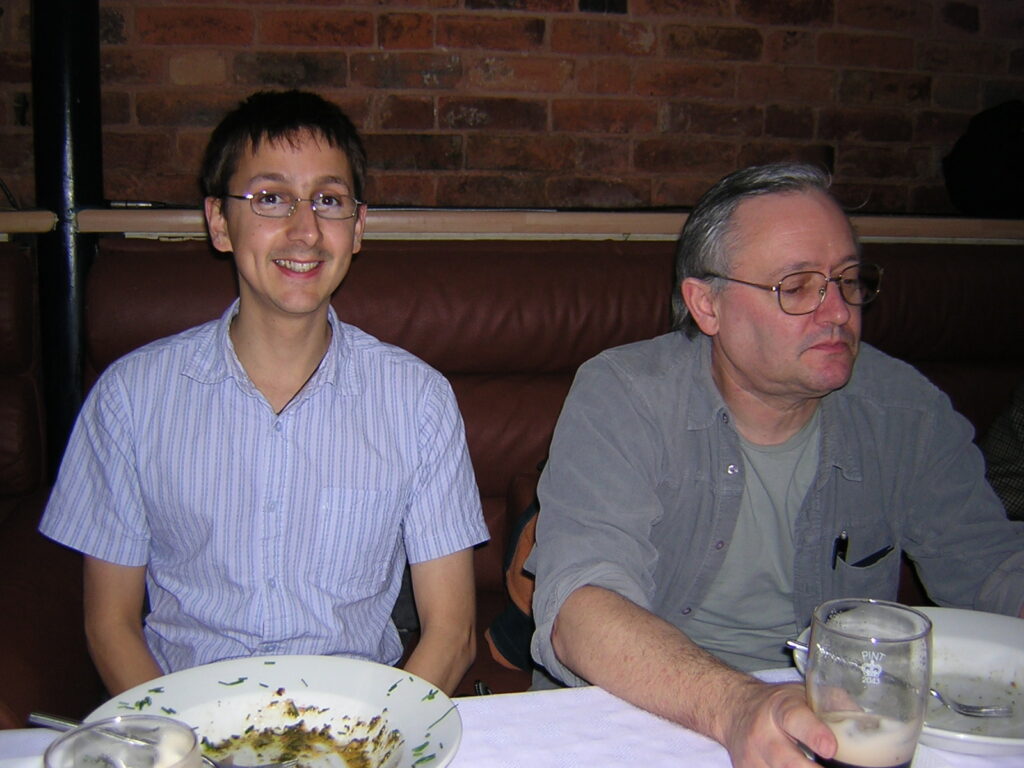
It was always a pleasure to catch up with Richard at subsequent SVPCA and other academic meetings to talk plesiosaurs. It was 50/50 whether we were talking over fossils in museums, or over beers in pubs. I attended every SVPCA from 2004 to 2014 and Richard was ever-present.
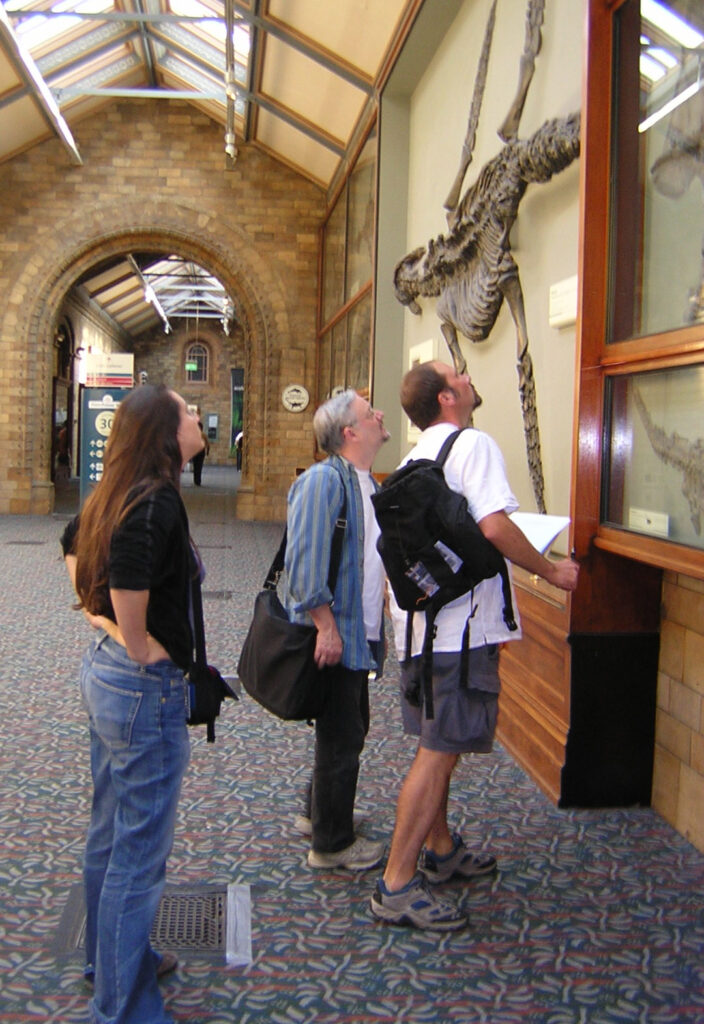
When I embarked on my PhD project on Rhomaleosaurus, Richard visited me in Dublin (October 2005) to provide advice on how to prepare the specimen. At this time Richard convinced me to move my plesiosaur website from third party hosting to my own domain. He registered plesiosauria.com (and later other sites) for me and he was my web host for 20 years, from 2005 until last year, when he started to wind down his web hosting business. So, this very website, the Plesiosaur Directory, exists because of Richard. The irony here is that Richard’s own plesiosaur website, the excellent plesiosaur.com database, seems to have gone missing. I suspect it was in the process of being migrated to a different server so I’m going to see if that can be salvaged somehow and put back online.
By pure coincidence and good fortune, when I moved back to the UK from Ireland I ended up working at the Nottingham Natural History Museum and living very near to Richard in Nottingham. I had always associated him with Leicester, so I don’t think I realised he was based in Nottingham until I moved there. This meant we were able to meet up frequently and I had more opportunities to work with Richard in person, both in Nottingham and out of the city.
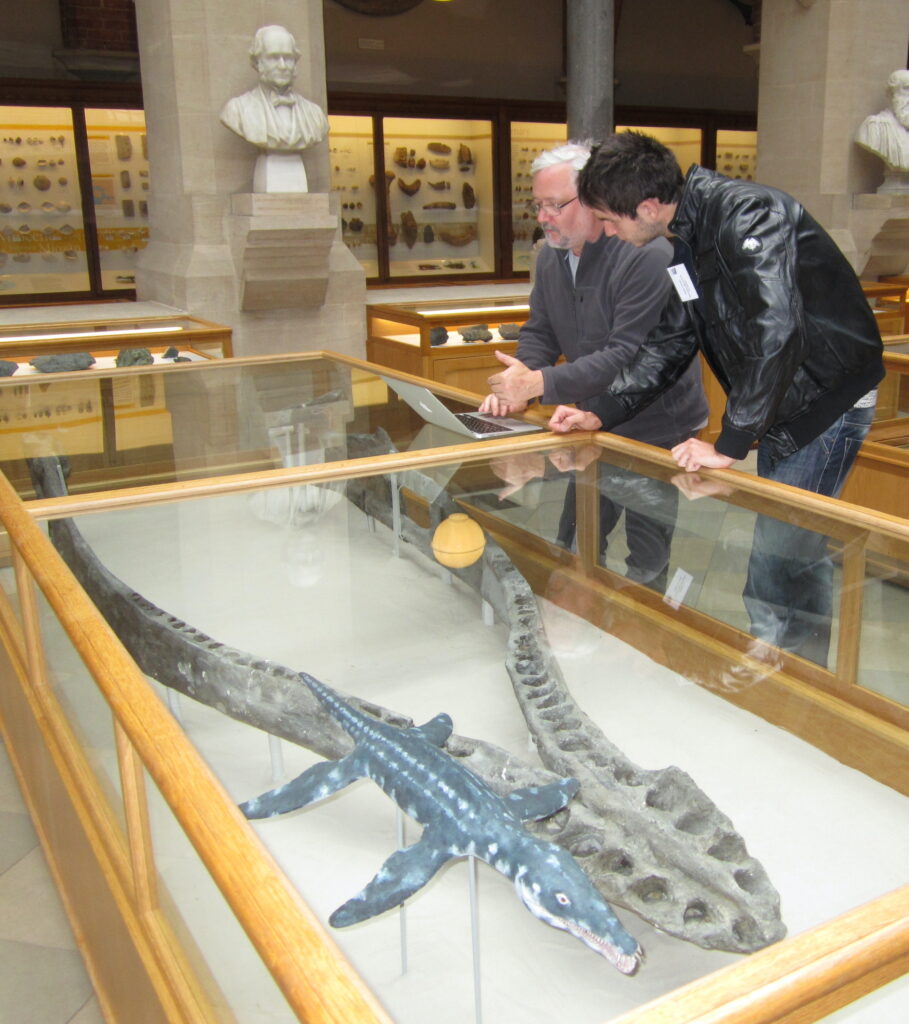
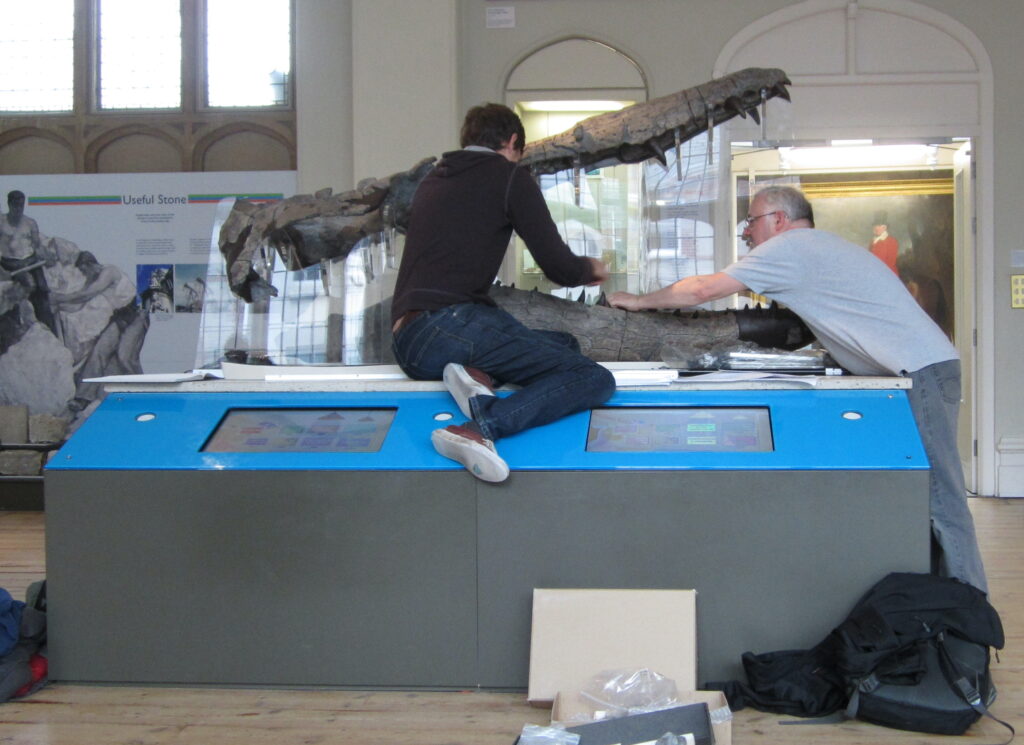
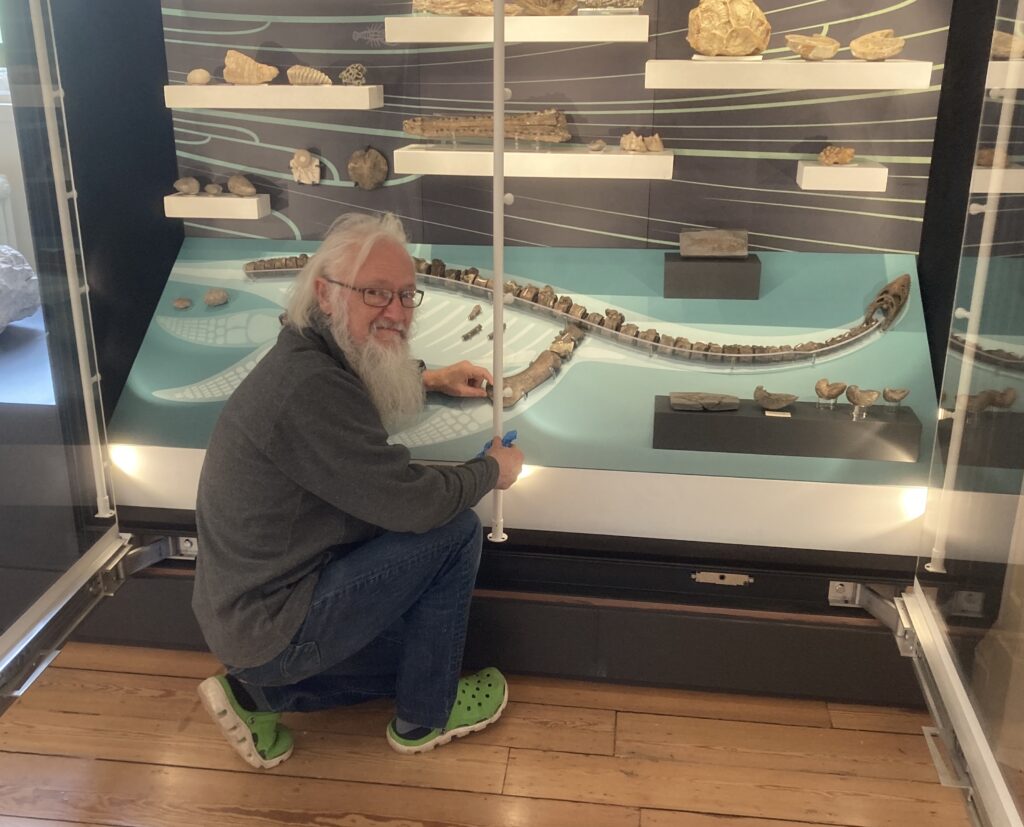
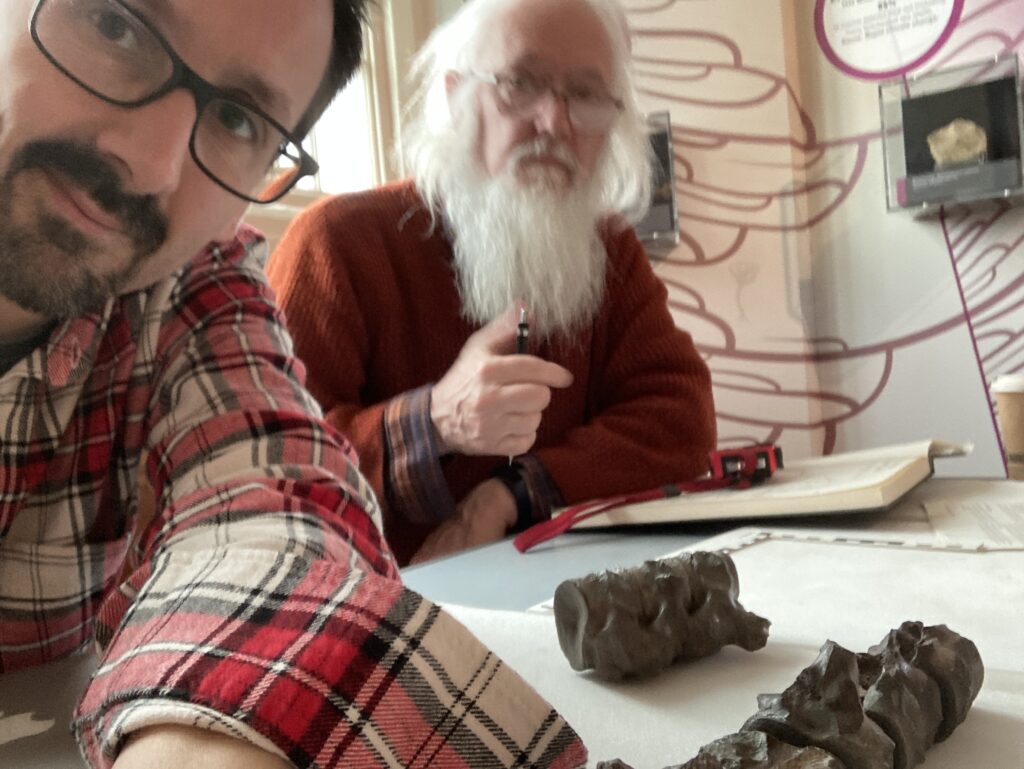
To pick a few examples with photographic evidence, in October 2012 we visited the Dorchester Museum together to study the skull of Pliosaurus kevani, a species we described and co-named in 2013 as part of a large collaborative team co-ordinated by Richard (Benson et al. 2013). In 2013 we took a trip to the British Antarctic Survey to look at their plesiosaur material with plesiosaur researcher Mark Evans, and in 2014 we visited the Sedgwick Museum of Earth Sciences together to inspect their plesiosaur collections. In January 2018 Michelle Johnston visited us in Nottingham from Kronosaurus Korner museum in Australia and Richard shared his ongoing preparation work.
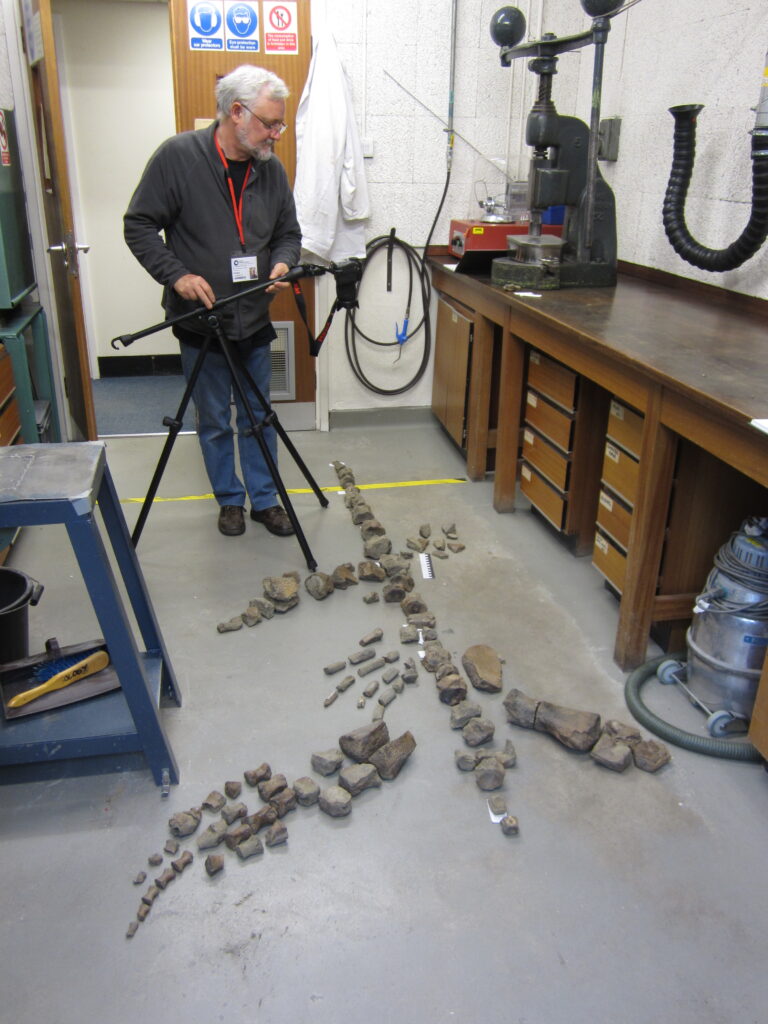
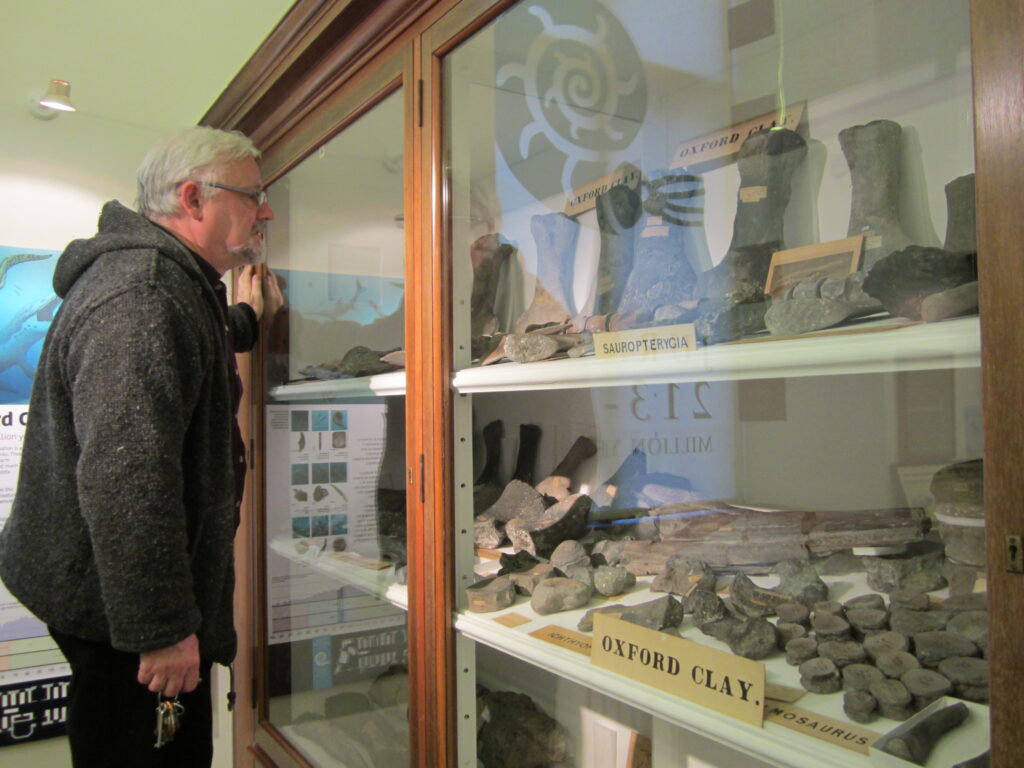
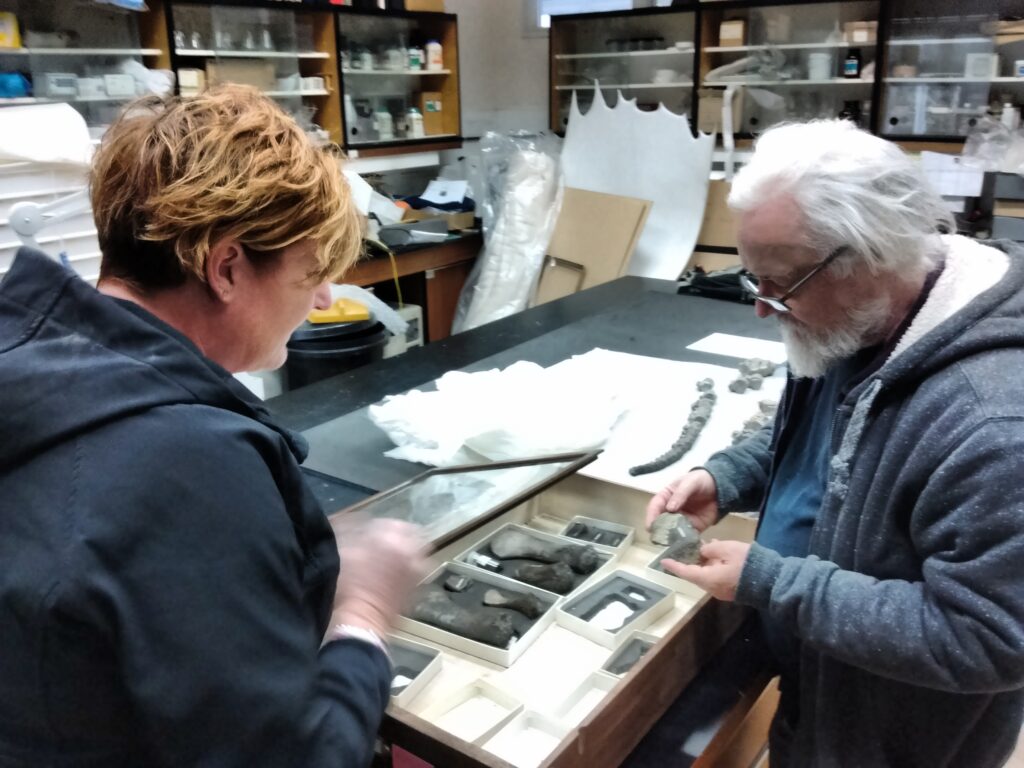
During my time as a curator at the Nottingham Natural History Museum, Richard was a frequent visitor and supporter of the museum. He participated in events, brought in recent discoveries to share, used our collection for research, and attended exhibition and book launches. He even donated several specimens to the museum via the Peterborough Geological and Palaeontological Group (of which he was Chair). All of the specimens he donated to Nottingham are on display, and one of the donations – an ankylosaur osteoderm – led to a publication. I know he also donated to other museums, too.
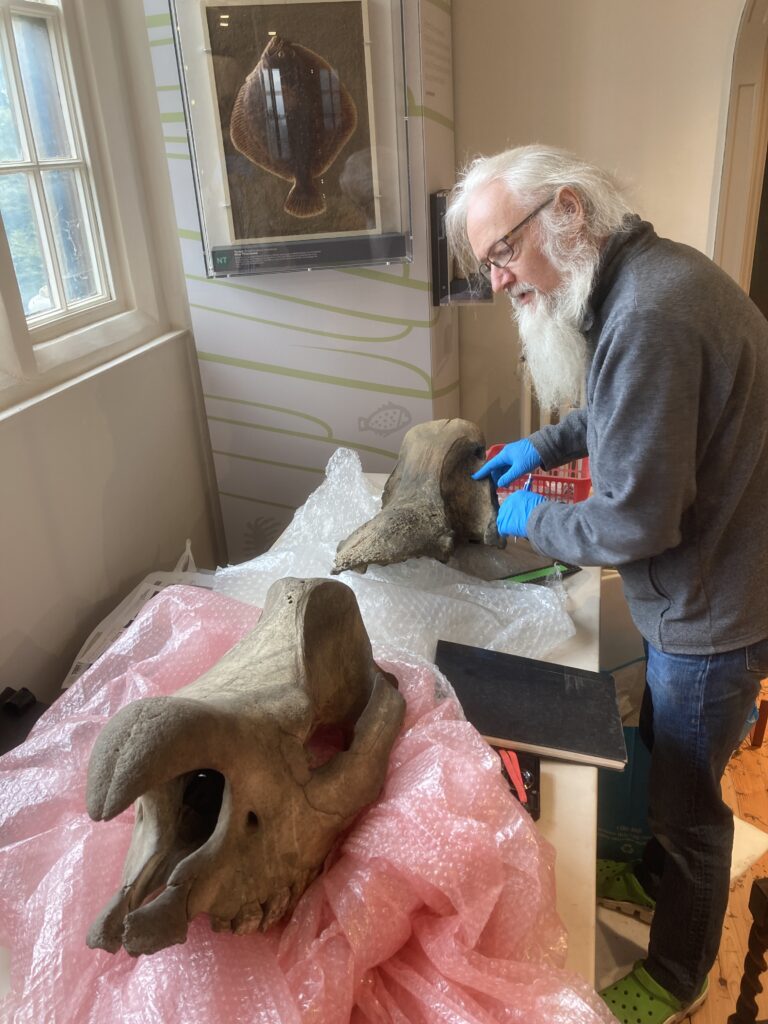
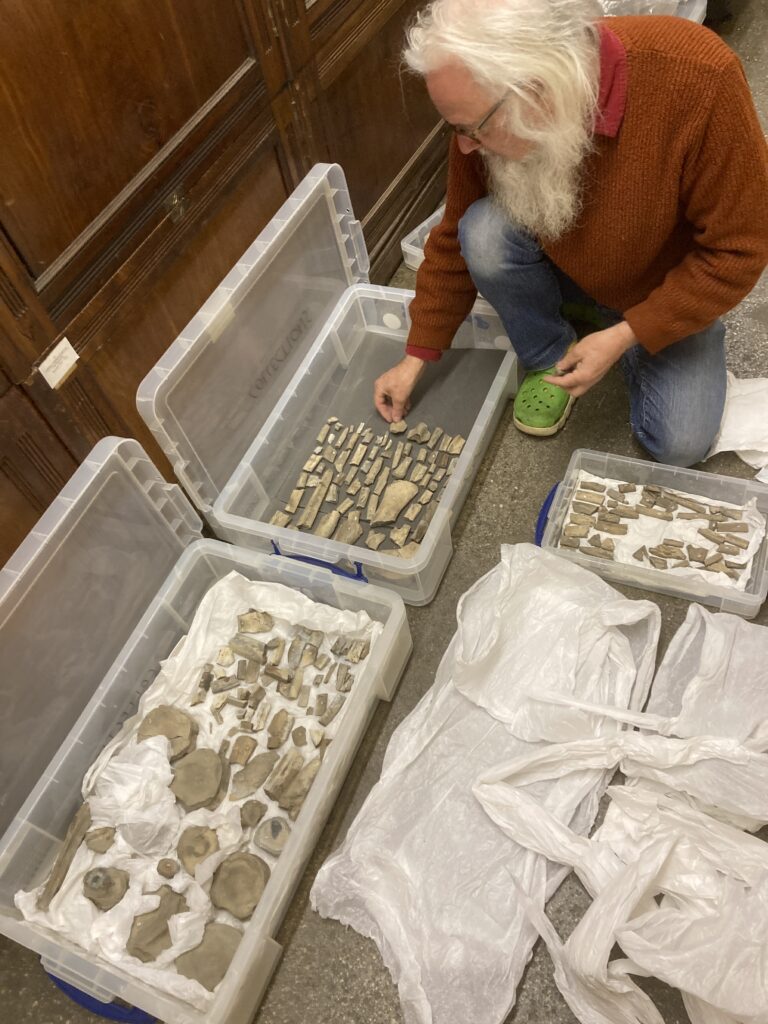
However, Richard’s connection to the Nottingham Natural History Museum stemmed way back before my time, to the 1990s when he worked on the ‘Cropwell Bishop Plesiosaur’. His article describing that specimen was, I believe, his first peer-reviewed academic publication (Forrest 1998), but he later published several other articles about other plesiosaurs (e.g. Forrest 2003).
Recently, he conducted restoration work on the Cropwell Bishop Plesiosaur specimen to prepare it for a new permanent display. And, with so much having changed in plesiosaur taxonomy since 1998, we were just embarking on a restudy of this specimen together.
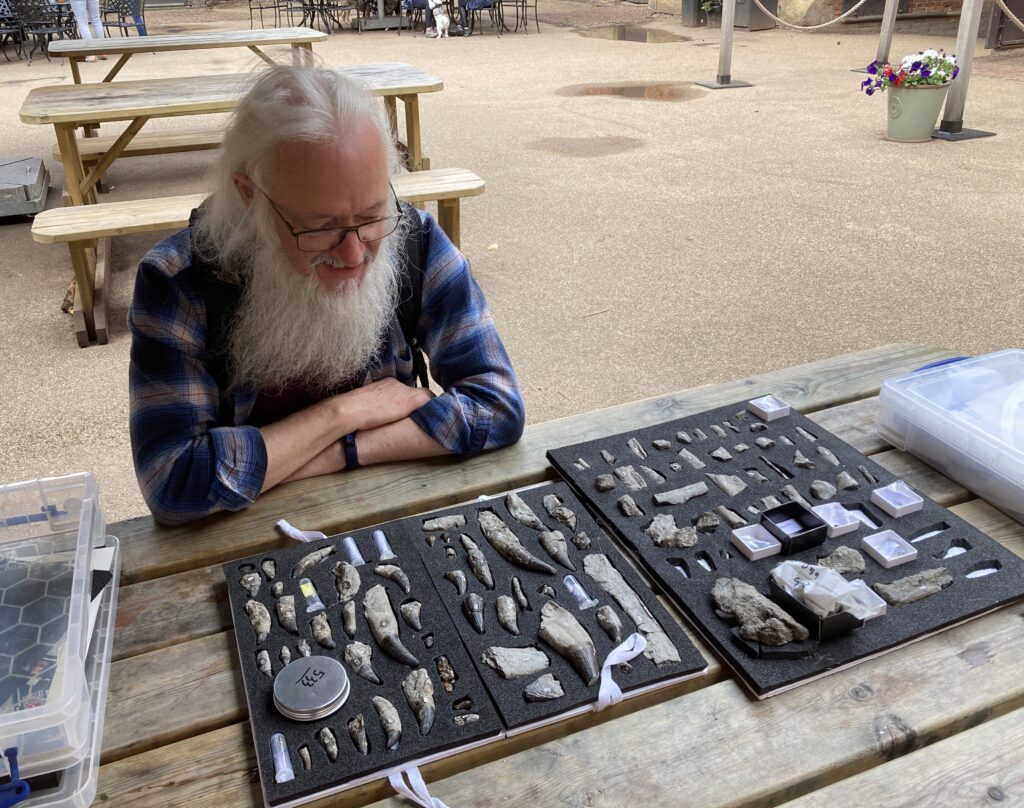
Richard emailed me from hospital last week to let me know he had a sudden serious heart attack, but in typical fashion he was upbeat and positive about his outlook. Sadly, I learned a few days later that he passed away.
This is just my own personal retrospective on a kind, generous, enthusiastic person, with whom I shared both passion and place. I’m not alone. Richard’s life intersected with many people in the palaeontology community who have similar stories. He will be greatly missed by us all.

Beautifully portrayed Adam, You clearly took great pride in writing this. Twenty plus years of reminiscence with so many wonderful stories to tell.
Thank you.
Only knew him for a few years but what an amazing human being to be around. I could’ve spent literal days listening to this man talk and breathe life into Palaeontology. A legend lost but a legend forever
Such sad news. Richard was a great friend from the first time we met at the Oxford SVPCA in 2003. Difficult to come to terms with knowing I won’t be bumping into him at Lyme and SVPCA in the future.
I have been a member of the peterborough geological and paeleontological society for 3 years so i begun to get to know Richard.
He taught me about bio-immuration and i think he really liked my dinosaur socks!
Im really happy I have found this site it looks very interesting.
Anyway I feel blessed that I knew him and I find myself going back onto the internet just to search for stories etc on him