Long-necked plesiosaur discovered in northern Germany

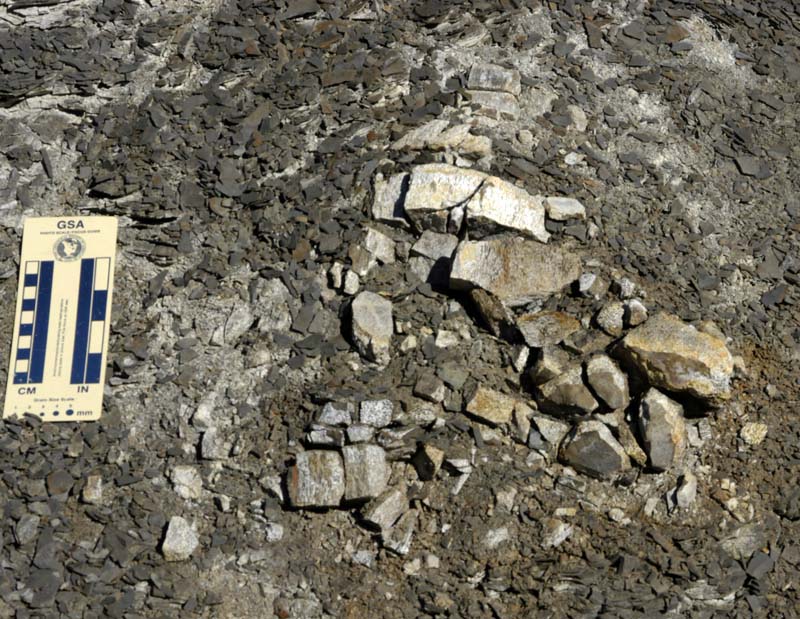
A four-metre-long plesiosaur skeleton has been discovered by in Northern Germany by an amateur palaeontologist. 19-year-old fossil collector Sönke Simonsen discovered the specimen in June whilst looking for fossils with his dad in a quarry at Tongrube in Kreis Hoxter, near Bielefeld. “The first thing I discovered was a caudal-vertebra” said Simonsen,…

Continue ReadingLong-necked plesiosaur discovered in northern Germany

Elasmosaurid skeleton excavated in Alberta

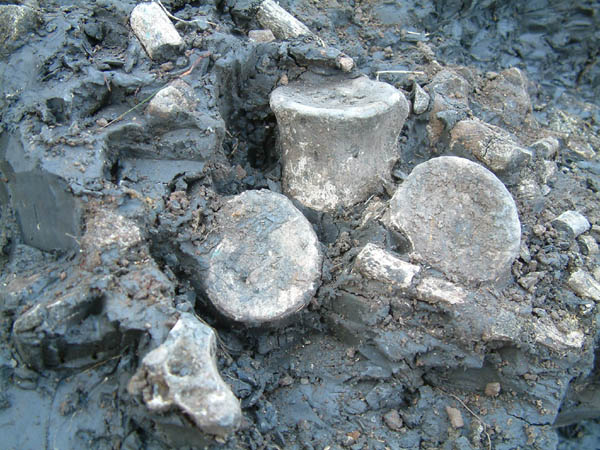
A giant plesiosaur has been discovered and excavated from the Late Cretaceous Bearpaw Shale of Drumheller, southern Alberta, Canada. According to the press release the fossil remains were found in an ammolite mine by staff from Korite International (‘Ammolite’ is a gemstone, not to be confused with the prehistoric cephalopod ‘ammonite’). After…

Continue ReadingElasmosaurid skeleton excavated in Alberta

Two new species of polycotylid plesiosaurs

The second paper in the two-part report on by Albright et al. on plesiosaurs from the Upper Cretaceous Tropic Shale of southern Utah (Journal of Vertebrate Palaeontology, Volume 27(1) p. 41-58), introduces two new genera and species of polycotylid plesiosaur and contributes to the systematics of polycotylid plesiosaurs. The first new genus…

Continue ReadingTwo new species of polycotylid plesiosaurs

Two new plesiosaur species and new data on Brachauchenius

The most recent Journal of Vertebrate Palaeontology (Volume 27(1)) contains three new plesiosaur papers. A short communication by Ben Kear (Kear 2007, p. 241-246) clarifies the taxonomy of what has become a very confusing taxon - Eromangasaurus (Kear 2005). The confusion originated because two separate researchers (Ben Kear and Sven Sachs) simultaneously published…

Continue ReadingTwo new plesiosaur species and new data on Brachauchenius

First elasmosaurid plesiosaur from Montana announced

Elasmosaurid plesiosaurs are notorious for 'losing their heads'. In fossil plesiosaur skeletons the skull is frequently missing, unfortunate because this is such a vital part of the anatomy for understanding the relationships and biology of the animal. This fact makes the discovery of a new elasmosaurid skull, the first ever from the…

Continue ReadingFirst elasmosaurid plesiosaur from Montana announced

Plesiosaurs from Svalbard

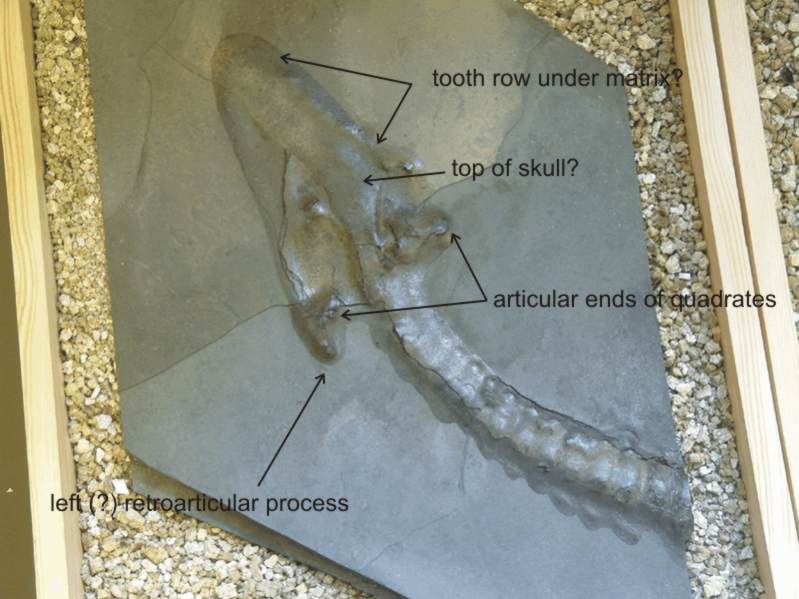
There has been a spate of reports in the media recently about an important find of marine reptiles from the Svalbard, in the Norwegian arctic. The largest island in this archipelago is Spitzbergen. Fragmentary remains from this area have been reported for almost a century (Wiman 1914). However, these have been only…

Continue ReadingPlesiosaurs from Svalbard

New ‘monster’ pliosaur amongst arctic plesiosaur fossil bounty

A total of 22 plesiosaurs have been discovered during an expedition to the Arctic island of Spitzbergen by the University of Oslo, Natural History Museum. The team led by Dr. Jørn Hurum and Hans Arne Nakrem also discovered ichthyosaurs - but the majority of the fossils await excavation when the team return…

Continue ReadingNew ‘monster’ pliosaur amongst arctic plesiosaur fossil bounty

The Speeton Plesiosaur

The substantially complete skeleton of a plesiosaur was found by an amateur collector, Nigel Armstrong, in 2001. He recognised the importance of the find and alerted the local museums who organised a scientific excavation led by Will Watts, Dinosaur Coast Officer and Phil Manning of the Yorkshire Museum. The specimen was found…

Continue ReadingThe Speeton Plesiosaur

The Collard Plesiosaur

Press reports of the finding of a plesiosaur on the Somerset coast hit the news last year. Dennis Parsons of Somerset County Museum has given presentation on this remarkable specimen at the SPPC, and during our 'Plesiosaur Day' in November 2004. Arthur Cruickshank, Mark Evans and I (Richard Forrest) have visited the…

Continue ReadingThe Collard Plesiosaur

The ‘Monster of Aramberri’

Read more about the article The ‘Monster of Aramberri’
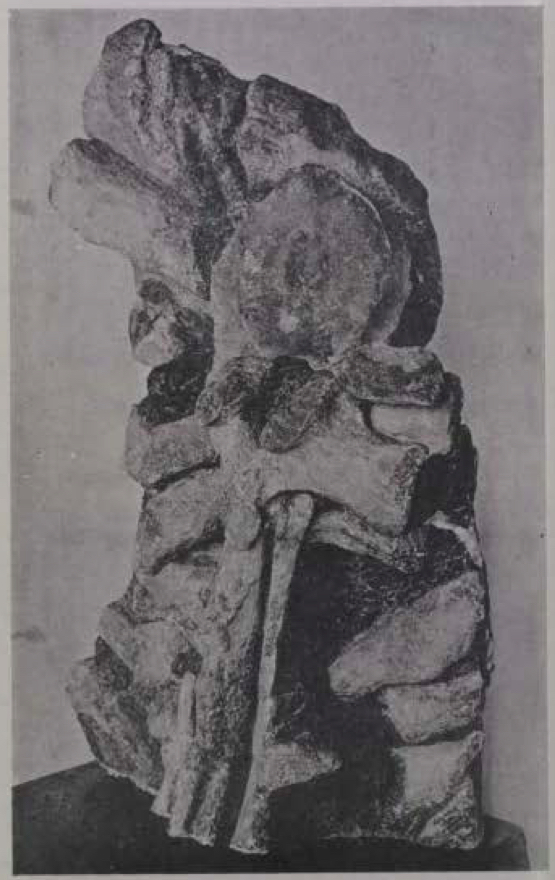
Some remains of the Monster of Aramberri (from Hähnel 1988)

The discovery of a huge and substantially complete pliosaur in Mexico hit the press on the 28th December 2002. I've heard from Marie-Celine Buchy, and I can put to rest some of the more obvious exagerations and mistakes made by the media. The monster comes from the La Casita Fm (Kimmeridgian), a…

Continue ReadingThe ‘Monster of Aramberri’