The Plesiosaur’s Neck book – coming soon!

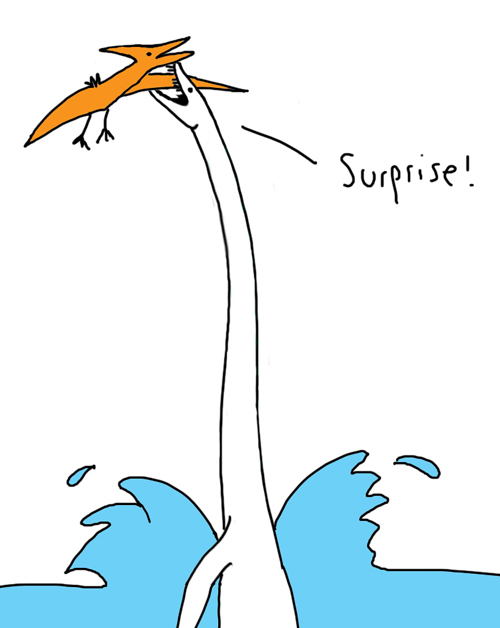
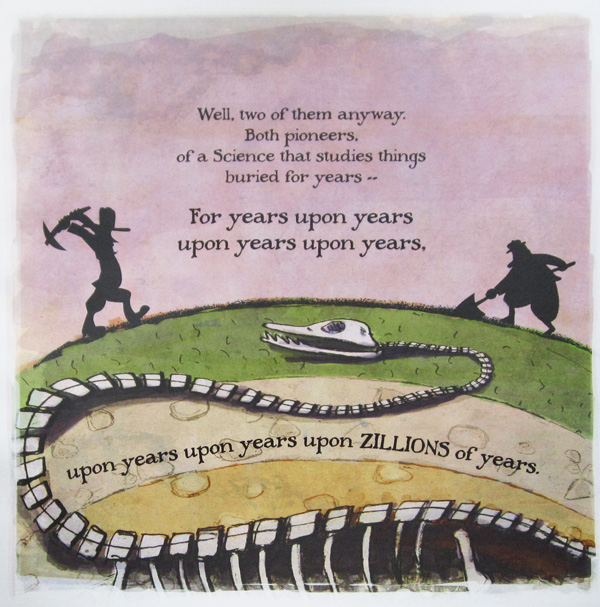
It is with much excitement that I am able to reveal the front cover of The Plesiosaur's Neck, a new children's picture book written by Jonathan Emmett and myself. The book, illustrated by the excellent Adam Larkum, is being published by UCLan Publishing. Now available for pre-order from Amazon.co.uk, Hive.co.uk, Waterstones.com “There’s…

Continue ReadingThe Plesiosaur’s Neck book – coming soon!

Did plesiosaurs have the hump?

Read more about the article Did plesiosaurs have the hump?
Restoration of the skeleton of Muraenosaurus in lateral view. From Andrews 1910.

Pick a random piece of plesiosaur paleoart and chances are the animal will be depicted with an arched back. A hump, almost. But did plesiosaurs really have the hump? This arched posture can be traced back in the scientific literature to Andrews' 1910-13 seminal works on the marine reptiles from the Oxford…

Continue ReadingDid plesiosaurs have the hump?

The University of British Columbia’s new Elasmosaurus

The University of British Columbia have erected a spectacular 13-metre-long Elasmosaurus skeleton in their Pacific Museum of Earth. The resin reconstruction was suspended in the Wheaton Precious Metals Atrium of the University's Earth Sciences Building earlier this month (15th-16th September 2018). Installation of the skeleton was led by Mike deRoos of Cetacea…

Continue ReadingThe University of British Columbia’s new Elasmosaurus

Thaumatodracon – the Wonder Dragon

Read more about the article <i>Thaumatodracon</i> – the Wonder Dragon
The Lower Saxony State Museum commissioned artist Luzia Soares to create a stylistic impression of Thaumatodracon. Copyright L. Soares 2017

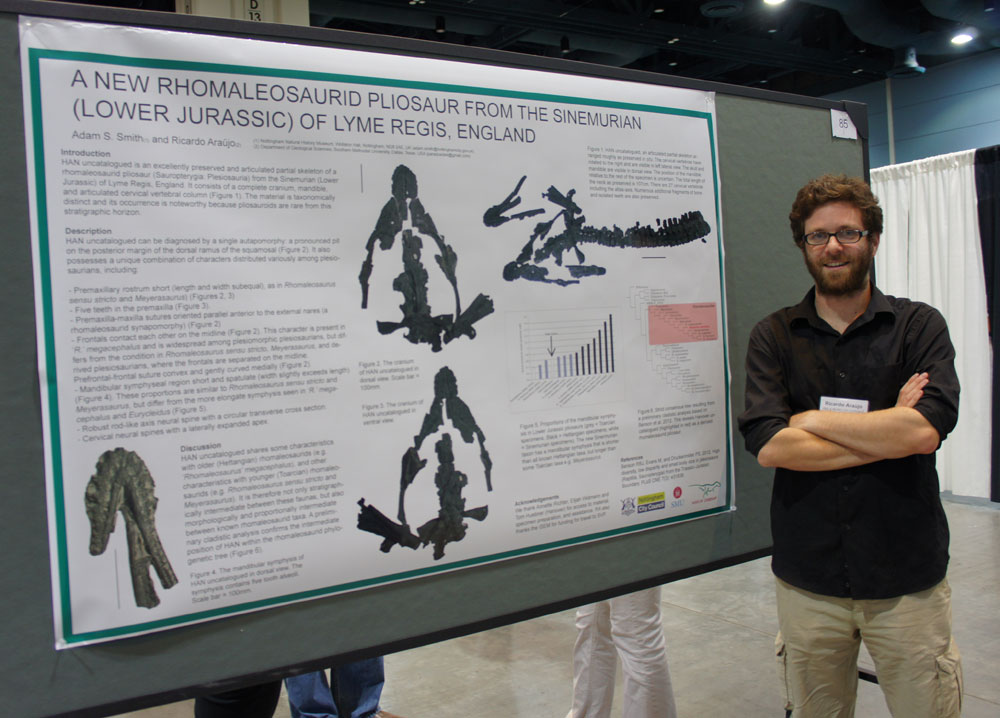
In 2012 I co-presented a poster at the SVP annual meeting on a new plesiosaur from Lyme Regis, UK (see my article about it here). The long awaited follow up paper was finally published this summer in the latest volume of Palaeontographica A (Smith and Araújo 2017) and the beast now has…

Continue ReadingThaumatodracon – the Wonder Dragon

Six years of new plesiosaur replicas (2012-2017)

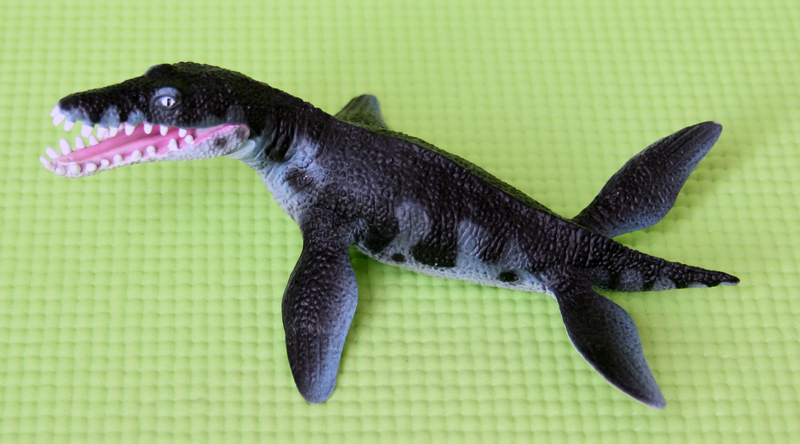
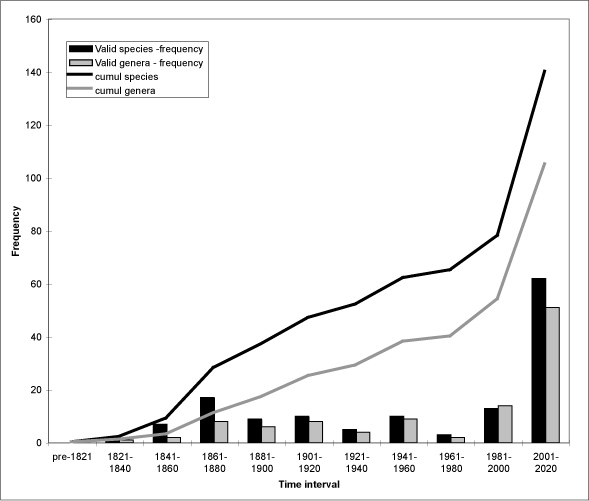
It is hard to believe that the last time I wrote about plesiosaur toys here was in March 2011, over six years ago (http://plesiosauria.com/news/index.php/new-plesiosaur-replicas-for-2011/). Since then, many more new plesiosaur figures have hit the shelves, well, online stores - you'll do well to find any of these toys in actual brick and…

Continue ReadingSix years of new plesiosaur replicas (2012-2017)

Investigating plesiosaur swimming using computer simulations

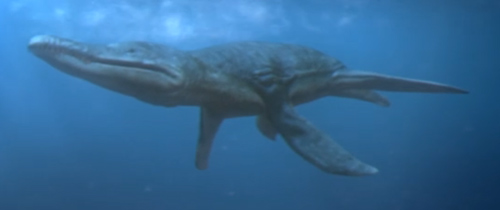
One of the many areas of controversy in plesiosaur palaeobiology is the topic of how they swam. The question goes back almost 200 years to the 1820s when the first complete plesiosaurs were described from the Jurassic cliffs of Lyme Regis, UK. Plesiosaur swimming is a particularly difficult topic to study for…

Continue ReadingInvestigating plesiosaur swimming using computer simulations

Resurrecting the Unfortunate Dragon

Read more about the article Resurrecting the Unfortunate Dragon
Holotype specimen of Atychodracon megacephalus in the Bristol City Museum and Art Gallery (from Swinton, 1948). The specimen was destroyed during the Second World War.

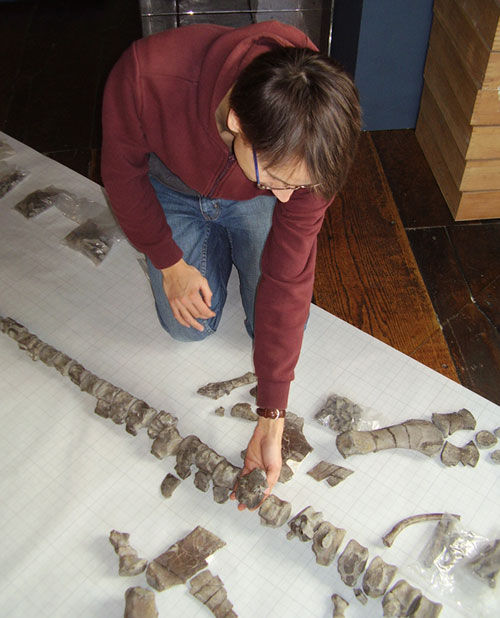
The five metre-long holotype specimen of ‘Plesiosaurus’ megacephalus, from the Jurassic of Street-on-the-Fosse, Somerset, was one of several plesiosaurs once displayed in the Bristol Museum and Art Gallery. As one of the earliest plesiosaurs to evolve it is an important species for understanding the early history of the group. Sadly, the fossil…

Continue ReadingResurrecting the Unfortunate Dragon

Monograph on Rhomaleosaurus thorntoni
Read more about the article Monograph on <i>Rhomaleosaurus thorntoni</i>
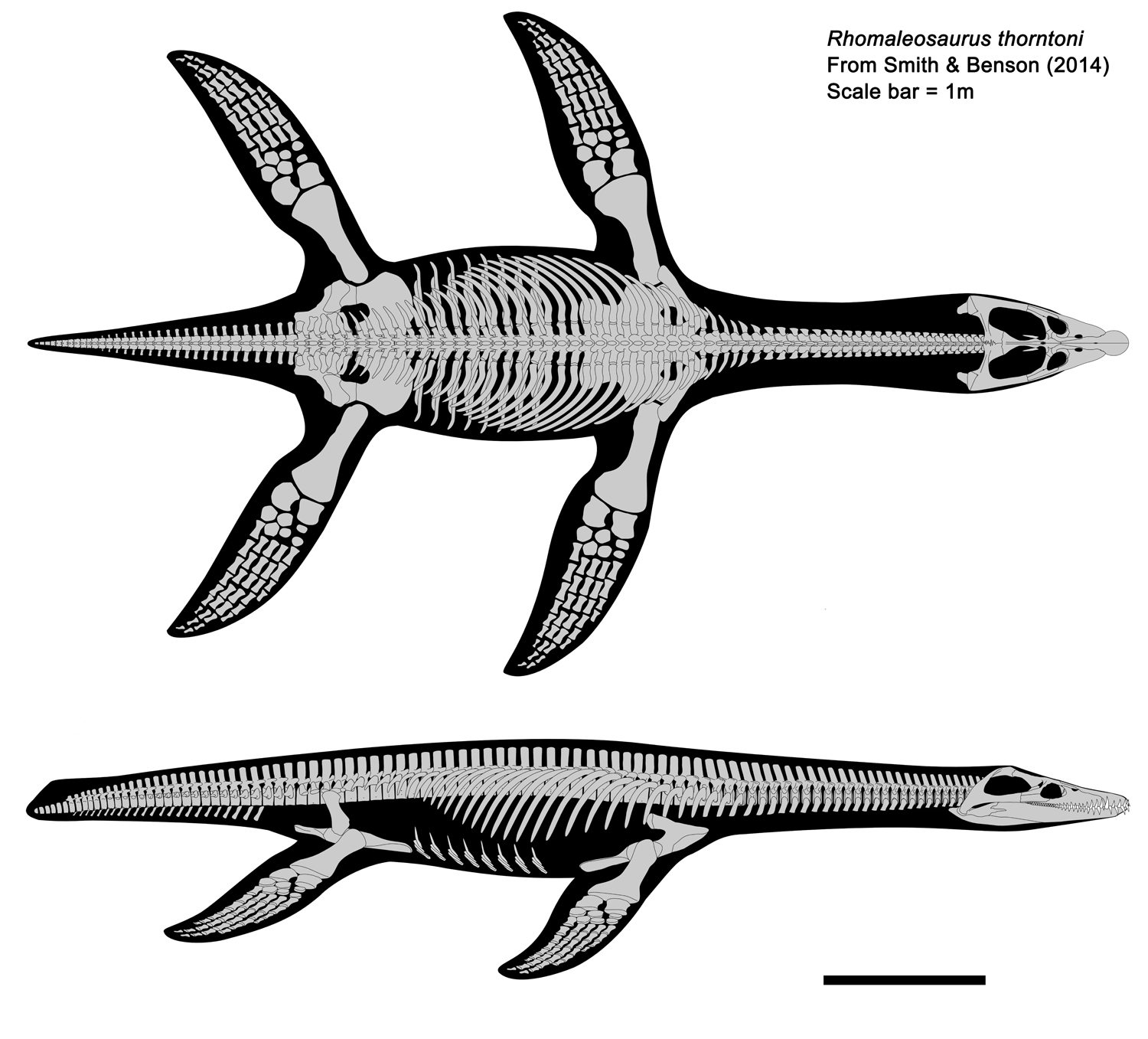
Reconstruction of the skeleton of Rhomaleosaurus thorntoni from Smith & Benson (2014).

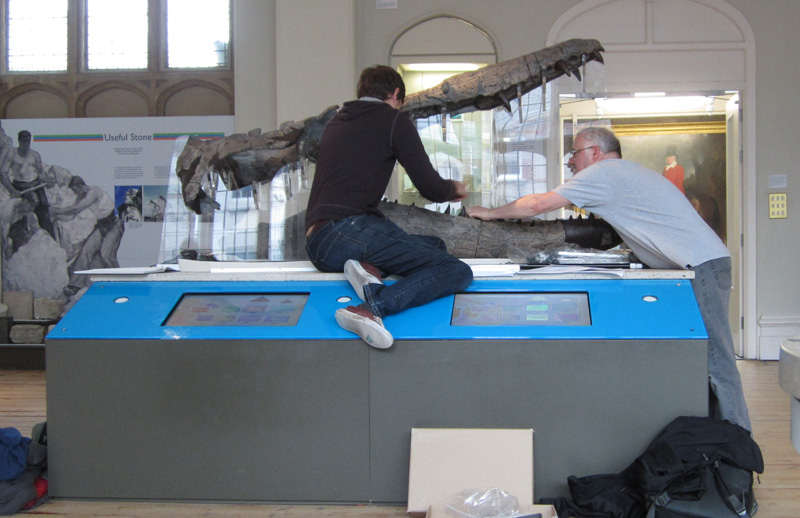
Many readers will be familiar with the giant plesiosaur on display in the marine reptiles gallery of the Natural History Museum, London. This is a cast of the 7 metre long holotype of Rhomaleosaurus cramptoni, the original of which is housed in the National Museum of Ireland (Natural History) and formed the…

Continue ReadingMonograph on Rhomaleosaurus thorntoni