CAMSM J.63919
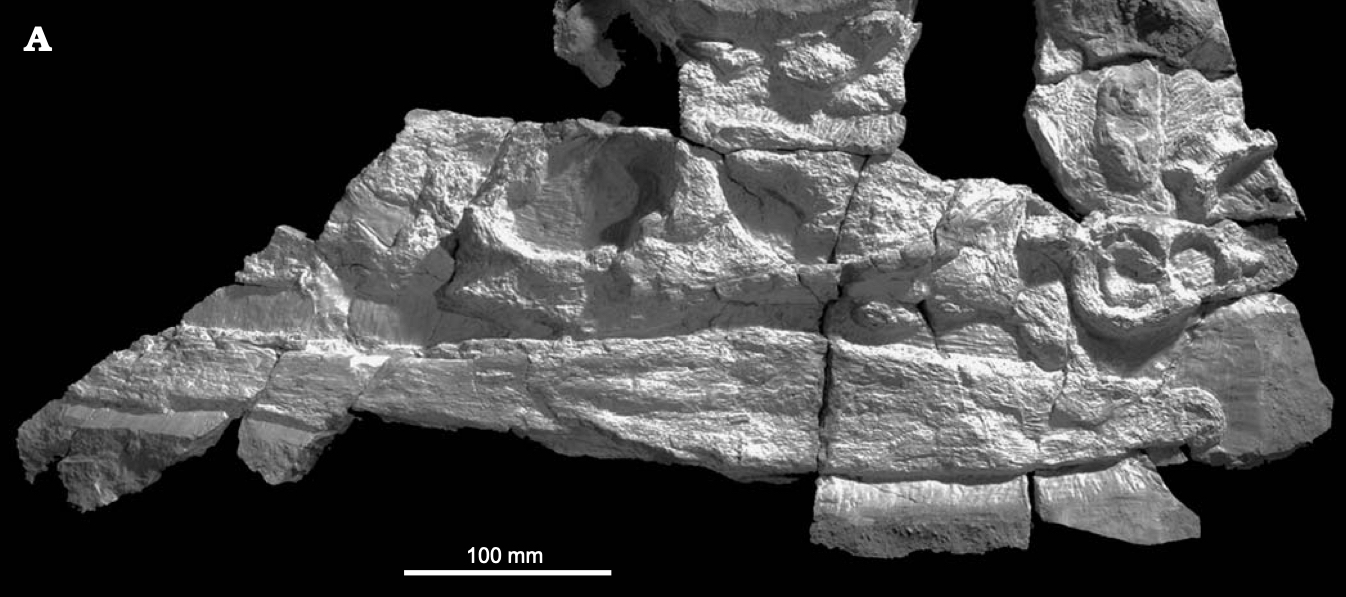
A partial postcranial skeleton. One of two syntype skeletons of Colymbosaurus megadeirus. The other is CAMSM J.29596etc....

A partial postcranial skeleton. One of two syntype skeletons of Colymbosaurus megadeirus. The other is CAMSM J.29596etc....
A partial postcranial skeleton with elements numbered CAMSM J.29596–29691 and J.59736–59743 (shortened in the literature to just “CAMSM J.29596etc). One of two syntype skeletons of Colymbosaurus megadeirus, the other being CAMSM J.63919....
Anguanax is the first articulated plesiosaur ever found in Italy. It is a basal thalassophonean pliosaur from the Late Jurassic (middle Oxfordian). The type and only known specimen (MPPL 18797) of Anguanax was originally described as an indeterminate pliosaurid (Cau and Fanti 2014), but was subsequently named after reanalysis by the same authors the following year (Cau and Fanti 2015)....
Colymbosaurus is a colymbosaurine (derived cryptoclidid) from the Late Jurassic of the UK and Svalbard, Norway. Two valid species are known, C. megadeirus from the UK, and C. svalbardensis from Svalbard, Norway. The genus is known from the Kimmeridgian, Tithonian, and possibly early Berriasian (Late Jurassic–possibly Early Cretaceous). Benson and Bowdler (2014) revised the genus Colymbosaurus and summarised its complicated...

Kimmerosaurus is a poorly known cryptoclidid plesiosaur known only from skull and neck material (Brown 1981, Brown et al. 1986). It differs from other plesiosaurs in the large number of needle-like teeth in its jaws, and in the form of its teeth, which are completely smooth and lack the longitidinal ridges present in other plesiosaurs. Brown et al. (1986) compared...

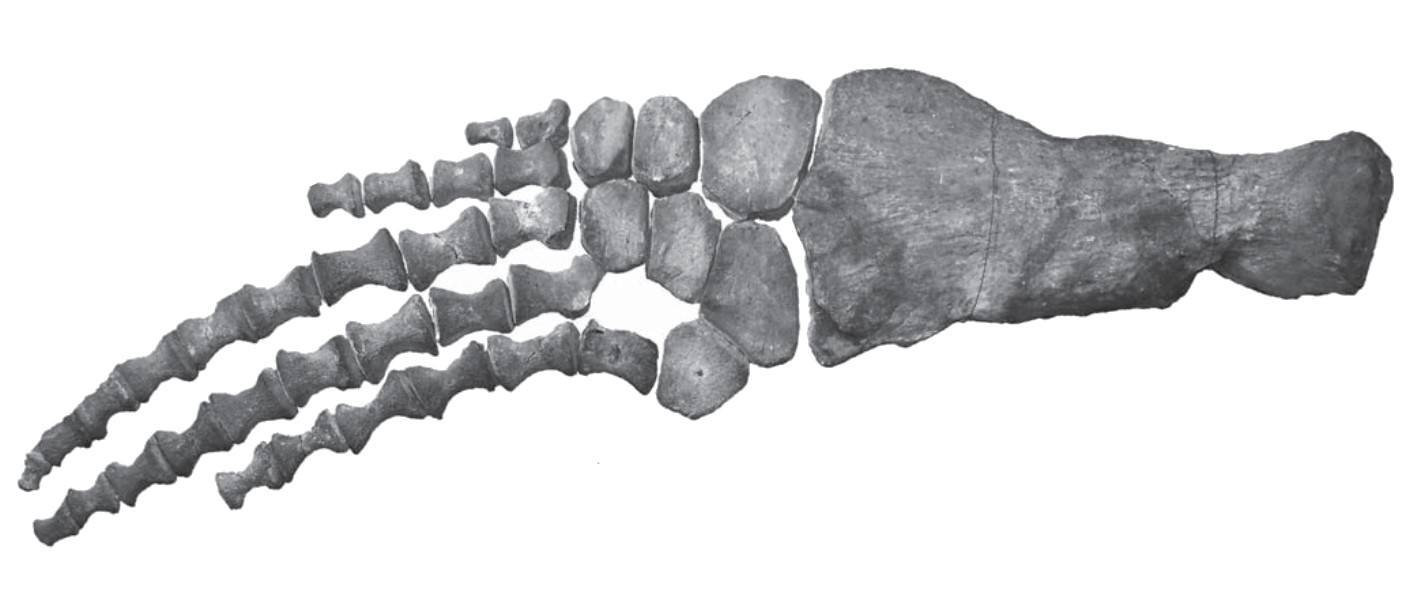
Cryptoclidus, often wrongly spelled ‘Cryptocleidus’ after Andrews (1909), is a moderately sized plesiosaur with adults about four metres long (Brown 1981). It is known from a large number of individual specimens from the Oxford Clay Formation. Fossils of Cryptoclidus are relatively common, and provide a complete ontogenetic sequence from very young to old adult individuals. This makes Cryptoclidus one of...

The genus and species ‘Apractocleidus teretipes‘ was erected by Smellie (1916). Smellie (1915) provided a preliminary account of the specimen before he named it. The specimen is now regarded as an old-adult individual of Cryptoclidus. The taxon ‘Apractocleidus‘ is therefore considered a junior synonym of Cryptoclidus. The specimen was collected by Alfred Leeds and acquired by the Hunterian Museum, Glasgow....