Muraenosaurus

Read more about the article <i>Muraenosaurus</i>
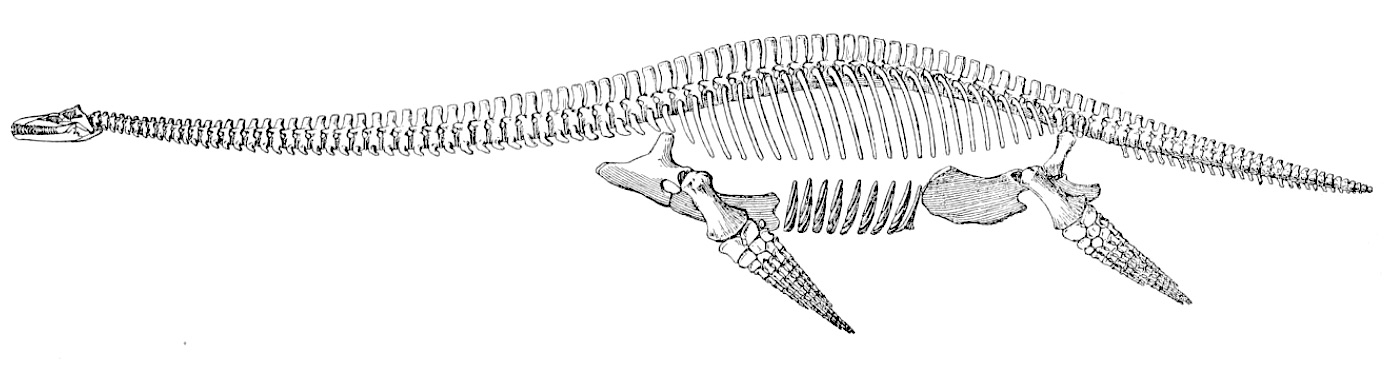
Restoration of the skeleton of Muraenosaurus in lateral view. From Andrews 1910.

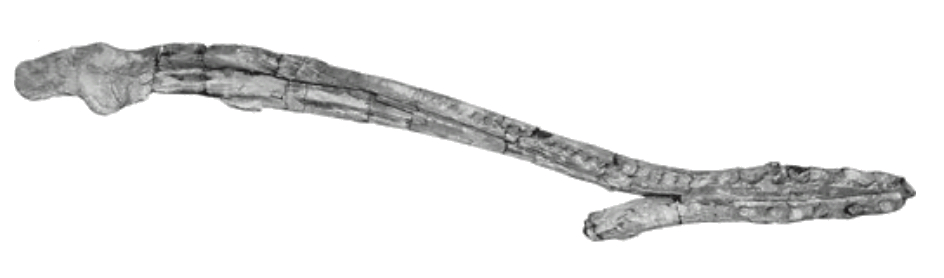
Brown (1981) diagnosed Muraenosaurus as follows: "Plesiosauroids in which the teeth are ornamented with many longitudinal ridges; the dentary bears 19 to 22 teeth on each ramus; the premaxillae bear 5 teeth each, of which the 1st and 5th are small, and the 2nd to 4th are large; the most anterior maxilliary…

Continue ReadingMuraenosaurus

Marmornectes

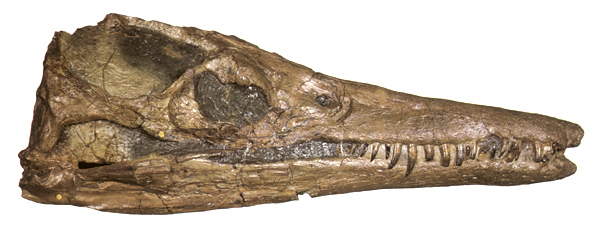
Marmornectes is a pliosaur with a long and narrow snout from the Oxford Clay. It was described and named by Ketchum and Benson (2011a). The type and only specimen (BEDFM 1999.201) comprises a substantially complete skeleton including a partial skull. Marmornectes is similar to Peloneustes but possesses some basal characters that were…

Continue ReadingMarmornectes

Liopleurodon

Read more about the article <i>Liopleurodon</i>
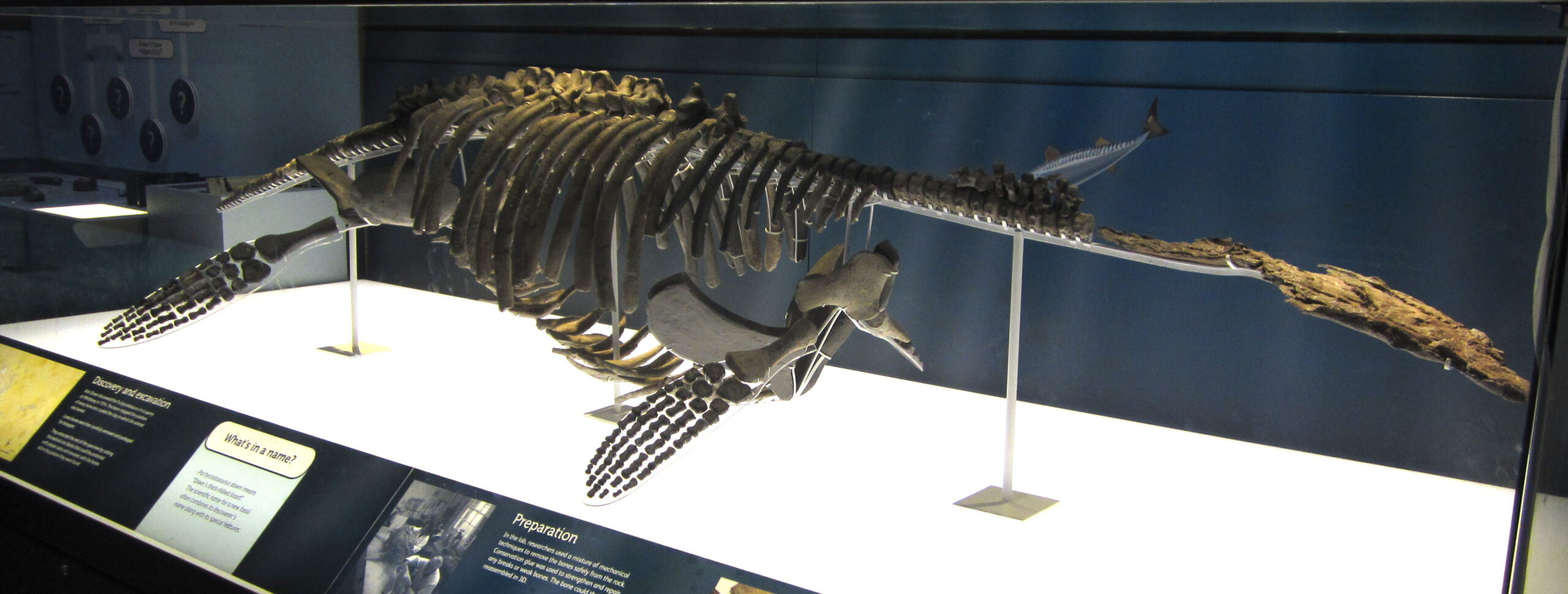
Mounted skeleton of Liopleurodon ferox in the Tubingen Museum, Germany (from Martill and Naish, 2000).

Liopleurodon is a pliosaur that hardly needs introduction since appearing as the villain in the BBC's 'Walking with Dinosaurs' TV series. This led to popular misconceptions about the size of Liopleurodon, which is known to have reached adult sizes in the region of seven metres long, nowhere near the gargantuan 25m estimate…

Continue ReadingLiopleurodon

Cryptoclidus

Read more about the article <i>Cryptoclidus</i>
Skeleton of Cryptoclidus in lateral view. From Brown (1981).

Cryptoclidus, often wrongly spelled 'Cryptocleidus' after Andrews (1909), is a moderately sized plesiosaur with adults about four metres long (Brown 1981). It is known from a large number of individual specimens from the Oxford Clay Formation. Fossils of Cryptoclidus are relatively common, and provide a complete ontogenetic sequence from very young to…

Continue ReadingCryptoclidus