AGT uncatalogued
A partial postcranial skeleton from Street, Somerset, UK (likely lowermost Hettangian)....

A partial postcranial skeleton from Street, Somerset, UK (likely lowermost Hettangian)....
A partial skeleton including a damaged skull. Suffering from pyrite decay....
A partial skeleton including the skull (but no mandible) (Smith 2007a, Benson et al. 2012)...
A substantially complete skeleton exposed in dorsal view. The specimen was proposed as a neotype for Rhomaleosaurus megacephalus (= Atychodracon megacephalus) (Cruickshank 1994b). This fossil, nicknamed the ‘Barrow Kipper’ after Barrow-upon-Soar where it was discovered (Taylor and Martin 1990), is on display at the New Walk Museum in Leicester, UK. This specimen has since become a referred specimen (Smith 2015)....
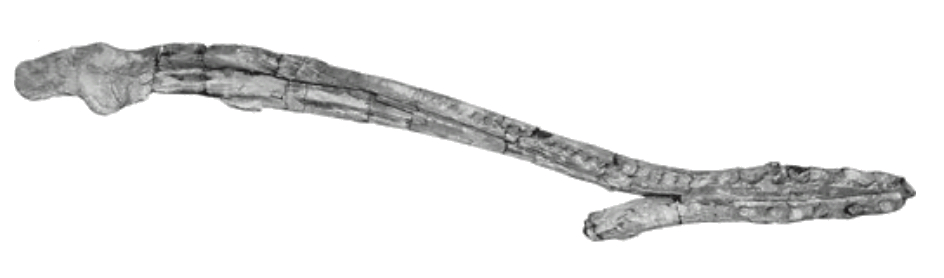
Marmornectes is a pliosaur with a long and narrow snout from the Oxford Clay. It was described and named by Ketchum and Benson (2011a). The type and only specimen (BEDFM 1999.201) comprises a substantially complete skeleton including a partial skull. Marmornectes is similar to Peloneustes but possesses some basal characters that were lost in Peloneustes and other more derived pliosaurids...
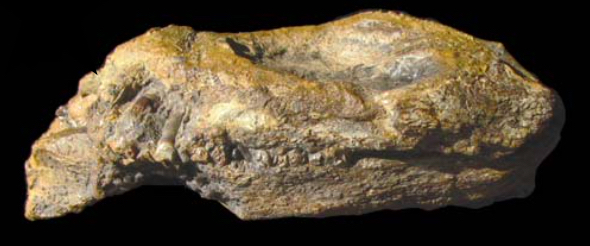
Lusonectes is a poorly known microcleidid the Toarcian (Lower Jurassic) of Portugal. It is known from a single holotype specimen (MG33), a partial skull in the Museu Geológico, Lisbon, Portugal. It was described and named by Smith et al. (2012) as the first diagnostic plesiosaur species from Portugal, and the westernmost occurrence of a plesiosaur in Europe. The genus name...
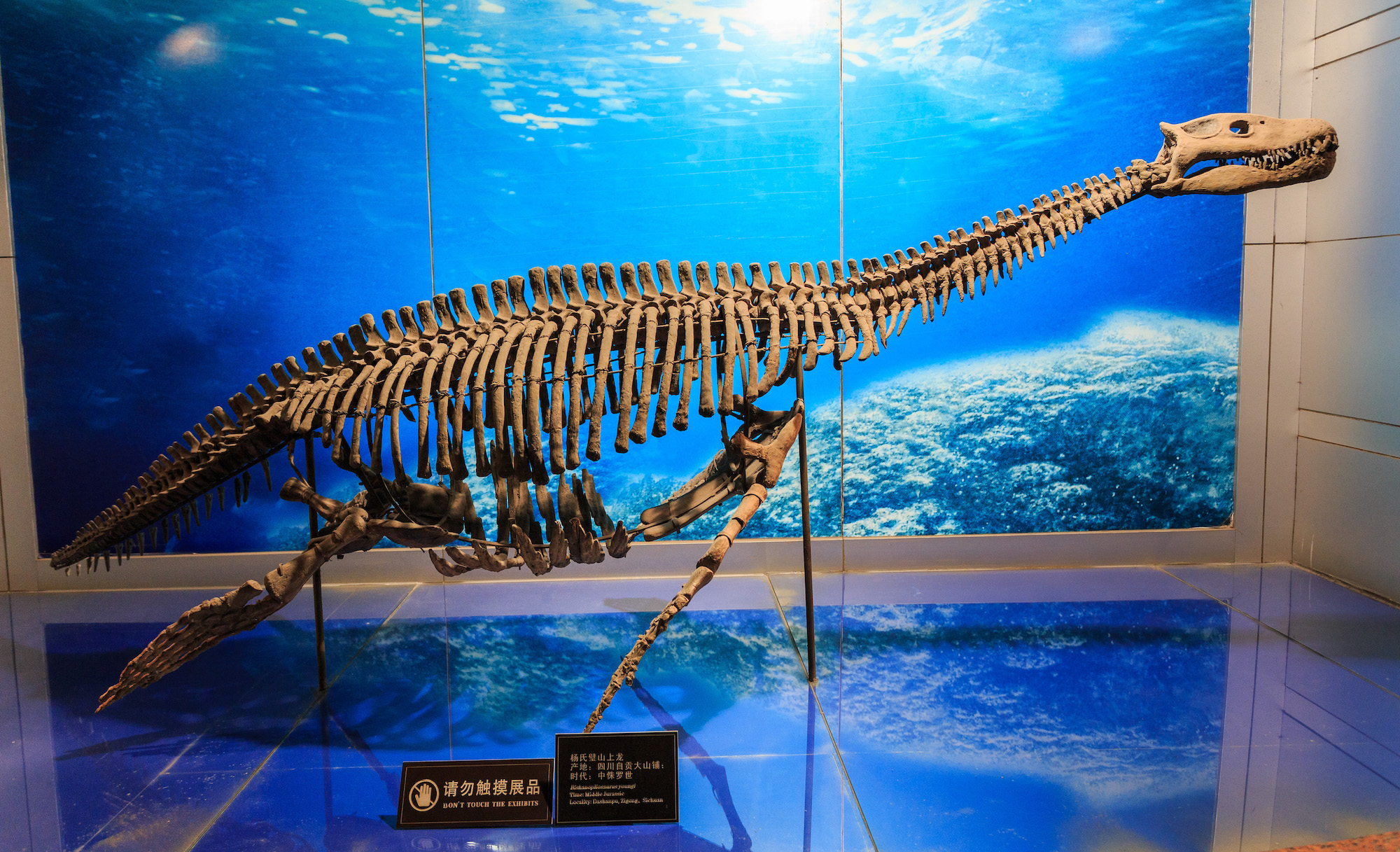
Bishanopliosaurus is the most complete plesiosaur known from the Jurassic of Asia (Sato et al. 2003). The holotype specimen of the type species, B. youngi, is a partial postcranial skeleton of a juvenile individual from the Dongyuemiao Member of the Ziliujing Formation (Lower or Mid Jurassic) of Bishan County, Chongqing, China. It was first described and named by Dong (1980),...

Microcleidus is a medium (4.27 m) to large (5.03 m) plesiosauroid with a small head and a long neck containing 38–39 cervical vertebrae. Watson (1909) erected Microcleidus to accommodate fossil material belonging to ‘P.’ homalospondylus and ‘P.’ macropterus (Watson 1911). Both species were considered valid by Seeley (1865), Blake (1876) and Watson (1911) on the basis of slight differences in the limbs,...
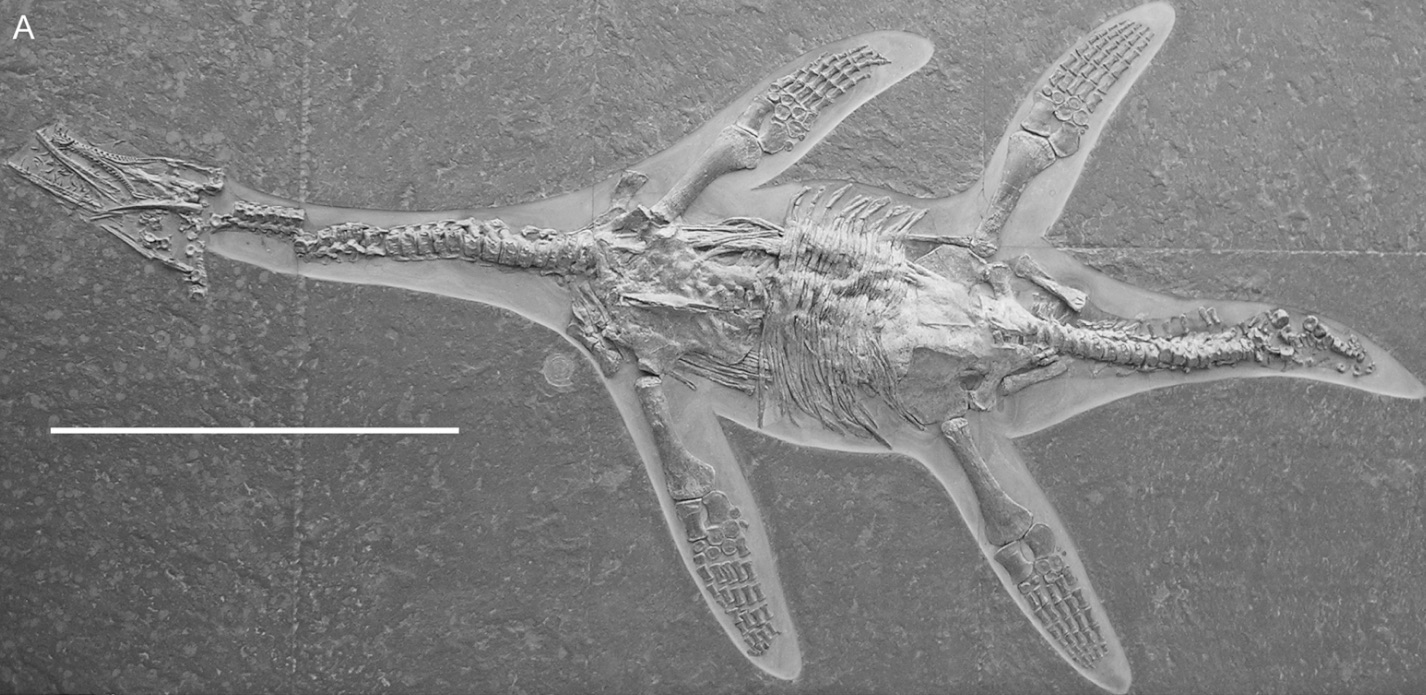
Hauffiosaurus is a basal pliosaurid known from the Lower Jurassic (Toarcian) of the UK and Germany. Hauffiosaurus is a medium to large sized plesiosaur (H. zanoni = 3.4 m, H. tomistomimus, 4.23 m, H. longirostris = 4.83 m) (Smith and Lomax 2019), with a relatively long neck for a pliosaur, and an elongate narrow snout. The genus Hauffiosaurus was named...
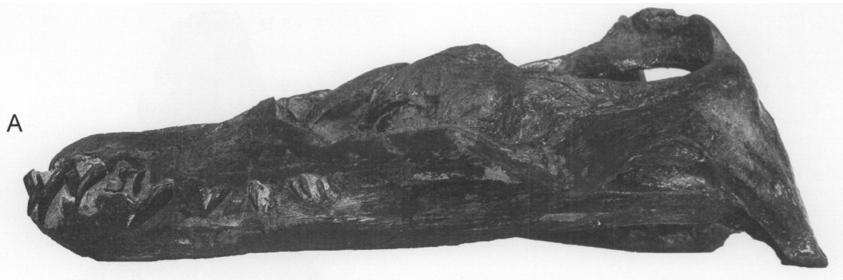
Anningasaura is a basal plesiosaur from the Lower Jurassic of Lyme Regis, UK, known from a single three-dimensionally preserved skull. The specimen, NHMUK OR49202, was originally described and figured by Andrews (1896), who referred it to ‘Plesiosaurus‘ macrocephalus. It was redescribed and named as the holotype of Anningasaura lymense by Vincent and Benson (2012). Cast of the holotype skull of...
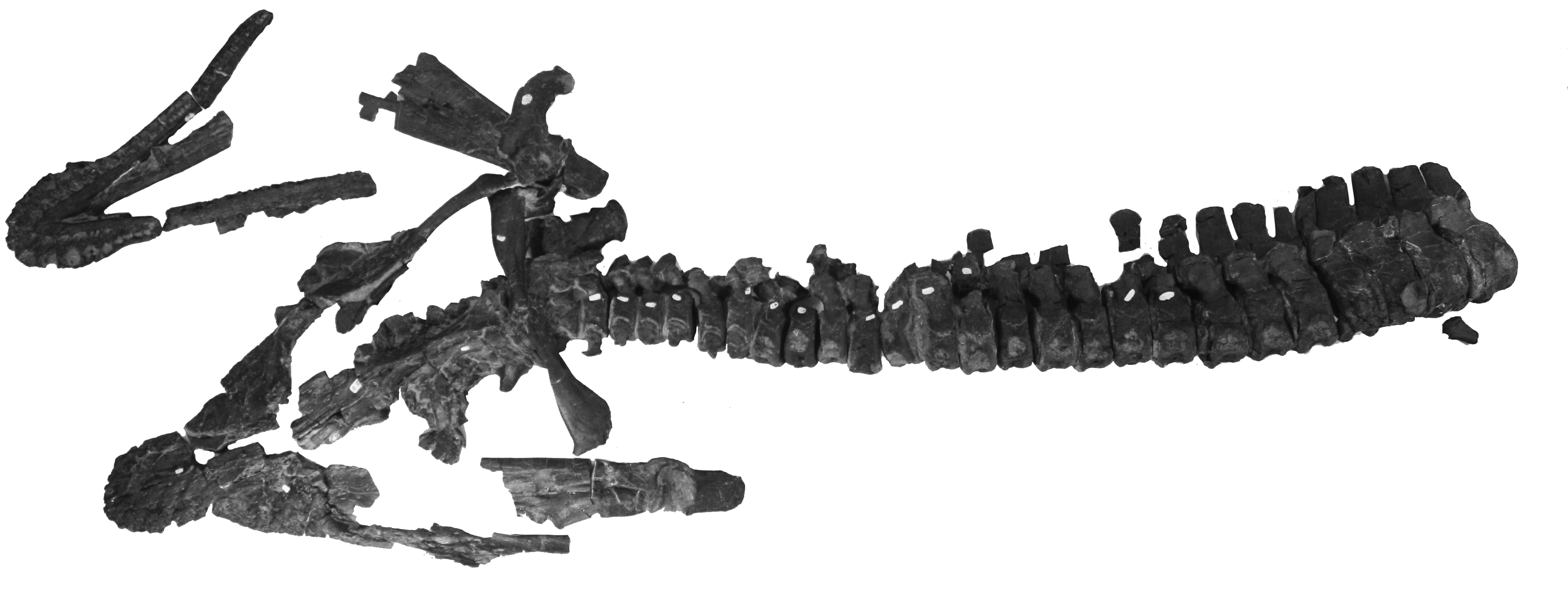
Thaumatodracon is a relatively large rhomaleosaurid from the Lower Jurassic (Sinemurian) of Lyme Bay – the coast between Lyme Regis and Charmouth – UK. The holotype specimen (NLMH 106.058) is an almost complete skull and cervical (neck) series. It has a 60 cm long skull, and based on comparison with other rhomaleosaurids I estimate its total body length to be 6.5...
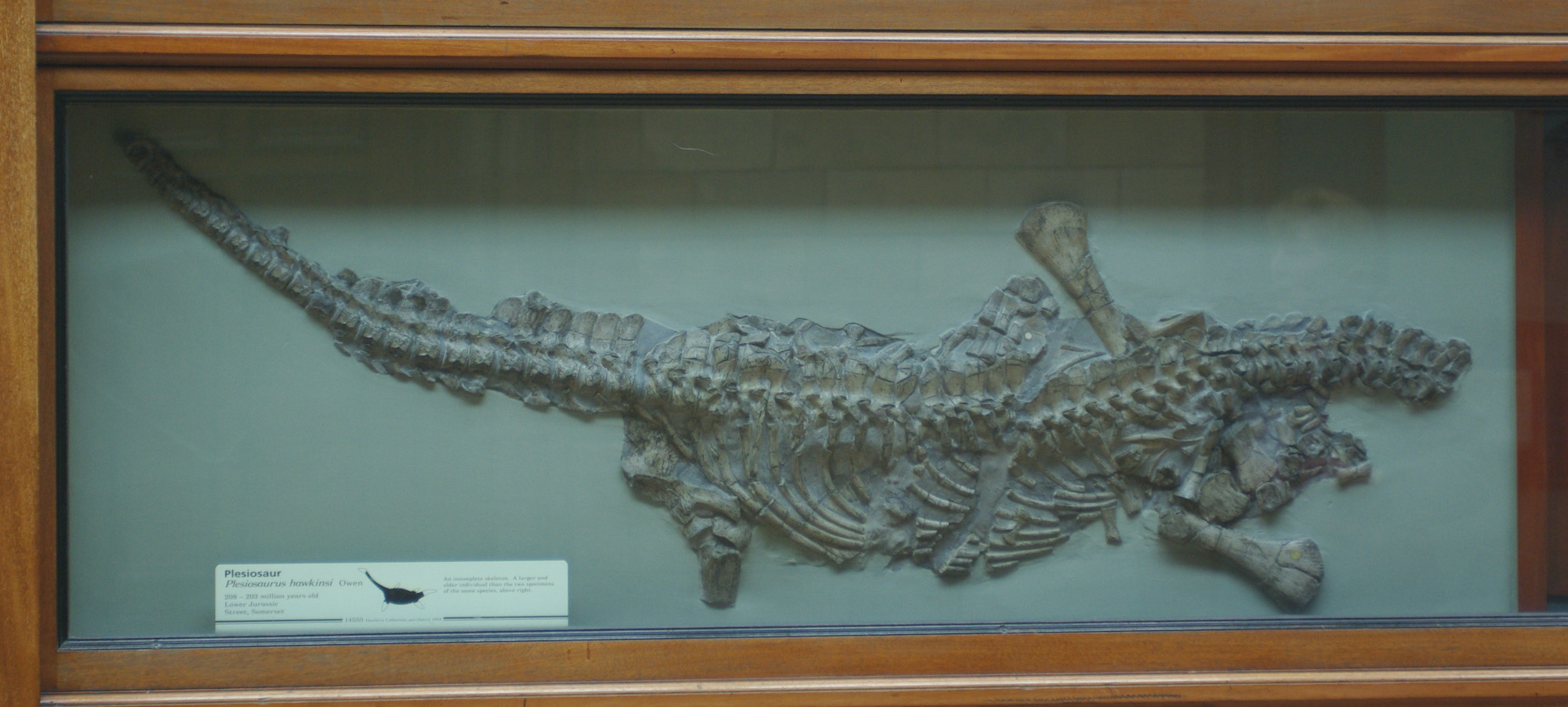
Avalonnectes is a small-bodied basal rhomaleosaurid. Avalonnectes was named by Benson, Evans and Druckenmiller (2012) for a partial skeleton including the rear part of the skull from the lowermost Jurassic of Street, Somerset, UK. The specimen (NHMUK PV OR 14550) was previously referred to Thalassiodracon hawkinsii and is one of many historical plesiosaur skeletons preserved on slabs on display in...
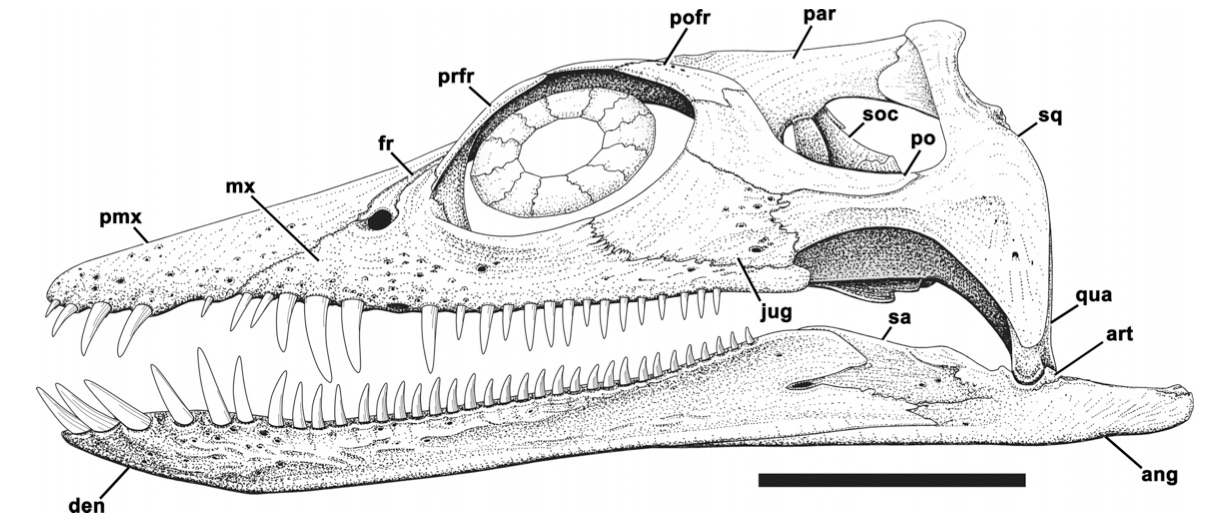
Stratesaurus is a very small-bodied basal plesiosaur known from the lowermost Jurassic (Blue Lias Formation) of Street, Somerset . Stratesaurus is represented by three specimens. The holotype specimen (OUMNH J.10337) was named and briefly described by Benson, Evans and Druckenmiller (2012), and later described in detail along with two referred specimens by Benson, Evans and Taylor (2015). The genus contains...