Lusonectes

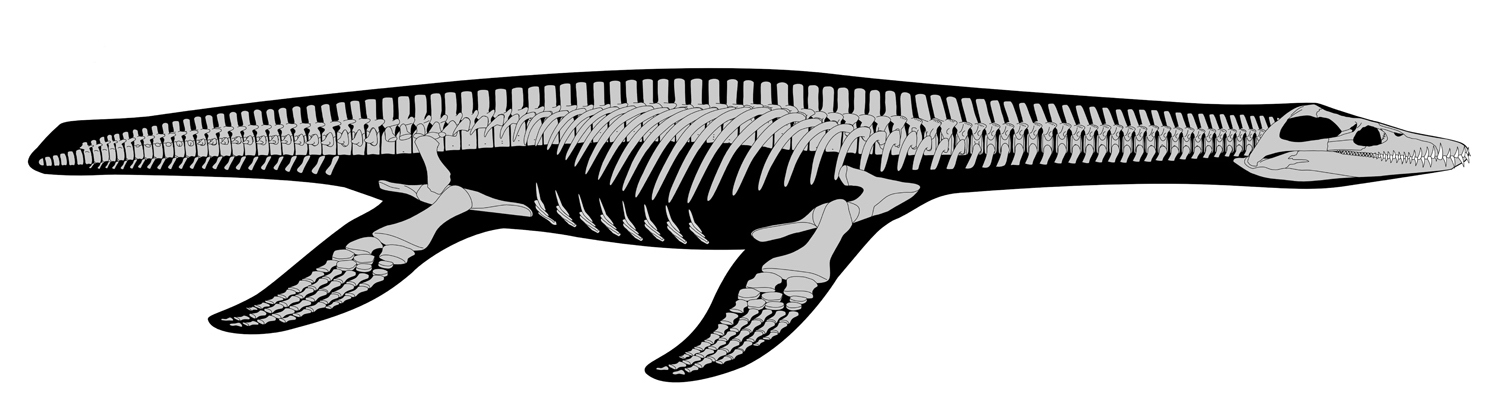
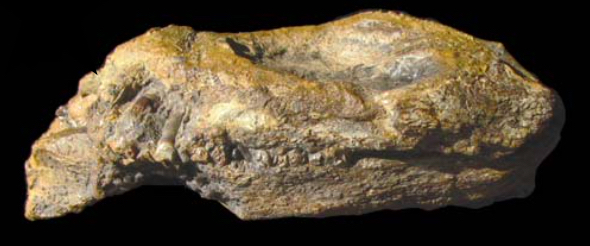
Lusonectes is a poorly known microcleidid the Toarcian (Lower Jurassic) of Portugal. It is known from a single holotype specimen (MG33), a partial skull in the Museu Geológico, Lisbon, Portugal. It was described and named by Smith et al. (2012) as the first diagnostic plesiosaur species from Portugal, and the westernmost occurrence of a plesiosaur in Europe. The genus name...

Continue ReadingLusonectes

Microcleidus

Read more about the article Microcleidus
Skeleton (lectotype specimen NHMUK PV OR 36184) of the Microcleidus homalospondylus. Lithograph from Owen (1865).

Microcleidus is a medium (4.27 m) to large (5.03 m) plesiosauroid with a small head and a long neck containing 38–39 cervical vertebrae. Watson (1909) erected Microcleidus to accommodate fossil material belonging to ‘P.’ homalospondylus and ‘P.’ macropterus (Watson 1911). Both species were considered valid by Seeley (1865), Blake (1876) and Watson (1911) on the basis of slight differences in the limbs,...

Continue ReadingMicrocleidus

Hauffiosaurus

Read more about the article Hauffiosaurus
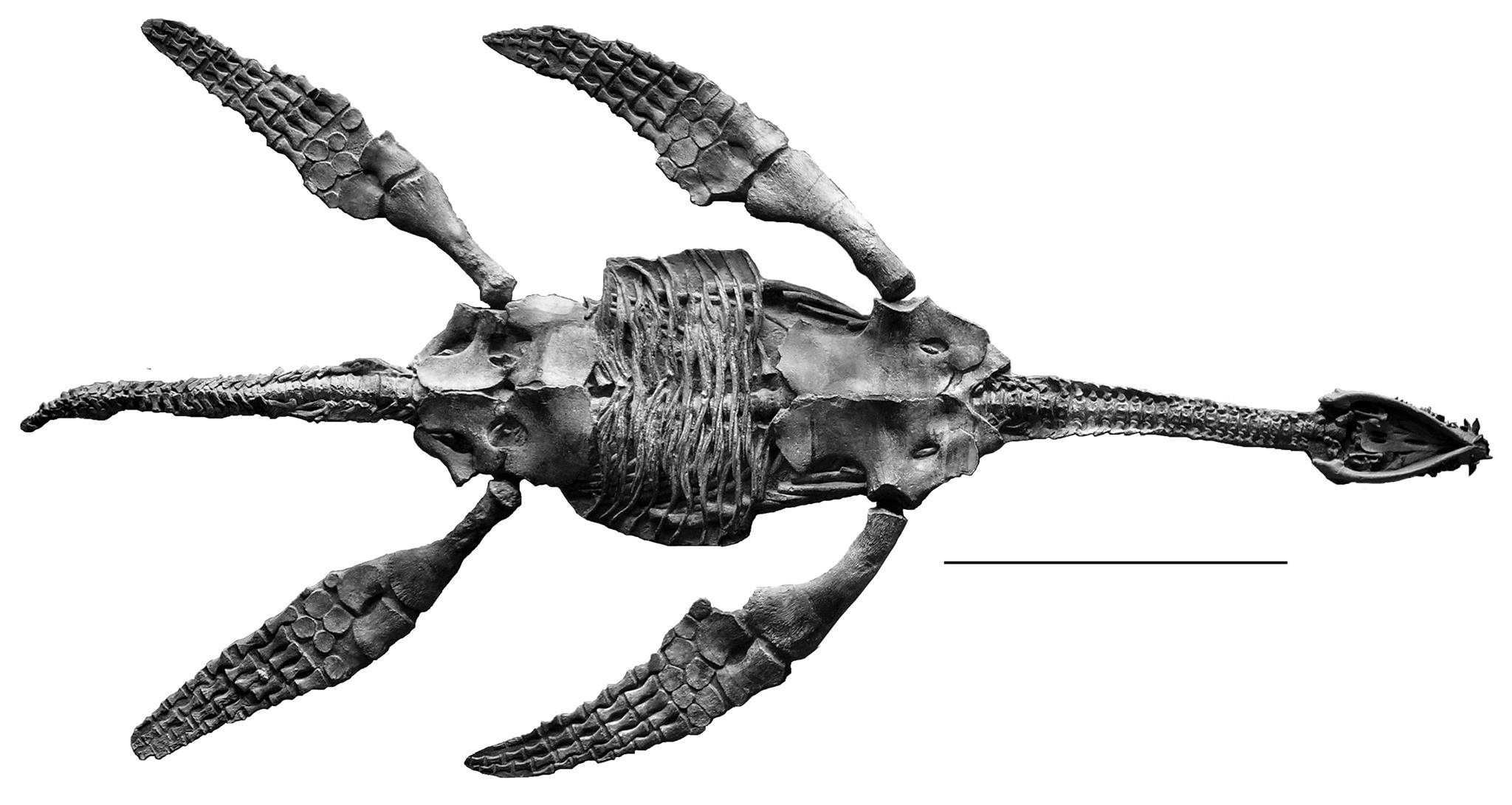
Holotype (Hauff Uncatalogued) of Hauffiosaurus zanoni as preserved in ventral view. Scale bar = 1 m. From Vincent (2011)

Hauffiosaurus is a basal pliosaurid known from the Lower Jurassic (Toarcian) of the UK and Germany. Hauffiosaurus is a medium to large sized plesiosaur (H. zanoni = 3.4 m, H. tomistomimus, 4.23 m, H. longirostris = 4.83 m) (Smith and Lomax 2019), with a relatively long neck for a pliosaur, and an elongate narrow snout. The genus Hauffiosaurus was named...

Continue ReadingHauffiosaurus

Rhomaleosaurus

Read more about the article Rhomaleosaurus
Reconstruction of Rhomaleosaurus thorntoni. From Smith and Benson (2014).

Rhomaleosaurus is the largest known Lower Jurassic pliosaur and was the top predator in early Jurassic marine ecosystems. It has a reinforced skull to help resist torsion and a ferocious set of teeth, a combination of characters perfect for snatching and killing cephalopods, fish, and other marine reptiles. Historically, the genus Rhomaleosaurus has been interchangeable with now invalid ‘Thaumatosaurus’. See...

Continue ReadingRhomaleosaurus

Occitanosaurus

Read more about the article Occitanosaurus
Mounted skeleton of 'Occitanosaurus'. From a postcard.

‘Occitanosaurus’ was described by Sciau et al. (1990) and Bardet et al. (1999). The genus name was erected for ‘Plesiosaurus’ tournemirensis by Bardet et al. (1999). The taxon was originally regarded as an early elasmosaurid but is now considered a member of the Microcleididae. ‘Occitanosaurus’ was approximately 3.9 meters long. The type material (MMM J. T. 86-100), in the Musée...

Continue ReadingOccitanosaurus

Meyerasaurus

Read more about the article Meyerasaurus
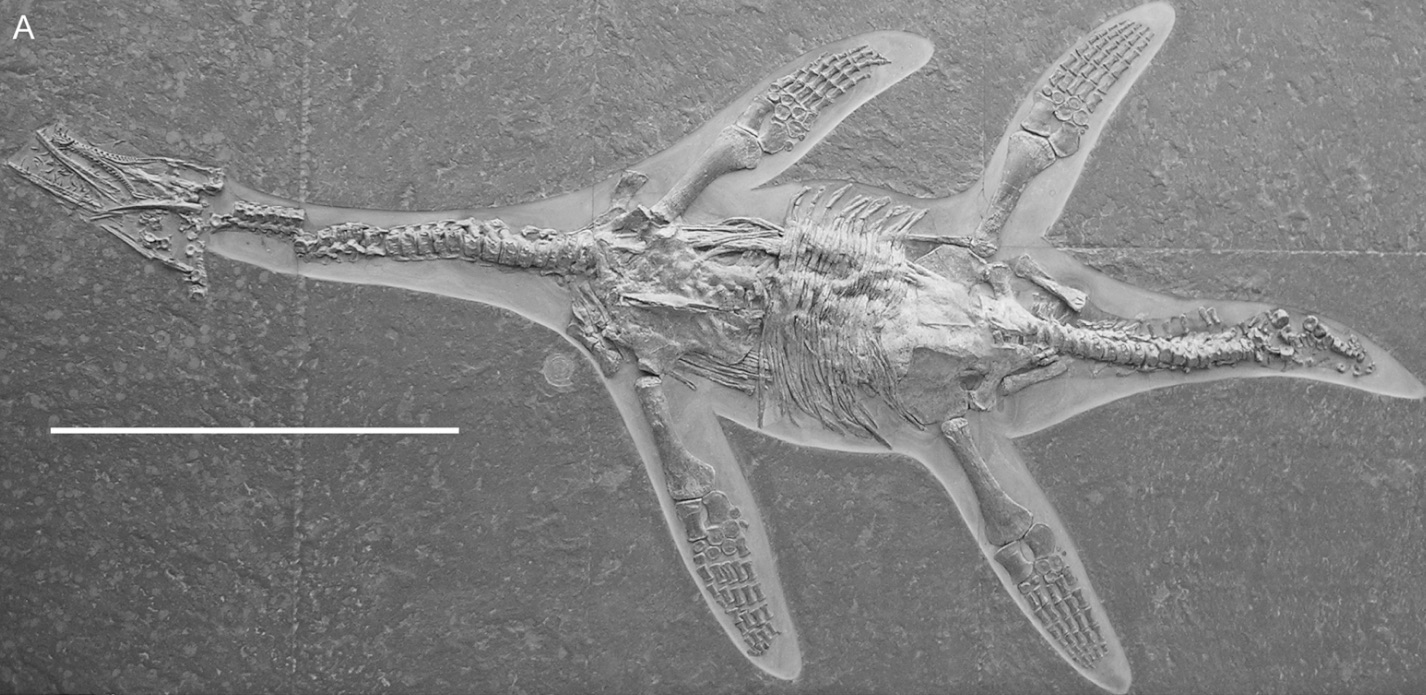
The holotype specimen of Meyerasaurus (SMNS 12478) from the Posidonia-Schiefer, Holzmaden, Germany.

M. victor was originally described and figured by Fraas (1910). Historically, M. victor has been regarded as a species of Rhomaleosaurus and is often associated in the literature under the defunct name ‘Thaumatosaurus’. See my article about this history of ‘Thaumatosaurus‘ here. Smith and Vincent (2010) identified M. victor as generically distinct from Rhomaleosaurus and erected the new name...

Continue ReadingMeyerasaurus