
Thalassiodracon

The species Plesiosaurus hawkinsii was introduced in 1838 for a small plesiosaurian from Street, Somerset. The new genus name Thalassiodracon was erected decades later following an examination of a referred skull in Cambridge (CAMSM J.46986). Thalassiodracon is from the Rhaetian-Hettangian boundary, so it is latest Triassic or earliest Jurassic in age. Thalassiodracon means ‘Sea Dragon’, which “alludes to the colloquial...
Rhomaleosaurus
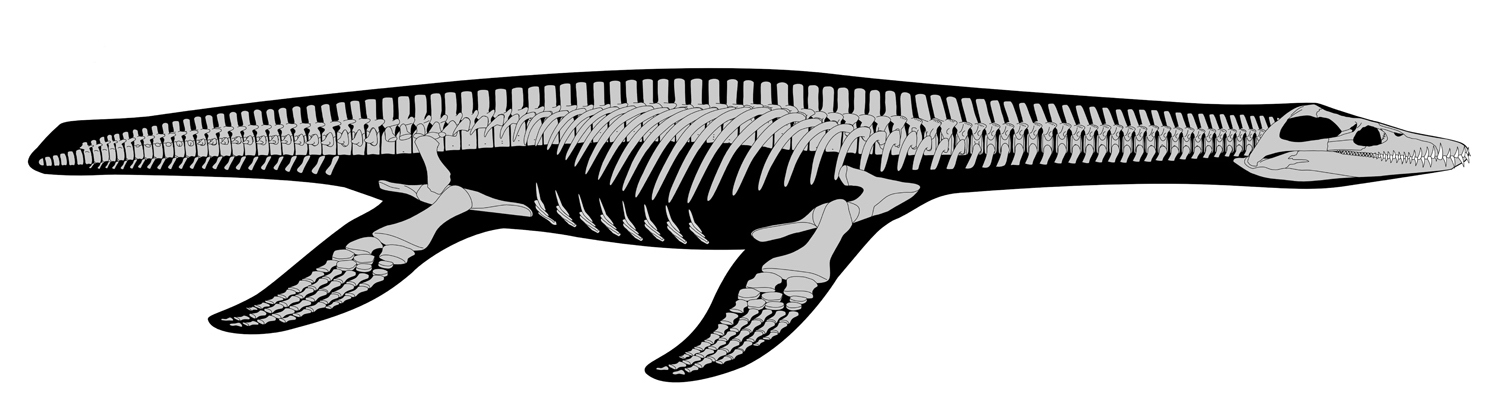
Rhomaleosaurus is the largest known Lower Jurassic pliosaur and was the top predator in early Jurassic marine ecosystems. It has a reinforced skull to help resist torsion and a ferocious set of teeth, a combination of characters perfect for snatching and killing cephalopods, fish, and other marine reptiles. Historically, the genus Rhomaleosaurus has been interchangeable with now invalid ‘Thaumatosaurus’. See...
Plesiosaurus
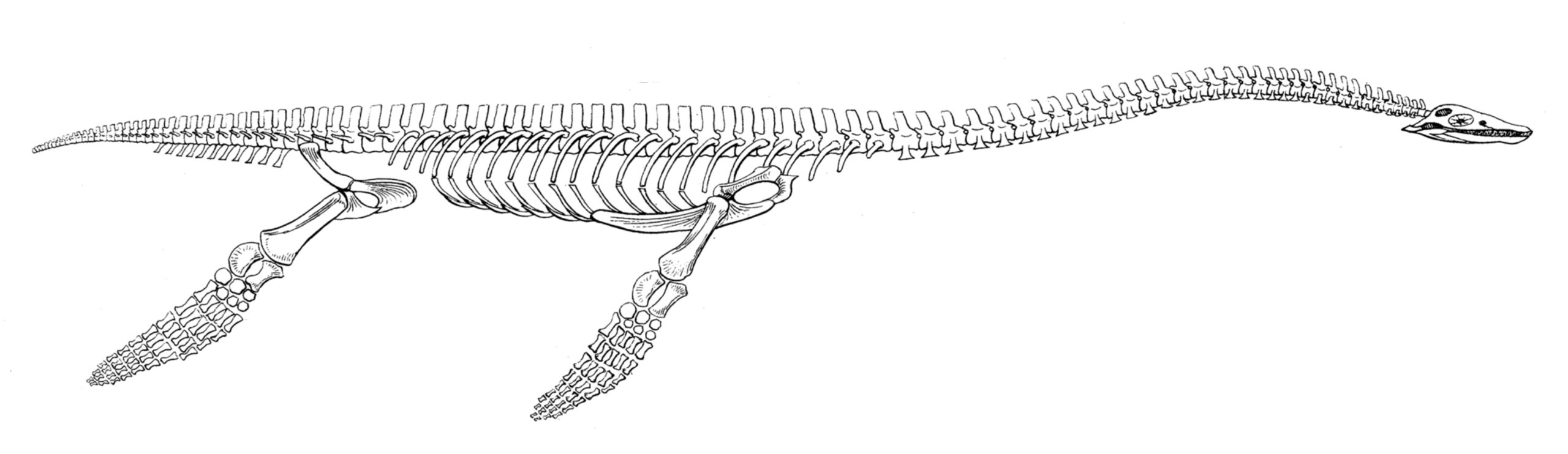
Plesiosaurus was the first plesiosaur discovered and named (De la Beche and Conybeare 1821). The first 1821 description was based on partial remains so the anatomy of Plesiosaurus – particularly the identity of the isolated bones and how they articulated together – involved some guesswork. An attempted reconstruction of the forelimb of Plesiosaurus by De la Beche and Conybeare (1821)....
Occitanosaurus

‘Occitanosaurus’ was described by Sciau et al. (1990) and Bardet et al. (1999). The genus name was erected for ‘Plesiosaurus’ tournemirensis by Bardet et al. (1999). The taxon was originally regarded as an early elasmosaurid but is now considered a member of the Microcleididae. ‘Occitanosaurus’ was approximately 3.9 meters long. The type material (MMM J. T. 86-100), in the Musée...
Meyerasaurus
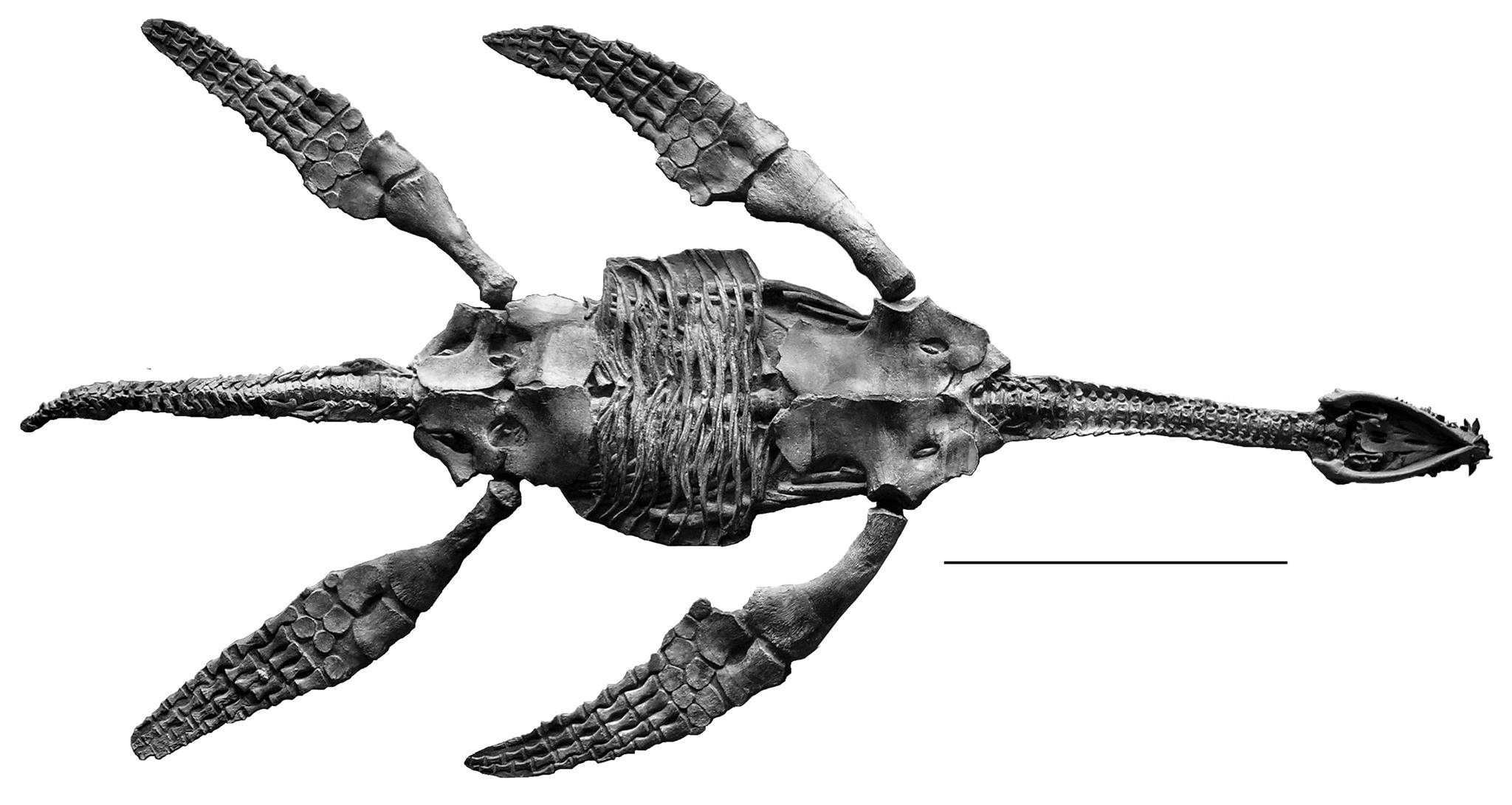
M. victor was originally described and figured by Fraas (1910). Historically, M. victor has been regarded as a species of Rhomaleosaurus and is often associated in the literature under the defunct name ‘Thaumatosaurus’. See my article about this history of ‘Thaumatosaurus‘ here. Smith and Vincent (2010) identified M. victor as generically distinct from Rhomaleosaurus and erected the new name...
Macroplata
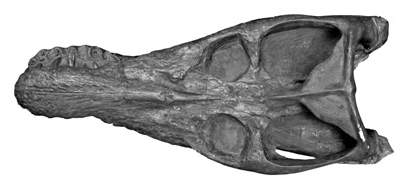
Macroplata is a rhomaleosaurid plesiosaur from the Lower Jurassic of Warwickshire, UK. Macroplata was named and briefly described by Swinton (1930a) based on a single skeleton from Harbury, Warwickshire, and the skeleton was redescribed in detail by Ketchum and Smith (2010). Photograph of Macroplata tenuiceps in situ in Harbury, Warwickshire. White (1940) referred the species Plesiosaurus longirostris to Macroplata, and...
Eretmosaurus

The genus Eretmosaurus was erected for ‘Plesiosaurus’ rugosus by Seeley (1874). Eretmosaurus is a rogue taxon in cladistic analyses and researchers have been in disagreement about its taxonomic affinity. Eretmosaurus has been included in several different families: the Rhomaleosauridae based on the anatomy of its girdles (Persson 1963); the Pliosauridae (Brown 1981), the Elasmosauridae (Bardet 1995, Bardet et al. 1999). The...
Atychodracon

The genus Atychodracon was erected by Smith (2015) to accommodate ‘Rhomaleosaurus’ megacephalus, because it is generically separarate from Rhomaleosaurus sensu stricto (Smith and Dyke 2008). A. megacephalus is closely related to Eurycleidus and some authors have regarded A. megacephalus as a distinct species of Eurycleidus. Three dimensional scan with texture (colour) removed of plaster cast (BGS GSM 118410) of the...
Attenborosaurus

Attenborosaurus is an unusual plesiosaur because it combines a long neck with a relatively large head. It is classified as a pliosaur in some classifications, but some phylogenies place it in a more basal position. The genus was introduced for ‘Plesiosaurus’ conybeari, a species originally described by Sollas (1881). Bob Bakker coined the new genus name to honour the esteemed...
Archaeonectrus

The genus Archaeonectrus was proposed by Novozhilov (1964) for ‘Plesiosaurus’ rostratus, a species named by Owen (1865). By modern standards, Owen’s (1865) original description is rather inadequate. One notable characteristic of Archaeonectrus rostratus is the relatively small size of the limbs relative to its body. It has been classified as a pliosauroid, sometimes within the Rhomaleosauridae. Archaeonectrus rostratus is the...