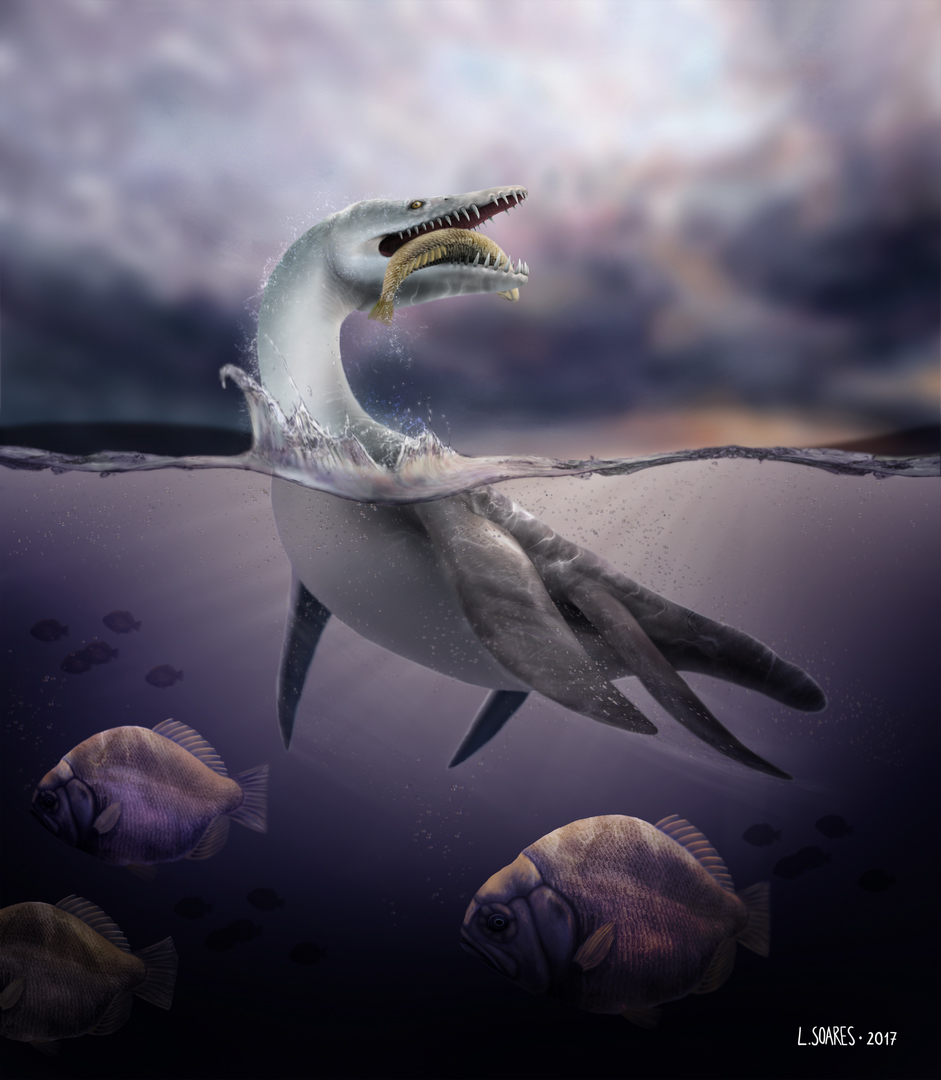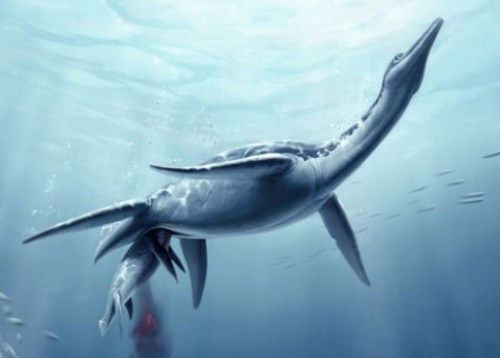
In 2012 I co-presented a poster at the SVP annual meeting on a new plesiosaur from Lyme Regis, UK (see my article about it here). The long awaited follow up paper was finally published this summer in the latest volume of Palaeontographica A (Smith and Araújo 2017) and the beast now has a name, Thaumatodracon wiedenrothi, meaning ‘Wiedenroth’s Wonder Dragon’.
Category «New paper»
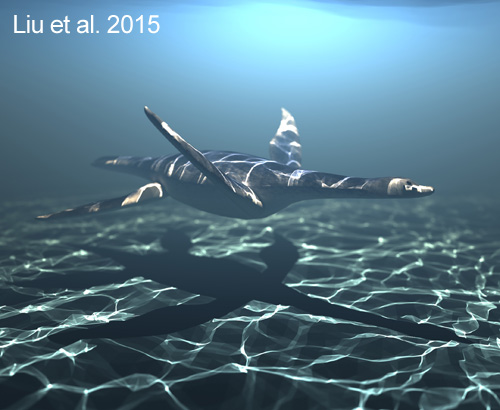
Investigating plesiosaur swimming using computer simulations
Resurrecting the Unfortunate Dragon
The five metre-long holotype specimen of ‘Plesiosaurus’ megacephalus, from the Jurassic of Street-on-the-Fosse, Somerset, was one of several plesiosaurs once displayed in the Bristol Museum and Art Gallery. As one of the earliest plesiosaurs to evolve it is an important species for understanding the early history of the group.
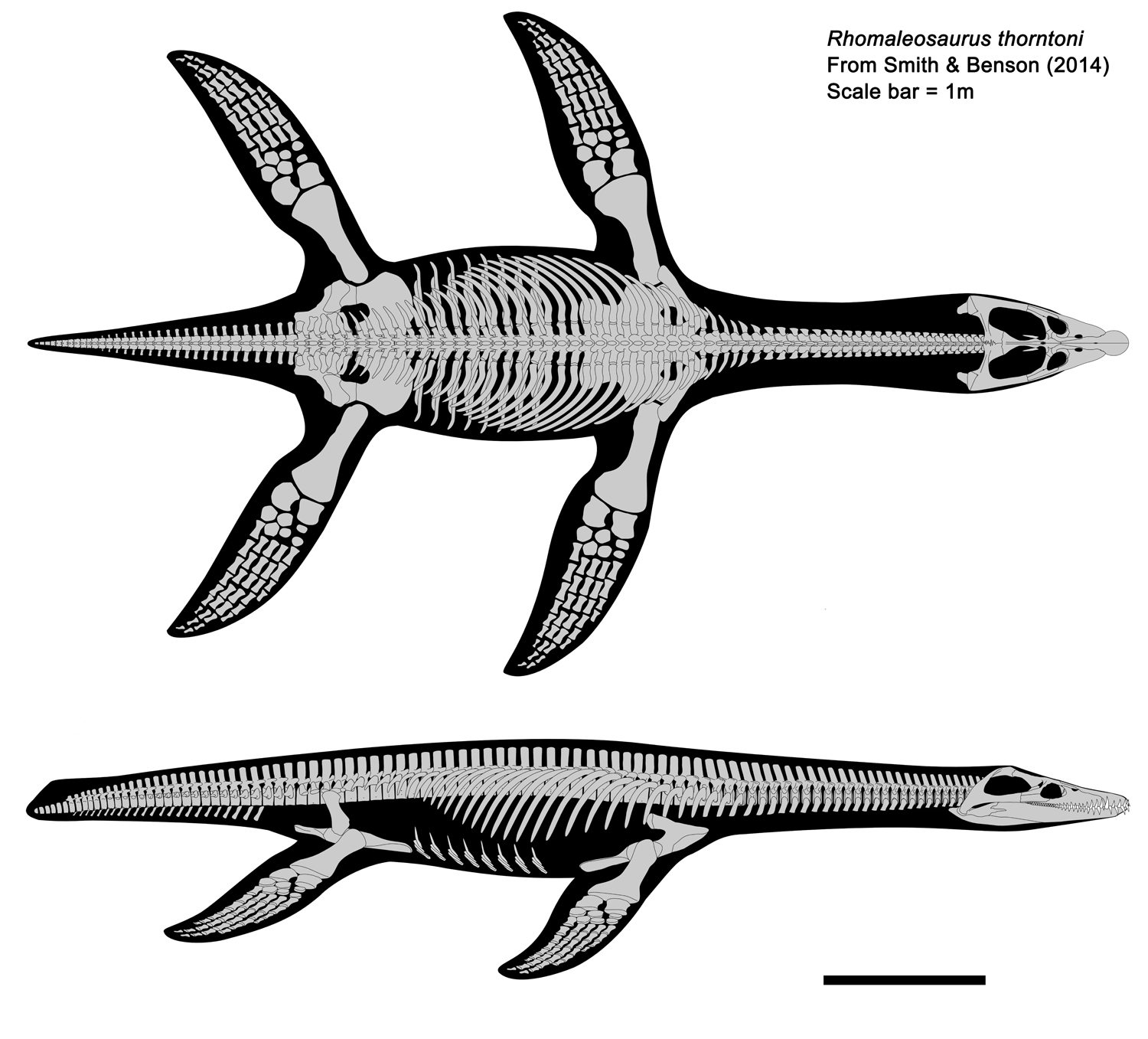
Monograph on Rhomaleosaurus thorntoni
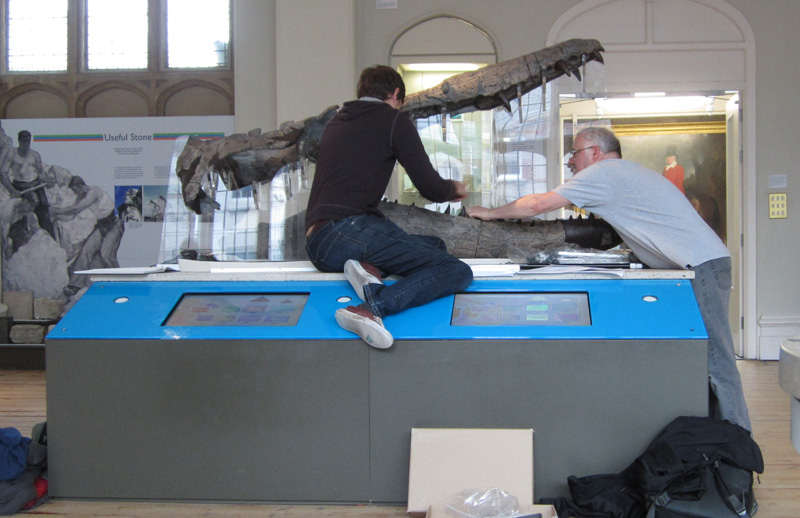
Many readers will be familiar with the giant plesiosaur on display in the marine reptiles gallery of the Natural History Museum, London. This is a cast of the 7 metre long holotype of Rhomaleosaurus cramptoni, the original of which is housed in the National Museum of Ireland (Natural History) and formed the basis for my PhD thesis back in (time flies!) 2007.
Pliosaurus kevani – the Weymouth Bay Pliosaur
New plesiosaurs, lots of new plesiosaurs!
An old debate settled – plesiosaurs gave birth to live young
Recent plesiosaur papers – a round up
So far, 2008 has seen a healthy number of new papers on plesiosaurs and a few new taxa too. Way back in February, Druckenmiller and Russell (2008a) introduced Nichollsia borealis, a plesiosaur of uncertain affinity, based on a beautifully preserved specimen from Alberta, Canada.