

All rhomaleosaurids have a relatively large head with a moderately long neck composed of about 28 vertebrae. The group has a stratigraphic range from the Lower Jurassic to the Middle Jurassic. The Rhomaleosauridae is traditionally regarded as a pliosauroid family but some cladistic analyses have placed the Rhomaleosauridae outside of Pliosauroidea (=pliosaurs), in a sister relationship with a clade called Neoplesiosauria (Plesiosauroidea + Pliosauridae) (e.g. Benson et al. 2012), or in an unresolved polytomy with Plesiosauroidea and Pliosauroidea (e.g. Benson and Druckenmiller 2014).
Rhomaleosaurid phylogeny
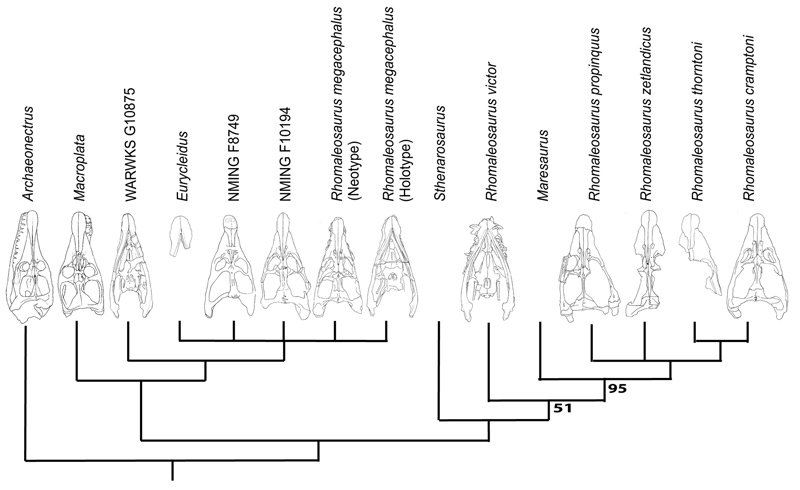
Rhomaleosaurid genera

Archaeonectrus
The genus Archaeonectrus was proposed by Novozhilov (1964) for ‘Plesiosaurus’ rostratus, a species named by Owen (1865). By modern standards, Owen’s (1865) original description is rather inadequate. One notable characteristic of Archaeonectrus rostratus is the relatively small size of the limbs relative to its body.

Atychodracon
The genus Atychodracon was erected by Smith (2015) to accommodate ‘Rhomaleosaurus’ megacephalus, because it is generically separarate from Rhomaleosaurus sensu stricto (Smith and Dyke 2008). A. megacephalus is closely related to Eurycleidus and some authors have regarded A.
Avalonnectes
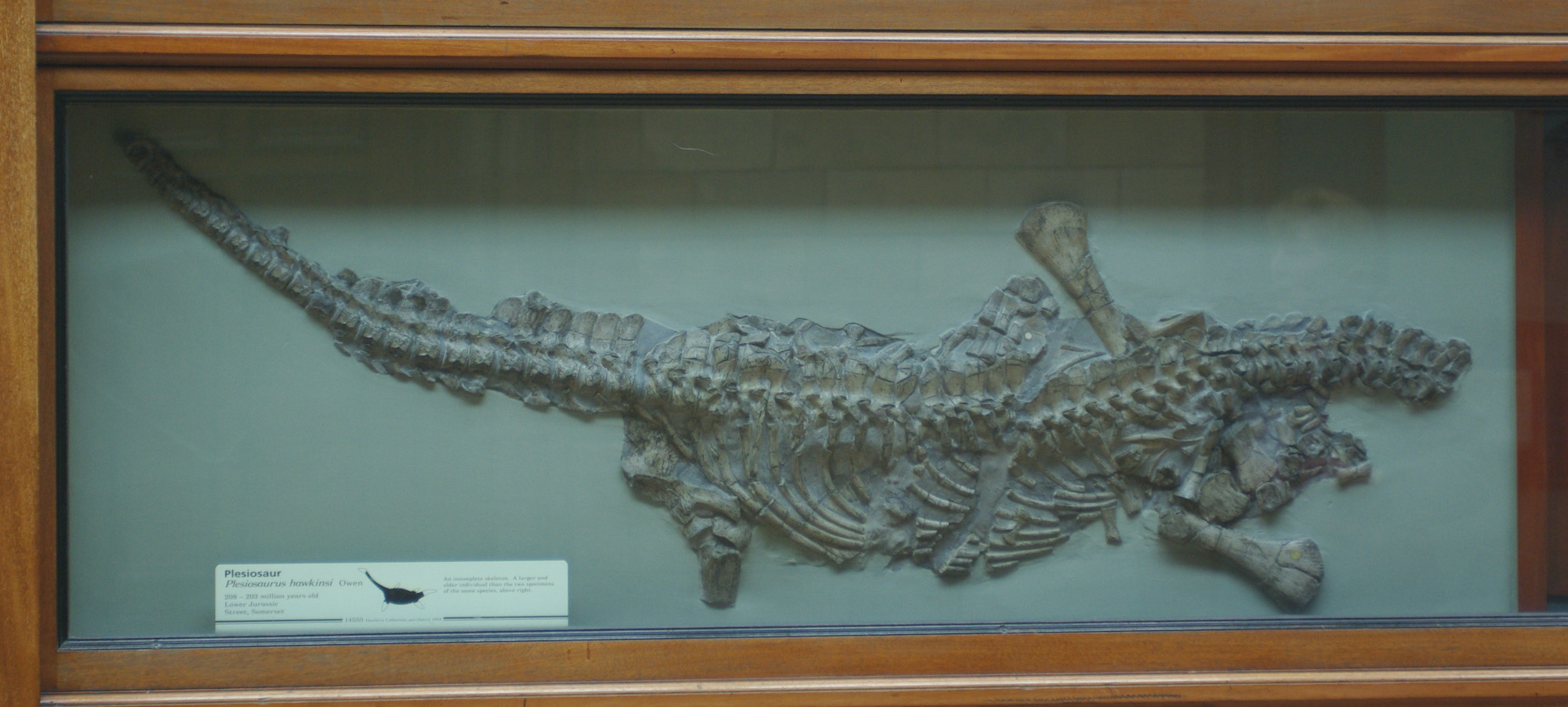
Avalonnectes is a small-bodied basal rhomaleosaurid. Avalonnectes was named by Benson, Evans and Druckenmiller (2012) for a partial skeleton including the rear part of the skull from the lowermost Jurassic of Street, Somerset, UK.
Bishanopliosaurus
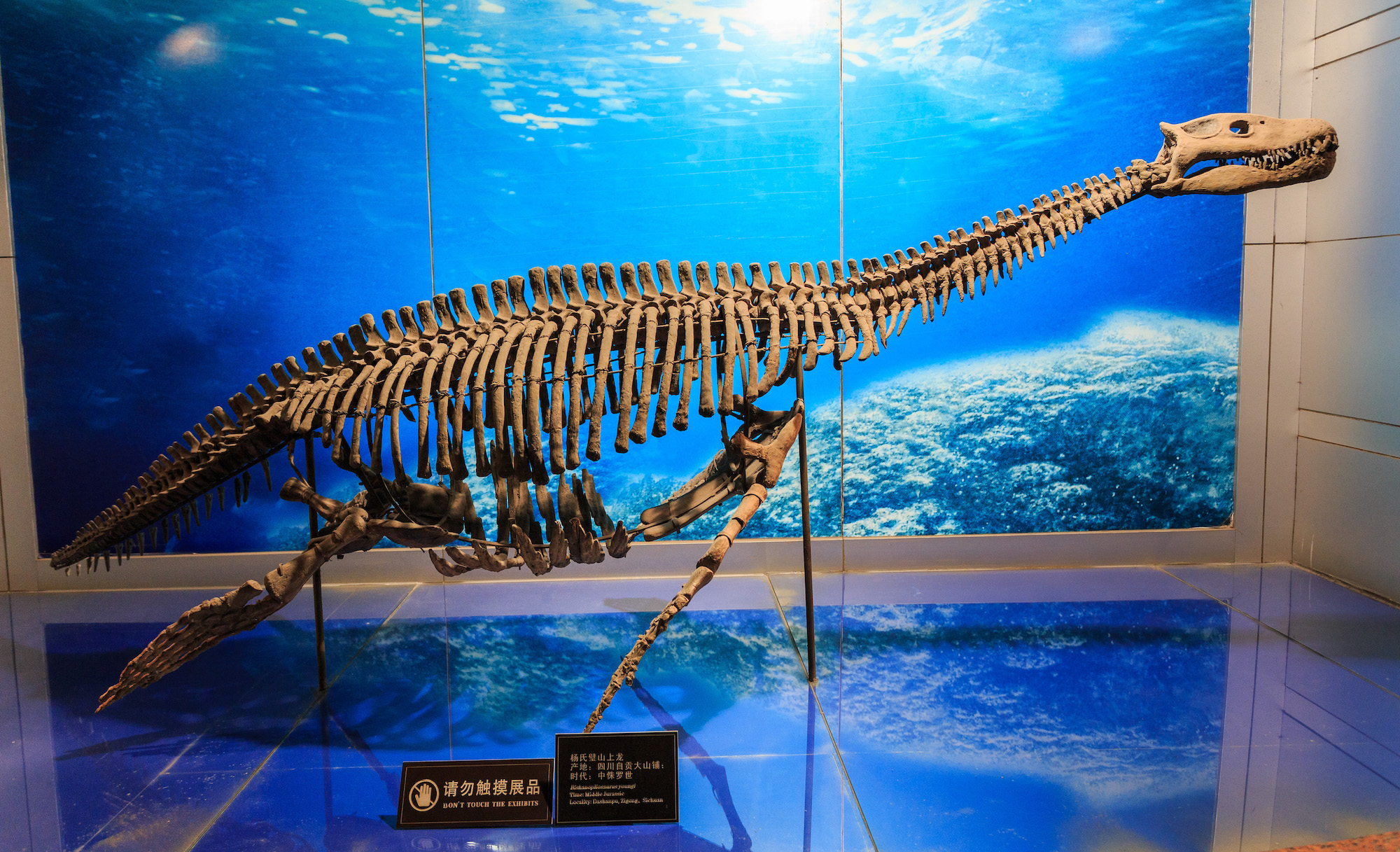
Bishanopliosaurus is the most complete plesiosaur known from the Jurassic of Asia (Sato et al. 2003). The holotype specimen of the type species, B. youngi, is a partial postcranial skeleton of a juvenile individual from the Dongyuemiao Member of the Ziliujing Formation (Lower or Mid Jurassic) of Bishan County, Chongqing, China.
Borealonectes
Under construction
Eurycleidus
Under construction
Macroplata
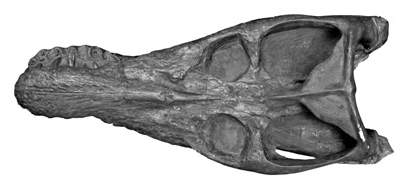
Macroplata is a rhomaleosaurid plesiosaur from the Lower Jurassic of Warwickshire, UK. Macroplata was named and briefly described by Swinton (1930a) based on a single skeleton from Harbury, Warwickshire, and the skeleton was redescribed in detail by Ketchum and Smith (2010).
Maresaurus
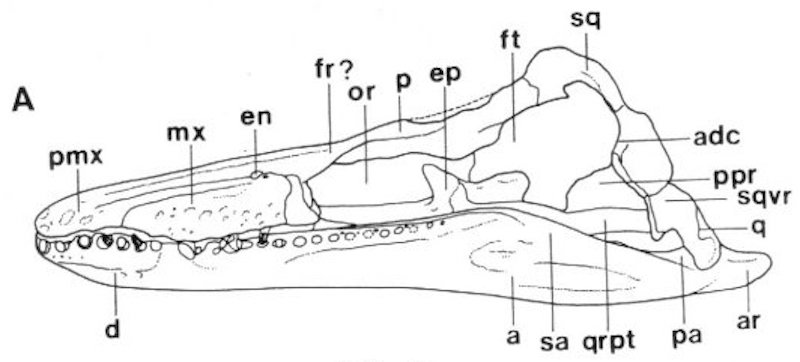
M. coccai (Gasparini 1997) type material: MOZ 4386 V articulated skull and mandible, atlas-axis and first cervical vertebrae. From the upper part of the Los Molles Formation, Cuyo Group, Emileia giebeli and Emileia multiformis subzone.
Skull of Maresaurus in lateral, dorsal and ventral view.
Meyerasaurus
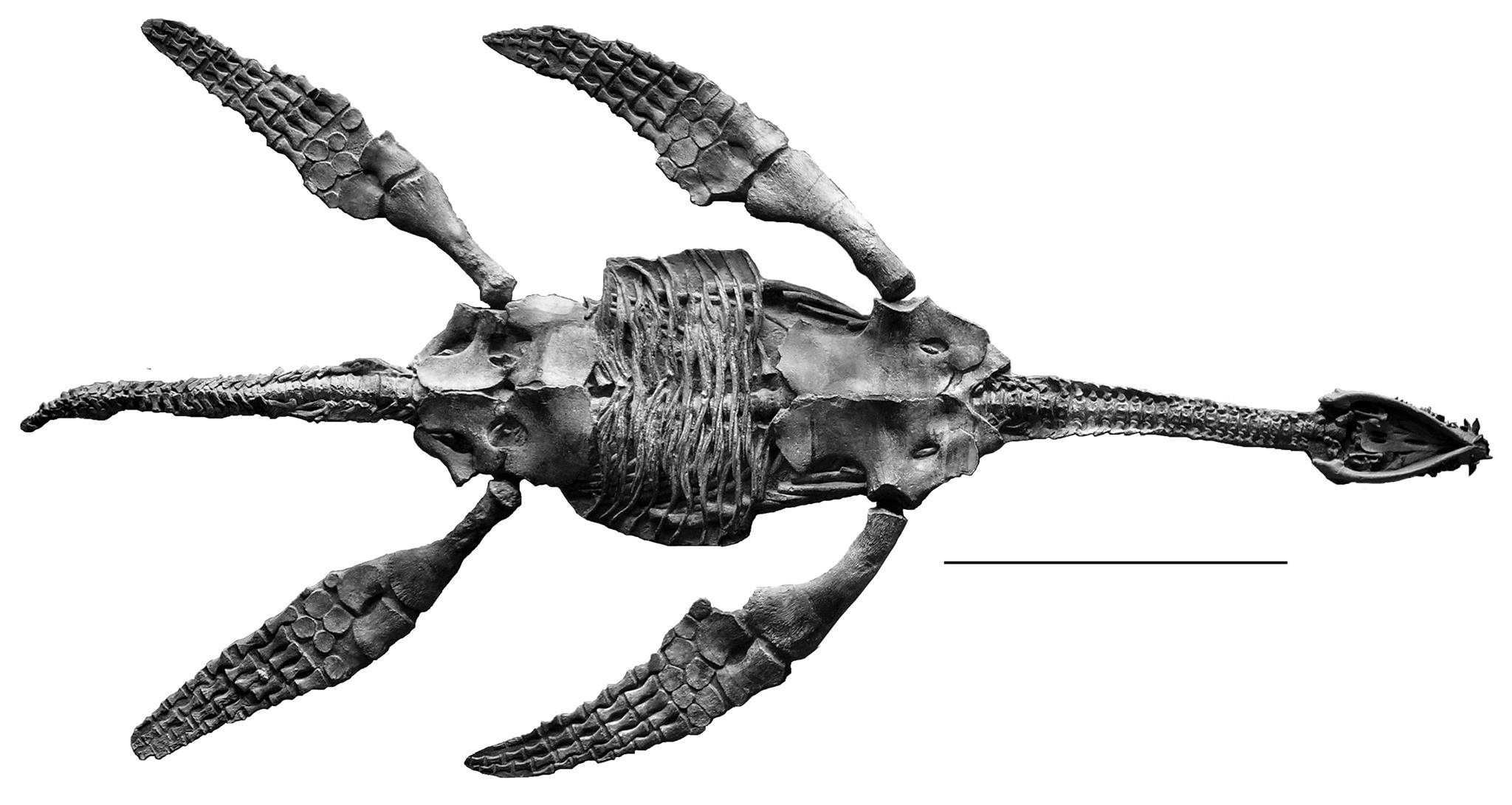
M. victor was originally described and figured by Fraas (1910). Historically, M. victor has been regarded as a species of Rhomaleosaurus and is often associated in the literature under the defunct name ‘Thaumatosaurus’.
Rhomaleosaurus
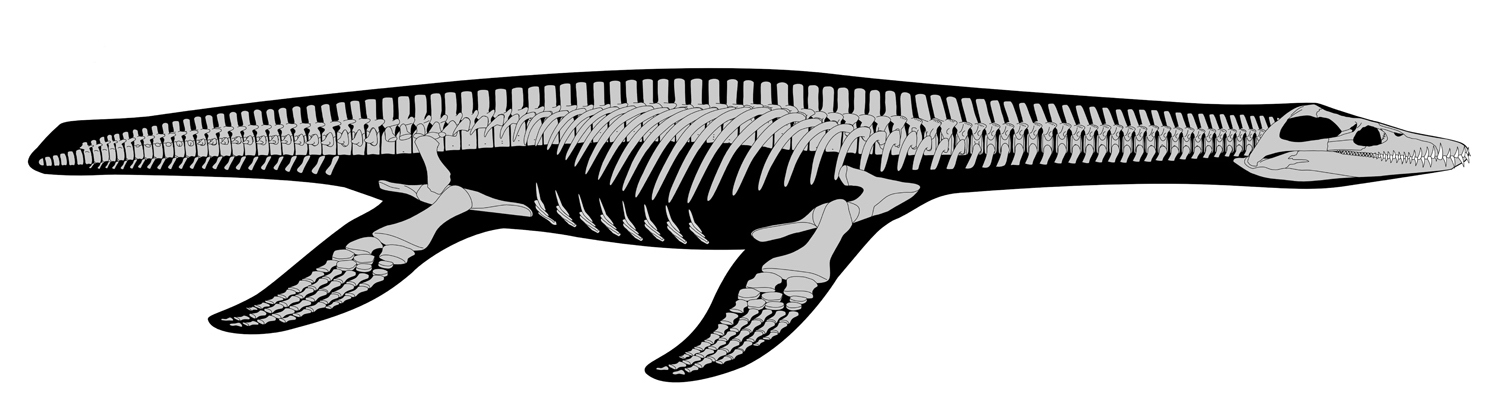
Rhomaleosaurus is the largest known Lower Jurassic pliosaur and was the top predator in early Jurassic marine ecosystems. It has a reinforced skull to help resist torsion and a ferocious set of teeth, a combination of characters perfect for snatching and killing cephalopods, fish, and other marine reptiles.
Thaumatodracon
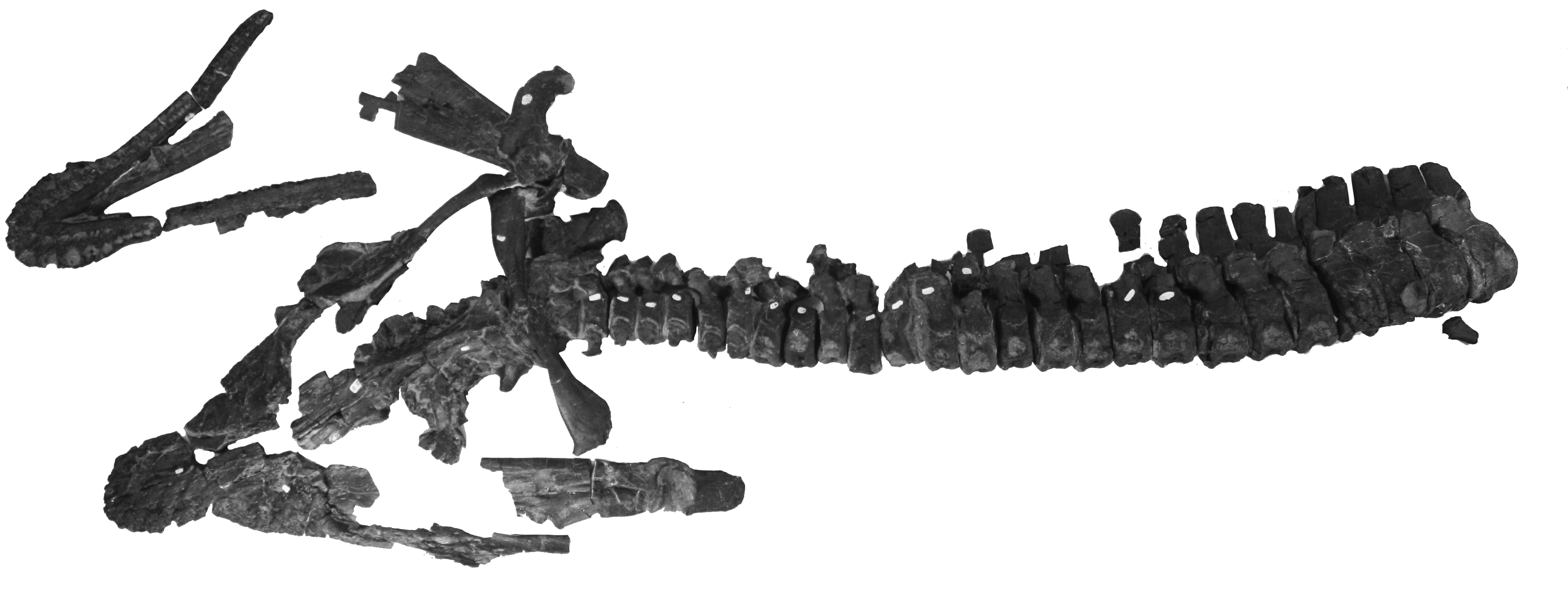
Thaumatodracon is a relatively large rhomaleosaurid from the Lower Jurassic (Sinemurian) of Lyme Bay – the coast between Lyme Regis and Charmouth – UK. The holotype specimen (NLMH 106.058) is an almost complete skull and cervical (neck) series.
Yuzhoupliosaurus
Under construction