
The superfamily Plesiosauroidea is one of the two major traditional divisions of plesiosaurs, the group that typically have long necks.
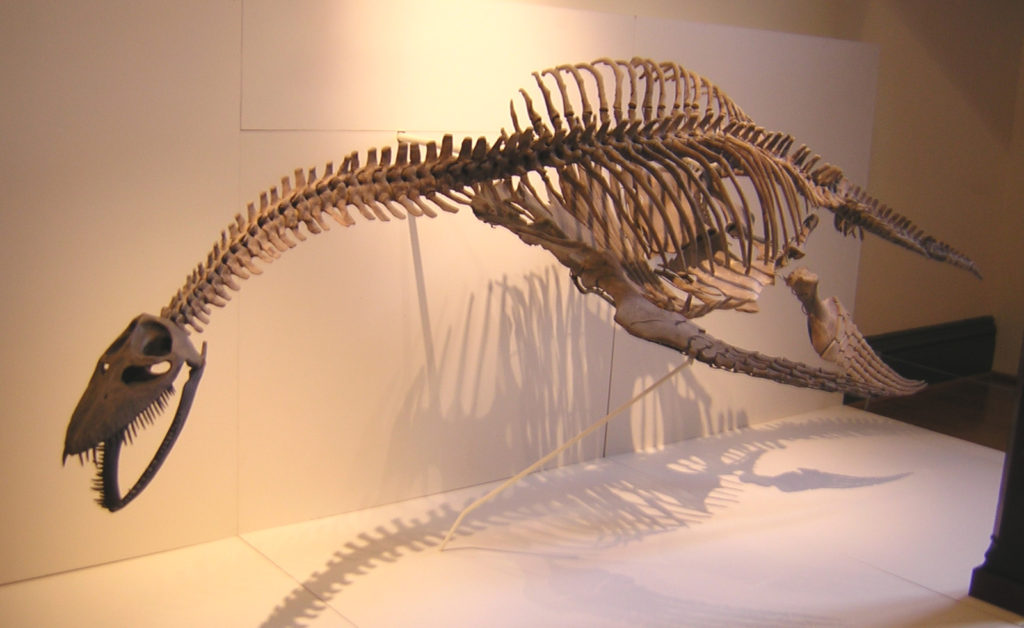
The other major group (superfamily) of plesiosaurs is the Pliosauroidea (often just called pliosaurs). During the 1990s and 2000s, this simple division of plesiosaurs into two superfamilies was called into question and multiple studies have demonstrated that the picture is more complicated, with at least some ‘true’ plesiosaurs being located outside of these two clades. Within the Plesiosauroidea, there are a number of families including the long-necked Plesiosauridae, Cryptoclididae, Elasmosauridae, and the short-necked Polycotylidae also originated from this group.
In popular literature both the superfamily Plesiosauroidea, and also the larger group Plesiosauria, can be referred to as ‘plesiosaurs’, and this can sometimes result in confusion. See my article on different concepts of plesiosaur for the full story. On the Plesiosaur Directory I only ever use the informal term ‘plesiosaur’ to refer to the Plesiosauria. I use the word ‘plesiosauroid’ for the Plesiosauroidea.
Plesiosauroid cladogram
Plesiosauroid genera
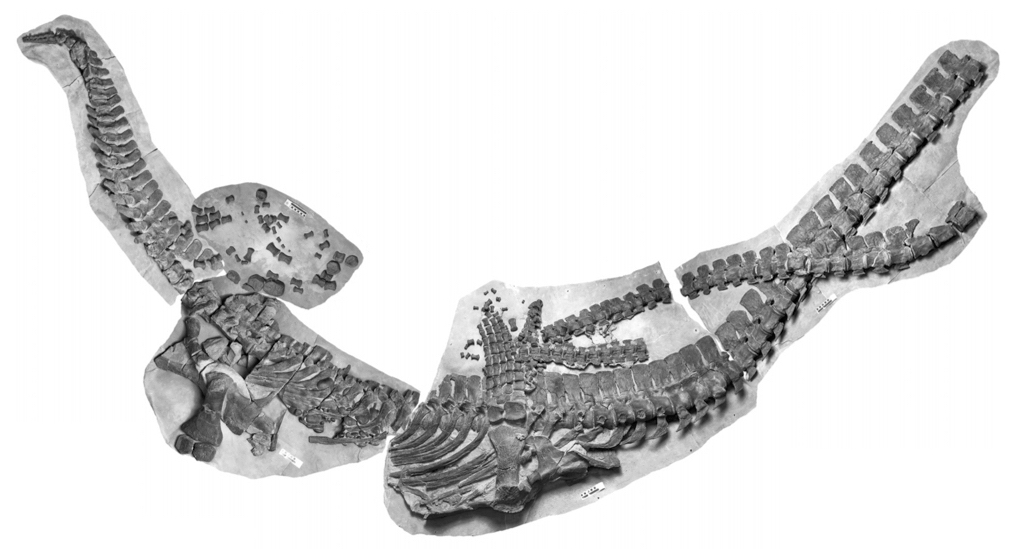
Albertonectes
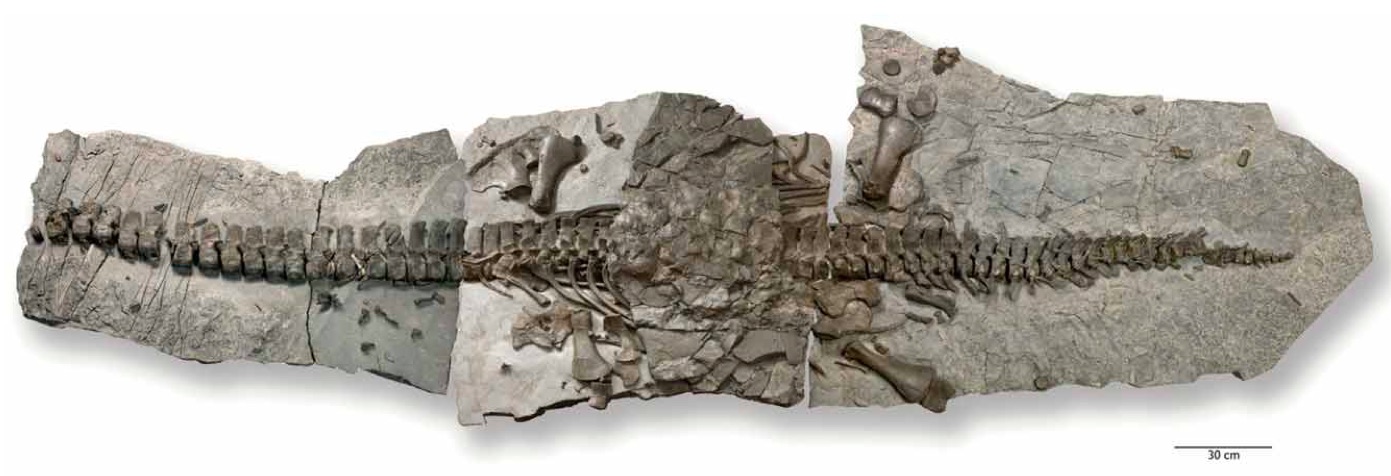
Albertonectes is a very long-necked elasmosaurid from the Late Cretaceous of Alberta, Canada. The holotype specimen (TMP 2007.0110001) consists of an almost complete skeleton lacking a skull (Kubo et al. 2012). The neck contains 76 cervical vertebrae, which is a unique character of Albertonectes vanderveldei and the highest number of neck vertebrae known for any […]

Apractocleidus
The genus and species ‘Apractocleidus teretipes‘ was erected by Smellie (1916). Smellie (1915) provided a preliminary account of the specimen before he named it. The specimen is now regarded as an old-adult individual of Cryptoclidus. The taxon ‘Apractocleidus‘ is therefore considered a junior synonym of Cryptoclidus. The specimen was collected by Alfred Leeds and acquired […]

Aristonectes
The mysterious plesiosaur Aristonectes is notable for its mouthful of pin-like teeth. A special feeding guild, the ‘trap guild’, has been proposed to accommodate Aristonectes and other plesiosaurs with similar dentition (Chatterjee and Small 1989) such as Cryptoclidus, Kimmerosaurus, and Kaiwhekea. These plesiosaurs may have fed in a similar manner to the extant crabeater seal, […]
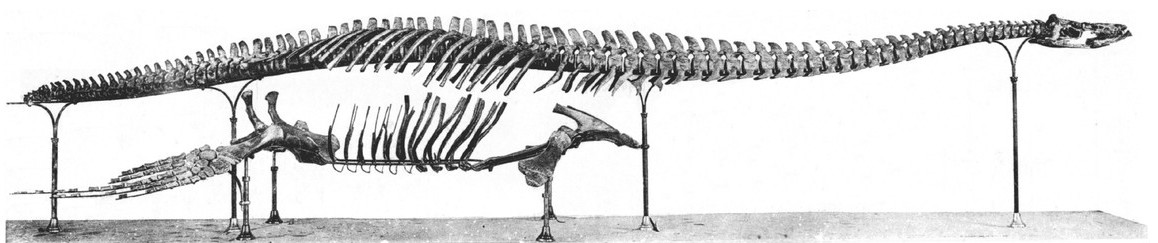
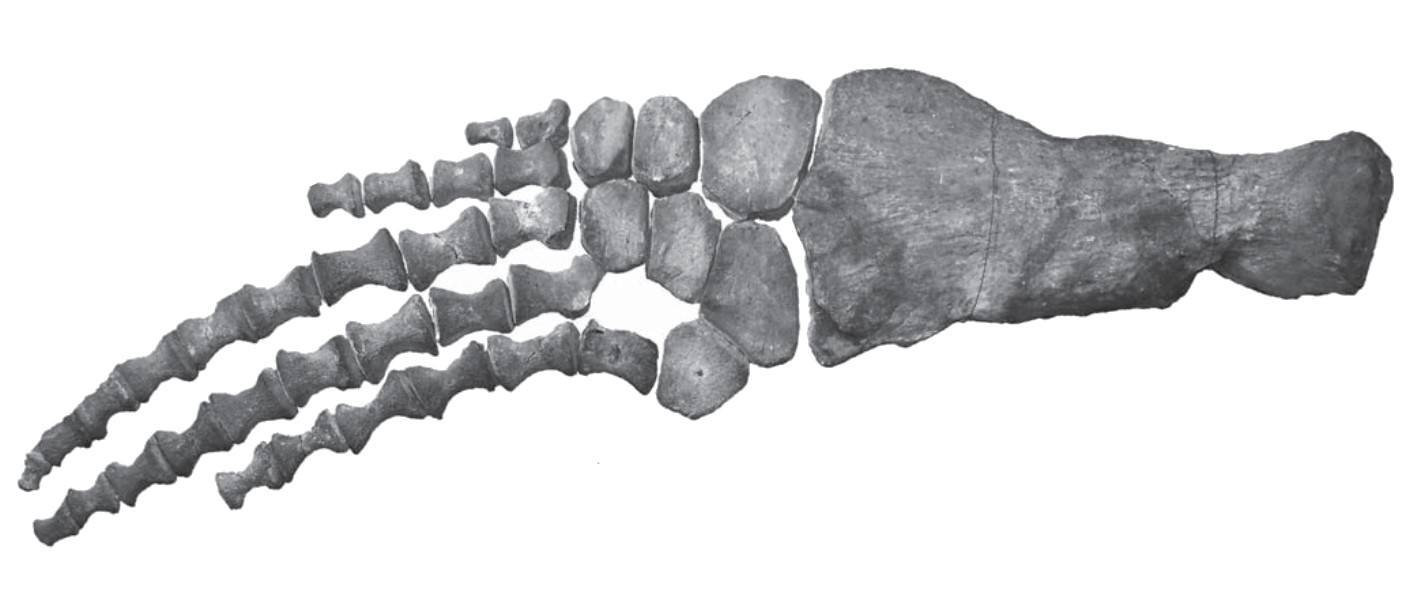
Colymbosaurus
Colymbosaurus is a colymbosaurine (derived cryptoclidid) from the Late Jurassic of the UK and Svalbard, Norway. Two valid species are known, C. megadeirus from the UK, and C. svalbardensis from Svalbard, Norway. The genus is known from the Kimmeridgian, Tithonian, and possibly early Berriasian (Late Jurassic–possibly Early Cretaceous). Benson and Bowdler (2014) revised the genus […]

Cryptoclidus
Cryptoclidus, often wrongly spelled ‘Cryptocleidus’ after Andrews (1909), is a moderately sized plesiosaur with adults about four metres long (Brown 1981). It is known from a large number of individual specimens from the Oxford Clay Formation. Fossils of Cryptoclidus are relatively common, and provide a complete ontogenetic sequence from very young to old adult individuals. […]
Djupedalia
Under construction


Elasmosaurus
Elasmosaurus is one of the most widely recognised plesiosaur names and has become a stereotype for all elasmosaurids. However, it is relatively poorly known. The type and only known specimen of Elasmosaurus platyurus (ANSP 10081) includes the tip of the snout, occipital condyle, and the majority of the vertebral column. It is from the Sharon […]
Gronausaurus
‘Gronausaurus‘ was named in 2013 (Hampe 2013). It is now regarded as a junior synonym of Brancasaurus (Sachs et al. 2016). Under construction
Hastanectes
Under construction
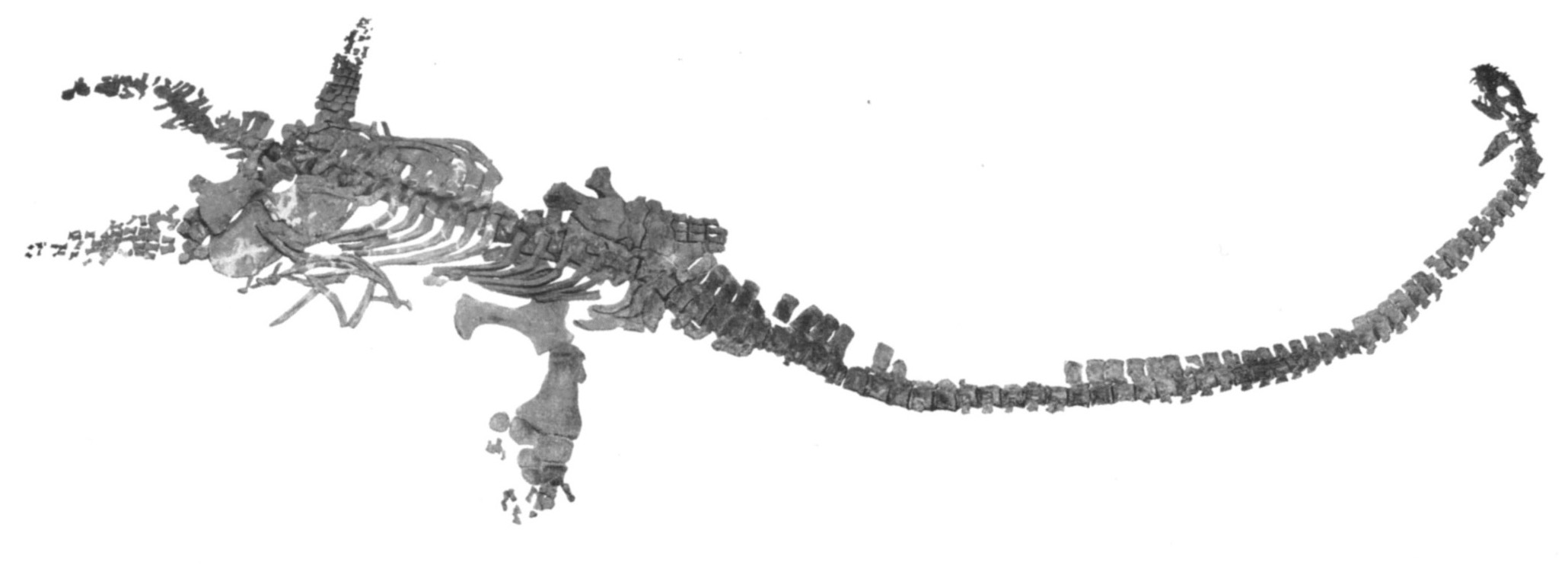
Hydrotherosaurus
Hydrotherosaurus is a long-necked elasmosaurid from California, USA. It is represented by one of the most complete elasmosaurid skeletons ever discovered, so Hydrotherosaurus is one of the best known members of this family. The almost complete type skeleton of Hydrotherosaurus was discovered in the Panoche Hills by Mr. Frank C. Paiva in 1937, and was […]

Leptocleidus
Lower Cretaceous plesiosaurs are rare, so Leptocleidus is important because it fills a gap in the fossil record of plesiosaurians. Leptocleidus was once considered to be a late surviving member of the family Rhomaleosauridae but it has recently been reidentified as a close relative of polycotylids. The fossils of all known species of Leptocleidus were […]
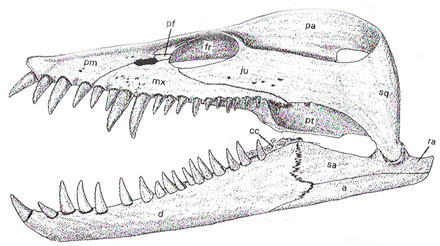
Libonectes
Libonectes was erected for ‘Elasmosaurus morgani’. The pectoral girdle and a forelimb of the holotype are figured (most recently by Welles 1962, fig. 12) but now lost (Carpenter 1999). Libonectes morgani (Welles 1949) is the type and only species. Type material of L. morgani (SMUSMP 69120) consists of a skull, cervical vertebrae and gastralia, from the […]
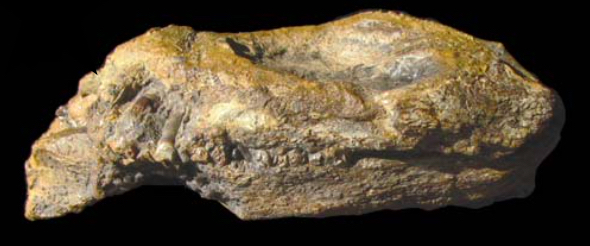
Lusonectes
Lusonectes is a poorly known microcleidid the Toarcian (Lower Jurassic) of Portugal. It is known from a single holotype specimen (MG33), a partial skull in the Museu Geológico, Lisbon, Portugal. It was described and named by Smith et al. (2012) as the first diagnostic plesiosaur species from Portugal, and the westernmost occurrence of a plesiosaur […]

Microcleidus
Microcleidus is a medium (4.27 m) to large (5.03 m) plesiosauroid with a small head and a long neck containing 38–39 cervical vertebrae. Watson (1909) erected Microcleidus to accommodate fossil material belonging to ‘P.’ homalospondylus and ‘P.’ macropterus (Watson 1911). Both species were considered valid by Seeley (1865), Blake (1876) and Watson (1911) on the basis of […]
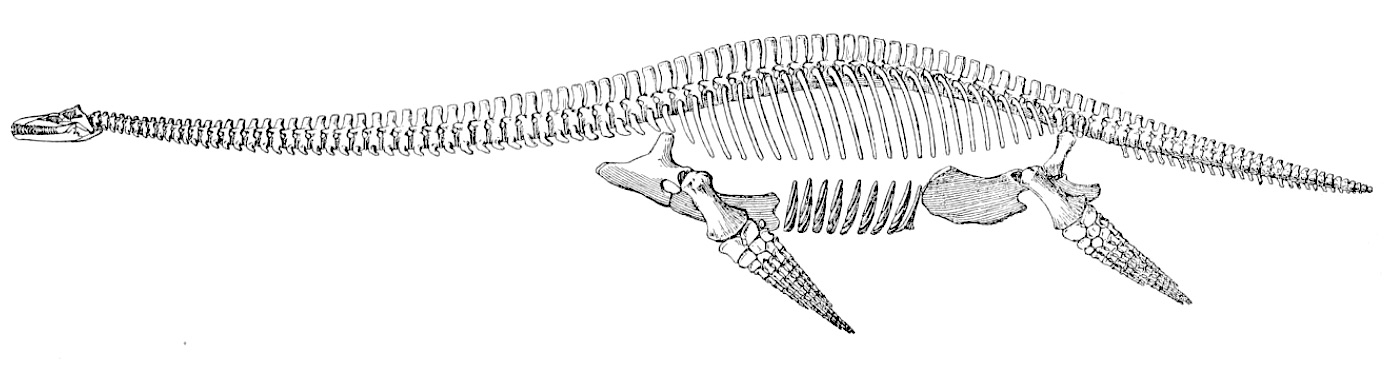
Muraenosaurus
Brown (1981) diagnosed Muraenosaurus as follows: “Plesiosauroids in which the teeth are ornamented with many longitudinal ridges; the dentary bears 19 to 22 teeth on each ramus; the premaxillae bear 5 teeth each, of which the 1st and 5th are small, and the 2nd to 4th are large; the most anterior maxilliary tooth (6th upper […]
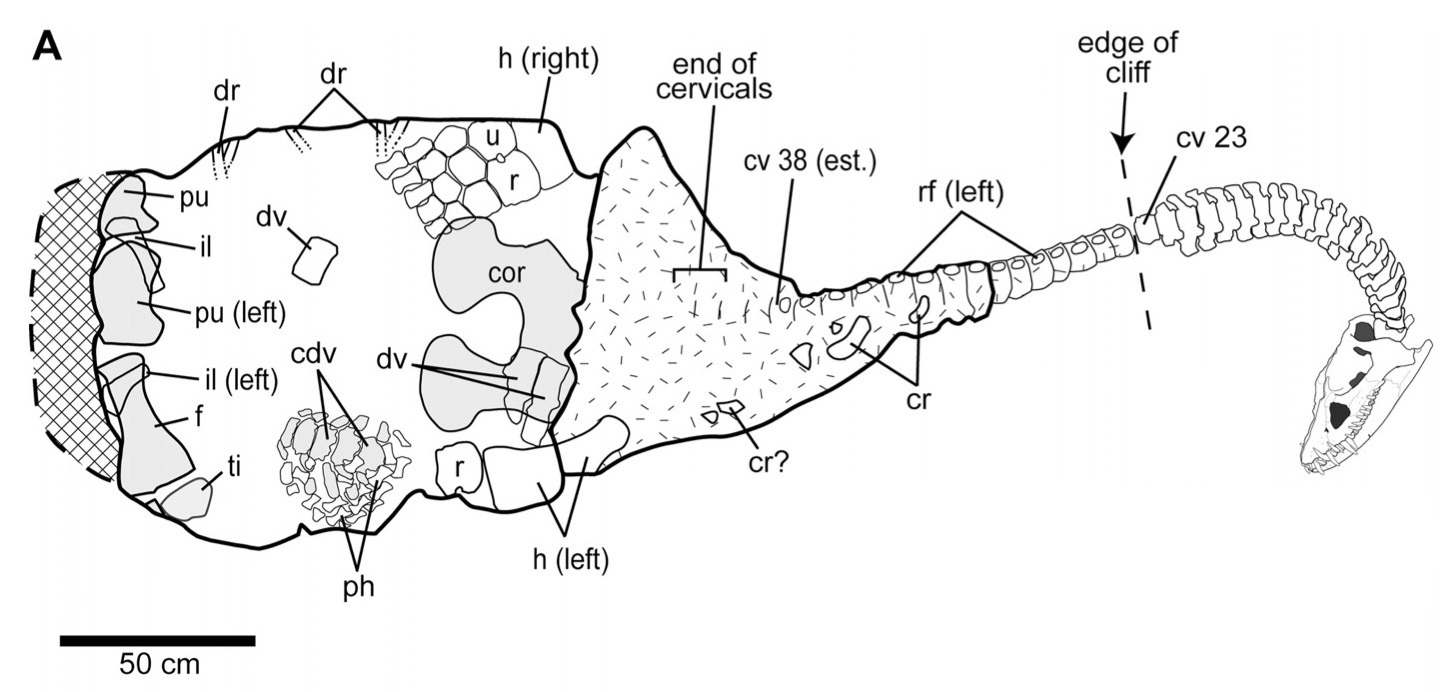
Nakonanectes
Nakonanectes is a small elasmosaurid plesiosaur from the Bearpaw Shale of Montana, USA. It is known from a single moderately complete specimen including a particularly fine skull. It has a relatively short neck for an elasmosaur consisting of ‘only’ 39-42 neck vertebrae. However, 16–19 of the neck vertebrae were lost in a “heavy spring runoff […]

Occitanosaurus
‘Occitanosaurus’ was described by Sciau et al. (1990) and Bardet et al. (1999). The genus name was erected for ‘Plesiosaurus’ tournemirensis by Bardet et al. (1999). The taxon was originally regarded as an early elasmosaurid but is now considered a member of the Microcleididae. ‘Occitanosaurus’ was approximately 3.9 meters long. The type material (MMM J. […]

Ogmodirus
The type skeleton of ‘Ogmodirus’ was collected in 1909 by C. Boyce from the upper Greenhorn Limestone Formation (Lower Turonian, Upper Cretaceous) of Cloud County (near Aurora), Kansas (Storrs 1999, Schumacher and Everhart 2005). The specimen, KUVP 441, is a partial skeleton consisting of partial vertebral column (51 cervical vertebrae, 18 caudal vertebrae), limb, and girdle […]

Opallionectes
Opallionectes is a large, around 5 m long, derived cryptoclidid plesiosauroid from the Early Cretaceous of South Australia. It is known from a partial opalised skeleton, which is mounted for display in the South Australian Museum. The holotype specimen lacks a skull. It is diagnosed by the following unique combination of characters: small needle-like teeth […]
Pantosaurus
Under construction


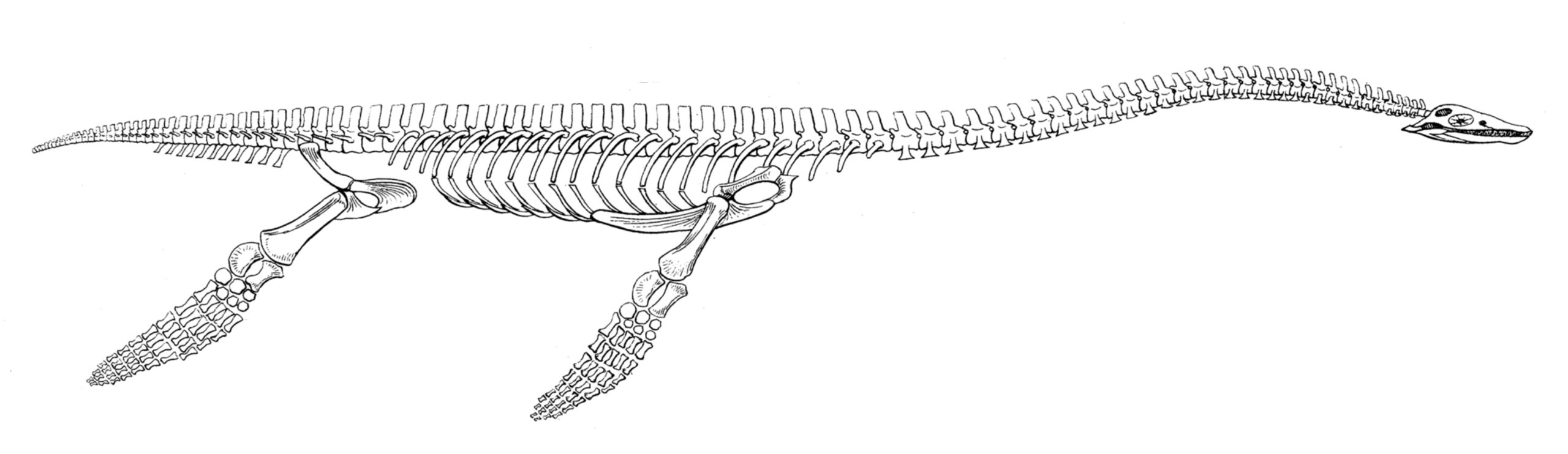
Plesiosaurus
Plesiosaurus was the first plesiosaur discovered and named (De la Beche and Conybeare 1821). The first 1821 description was based on partial remains so the anatomy of Plesiosaurus – particularly the identity of the isolated bones and how they articulated together – involved some guesswork. The type species (P. dolichodeirus) was named a few years […]
Spitrasaurus
Under construction
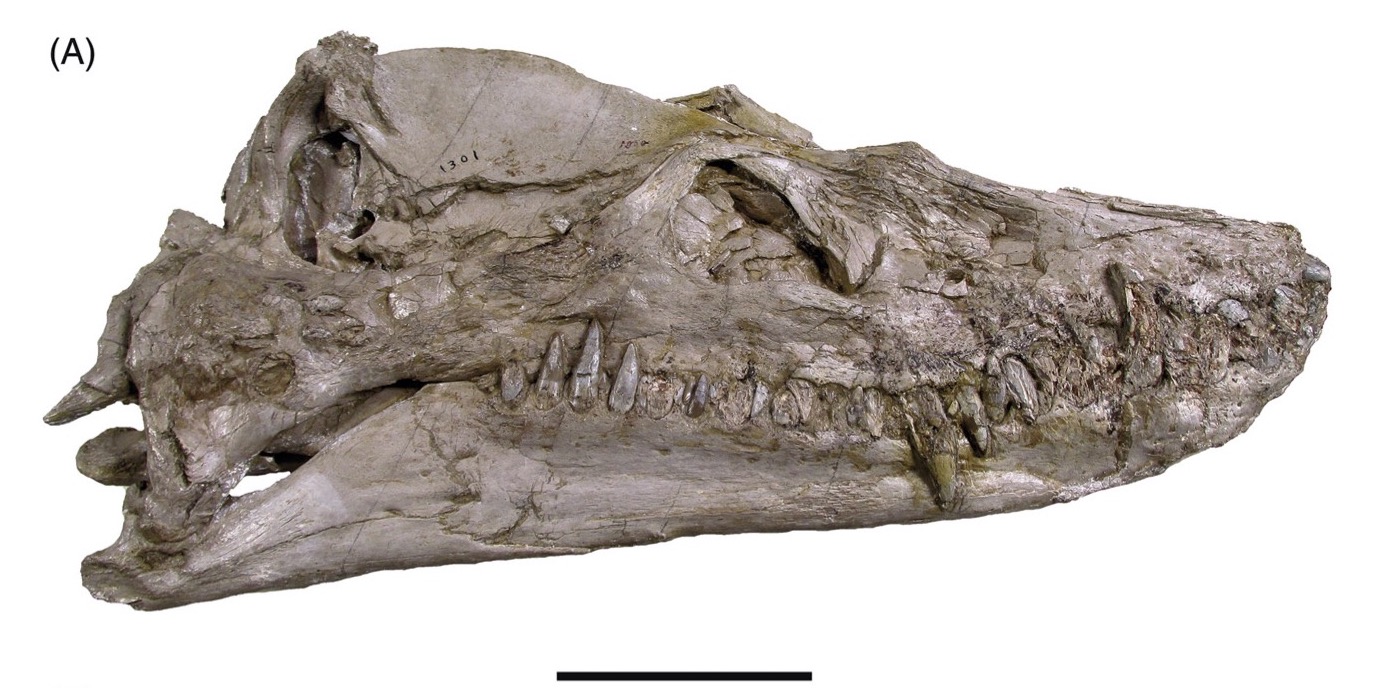
Styxosaurus
The holotype specimen (KUVP 1301) of Styxosaurus is an articulated skull and anterior portion of the neck. It was found in the Niobrara Chalk near Hell Creek, Logan County, Western Kansas in 1890. It was described later that year as a new species Cimoliosaurus snowii by Williston (1890a) (and in more detail soon after by Williston […]
Tatenectes
Under construction

Thalassomedon
The holotype of Thalassomedon was discovered by R. L. Landberg in 1939 in Baca County, Colorado. Thalassomedon has a short and deep atlas-axis and 62 cervical vertebrae, and there is no pectoral or pelvic bar in the adult condition (Carpenter 1999). The species name haningtoni is sometimes wrongly spelled ‘hanningtoni’ (as in Carpenter 1999) or […]

Thililua
Thililua has 30 cervical vertebrae. Each cervical has a longitudinal ridge on its lateral surfaces, this is a convergent feature with elasmosaurids. The skull of Thililua is relatively large with a short postorbital region and elongate rostrum. The type specimen (MHNGr.PA.11710) consists of a complete skull, entire cervical and pectoral series, and the first four […]

Tricleidus
Tricleidus is a cryptoclidid from the Oxford Clay Formation of the UK. The holotype specimen (NHMUK R 3539) consists of disarticulated elements including most of skull and half the postcranium, from the Kosmoceras jasoni – Peltoceras athleta zones from the lowest deposits of the Oxford Clay Formation. The type and only species of Tricleidus is […]

Umoonasaurus
Umoonasaurus is a small (~2.5 m long) leptocleidid that lived during the Early Cretaceous in Southern Australia. The holotype specimen (AM F99374), a spectacular opalised skeleton including the skull, is nicknamed ‘Eric’. It is the most complete opalised plesiosaur skeleton (and fossil vertebrate) known. It was originally described briefly as Leptocleidus sp. by Kear (2006) […]
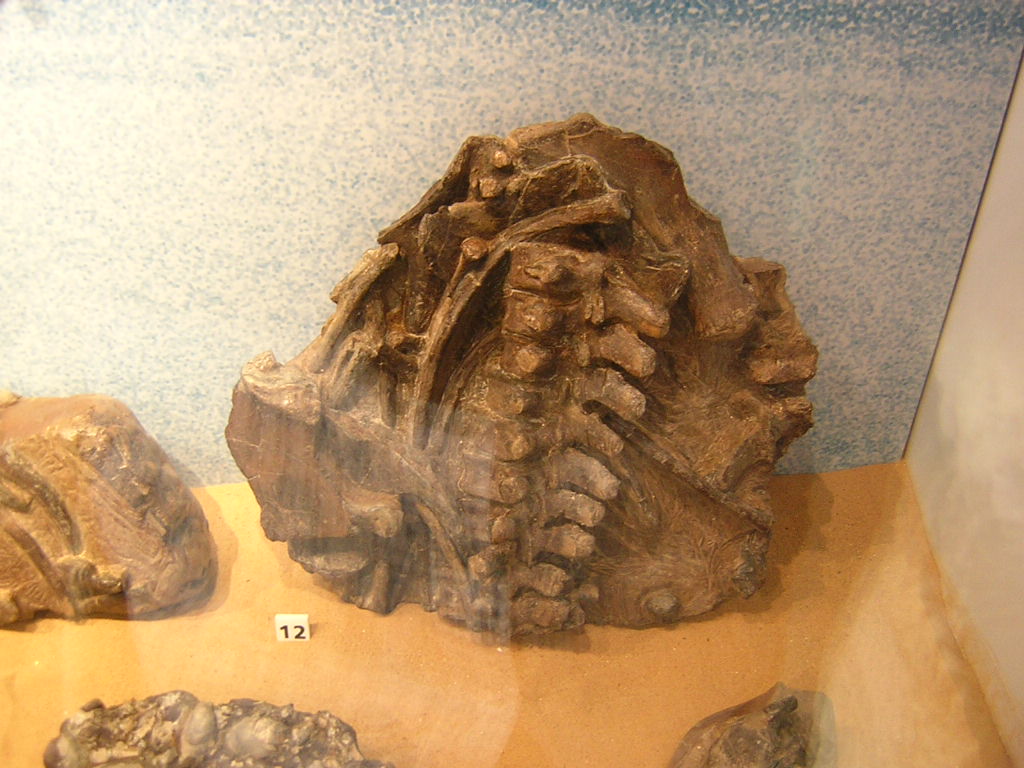
Vectocleidus
The name Vectocleidus was erected by Benson et al. (2012b) for a leptocleidid from the Early Cretaceous of the Isle of Wight, UK. The type specimen was previously referred to Leptocleidus sp. Vectocleidus can be confidently identified as a leptocleidid but its position within the clade is unstable (Benson et al. (2012b).

Woolungasaurus
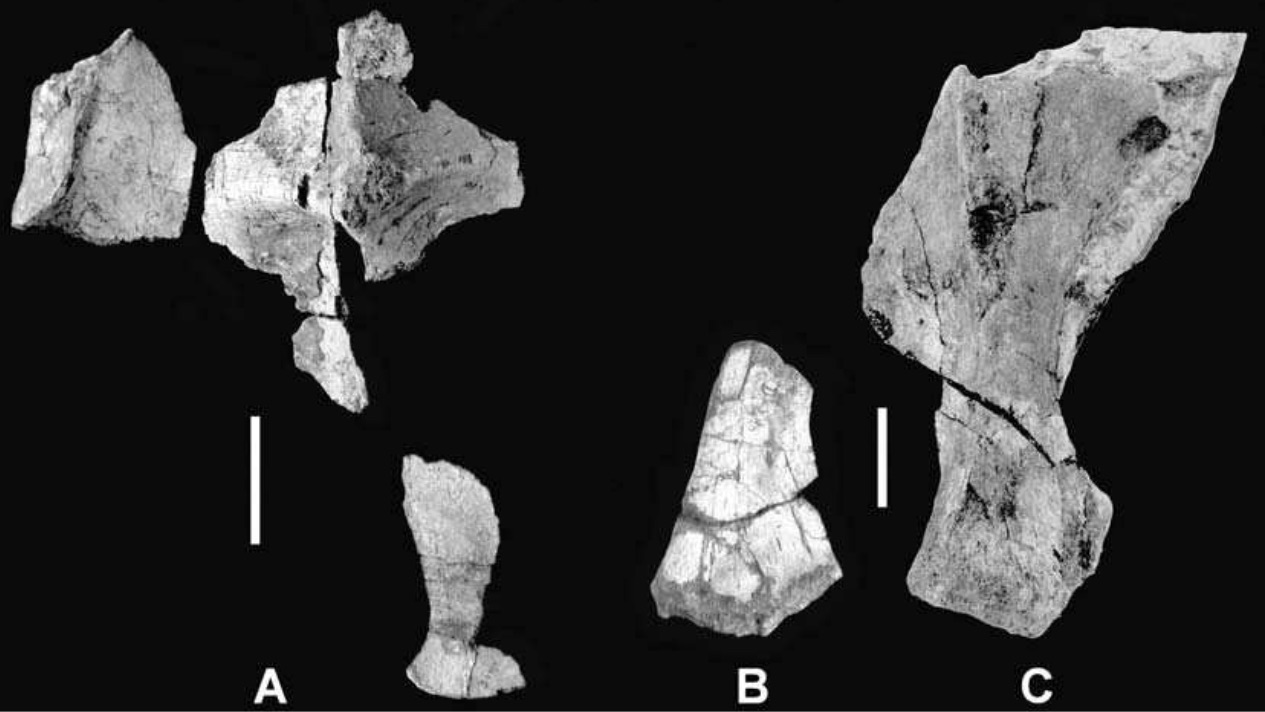
Sachs (2004) regarded ‘Woolungasaurus‘ as a junior synonym of Styxosaurus and assigned the type species (‘W. glendowerensis‘) to that genus under the new combination ‘Styxosaurus glendoweresnis‘. However, this placement was unsupported by unambiguous apomorphic characters (Kear 2007). Since ‘Woolungasaurus‘ has no unique diagnostic characters, Kear (2005) reassigned all specimens of it to Elasmosauridae indet. (indeterminate […]