
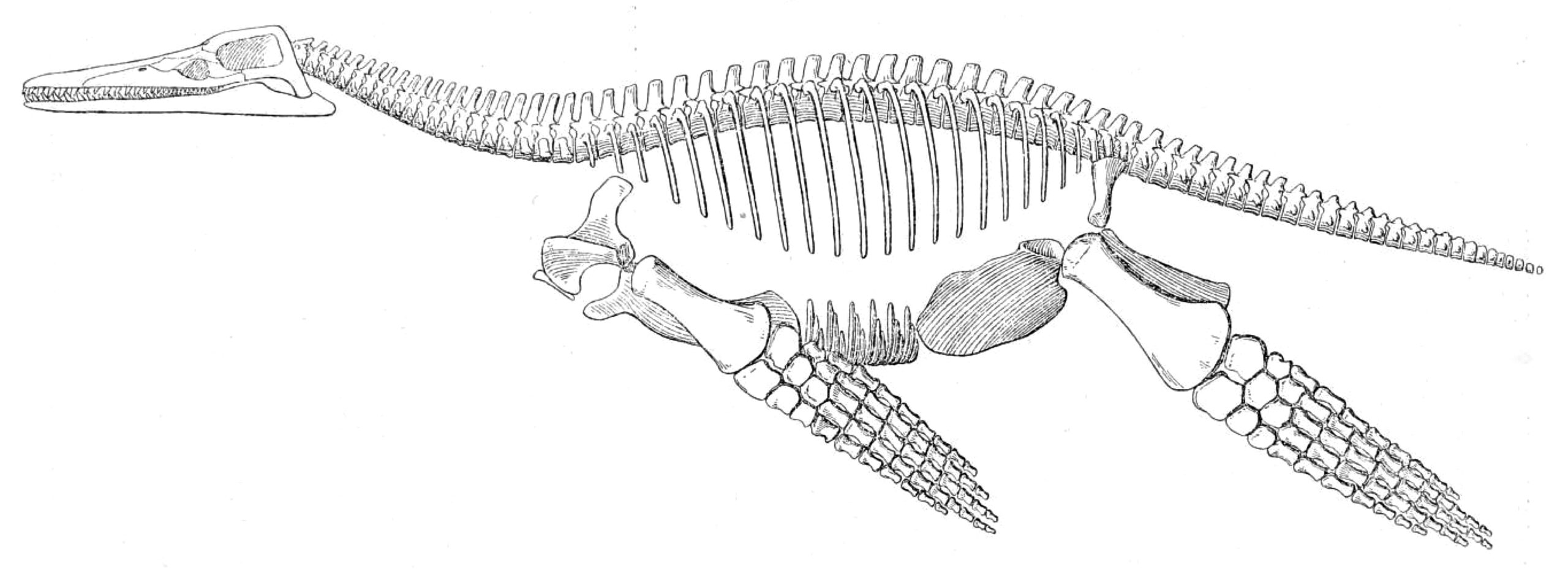
Pliosaurids are a large family of short-necked plesiosaurs within the superfamily Pliosauroidea. They have a reduced number of neck vertebrae and are often large skulls. In some genera the skull may reach up to 3 meters in length and make up about a quarter of the total length of the animal. The Pliosauridae is usually placed in a sister relationship with a second group of pliosaurs, the Rhomaleosauridae, and contains several ‘basal’ pliosaurids including Peloneustes, plus Thalassophonea, a large sub-clade of macropredaceous pliosaurids.

Pliosaurid classification
The positions of the basal pliosaurid genera are after Benson and Druckenmiller (2014)
The family Brachaucheninae has been proposed for pliosaurs which have very short necks and lack typical nutritive foramina on the vertebrae. This group includes Brachauchenius and Kronosaurus.
Pliosaurid genera
Anguanax
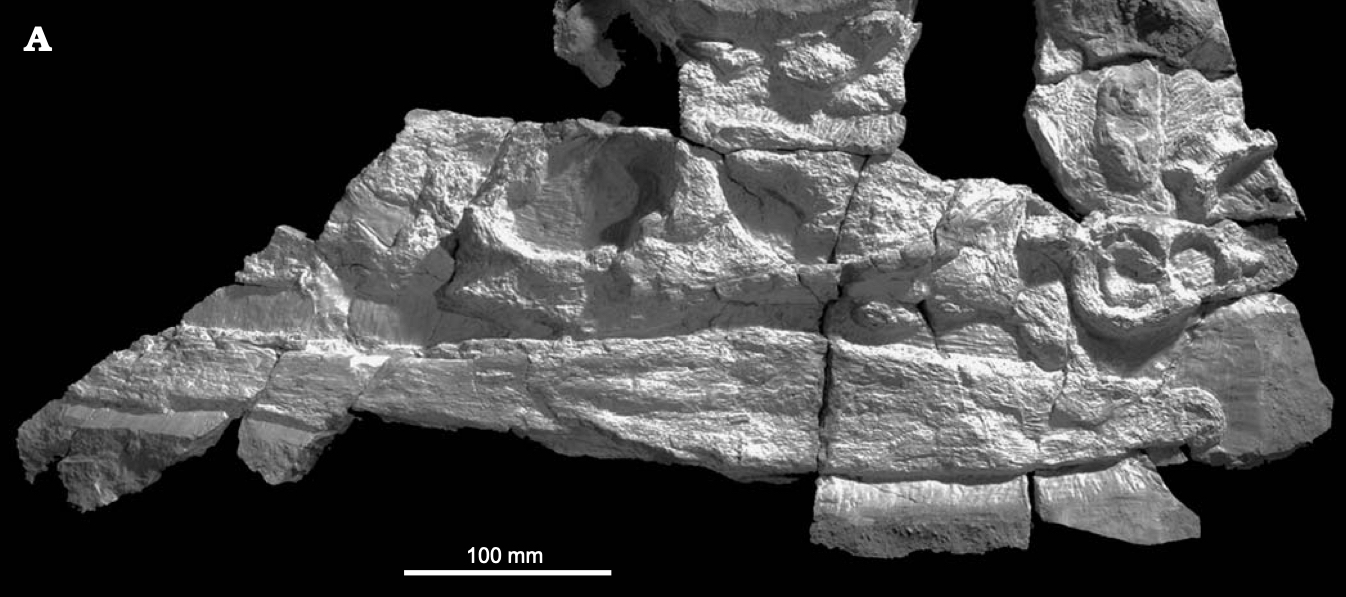
Anguanax is the first articulated plesiosaur ever found in Italy. It is a basal thalassophonean pliosaur from the Late Jurassic (middle Oxfordian). The type and only known specimen (MPPL 18797) of Anguanax was originally described as an indeterminate pliosaurid (Cau and Fanti 2014), but was subsequently named after reanalysis by the same authors the following […]

Attenborosaurus
Attenborosaurus is an unusual plesiosaur because it combines a long neck with a relatively large head. It is classified as a pliosaur in some classifications, but some phylogenies place it in a more basal position. The genus was introduced for ‘Plesiosaurus’ conybeari, a species originally described by Sollas (1881). Bob Bakker coined the new genus […]
Cryonectes
Under construction

Gallardosaurus
Under construction
Hauffiosaurus
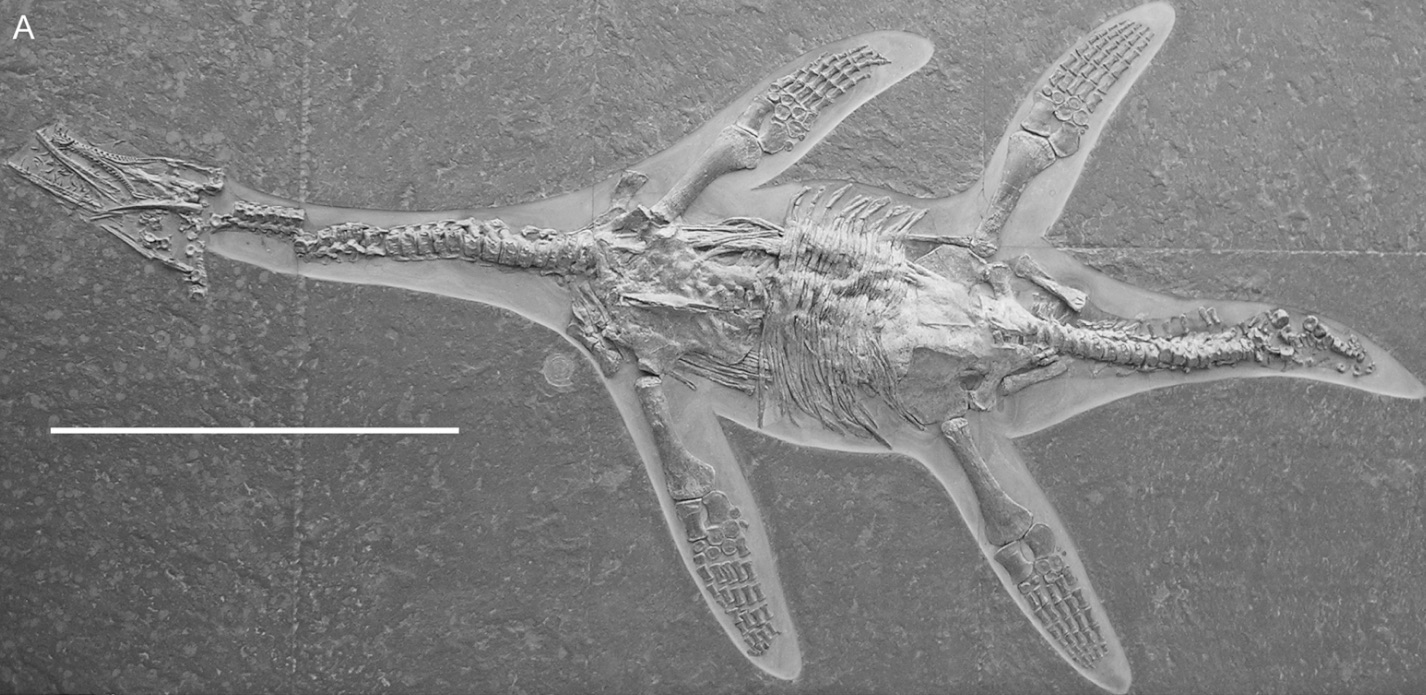
Hauffiosaurus is a basal pliosaurid known from the Lower Jurassic (Toarcian) of the UK and Germany. Hauffiosaurus is a medium to large sized plesiosaur (H. zanoni = 3.4 m, H. tomistomimus, 4.23 m, H. longirostris = 4.83 m) (Smith and Lomax 2019), with a relatively long neck for a pliosaur, and an elongate narrow snout. […]

Kronosaurus
Due to its large size and ferocious appearance, Kronosaurus is one of the most famous plesiosaurs. The iconic skeleton referred to Kronosaurus on display in the Museum of Comparative Zoology in Harvard is nicknamed ‘plasterosaurus’ because so much of it is reconstructed in plaster. About a third of the skeleton is plaster and there are […]
Liopleurodon
Liopleurodon is a pliosaur that hardly needs introduction since appearing as the villain in the BBC’s ‘Walking with Dinosaurs’ TV series. This led to popular misconceptions about the size of Liopleurodon, which is known to have reached adult sizes in the region of seven metres long, nowhere near the gargantuan 25m estimate proposed by the […]
Marmornectes
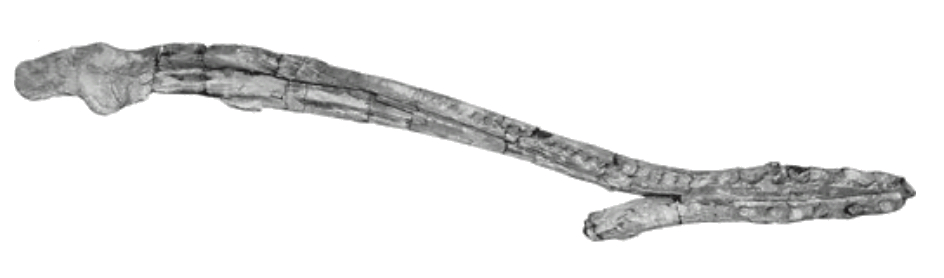
Marmornectes is a pliosaur with a long and narrow snout from the Oxford Clay. It was described and named by Ketchum and Benson (2011a). The type and only specimen (BEDFM 1999.201) comprises a substantially complete skeleton including a partial skull. Marmornectes is similar to Peloneustes but possesses some basal characters that were lost in Peloneustes […]
Megalneusaurus
Under construction

Monquirasaurus
Monquirasaurus is a giant pliosaurid from Colombia, South America. Originally named by Hampe (1992) as a species of Kronosaurus (K. boyacensis), the skeleton was later allocated to the new genus Monquirasaurus by Noè and Gómez-Pérez (2021). The genus name derives from ‘Monquira’, the administrative division in which the holotype was discovered.
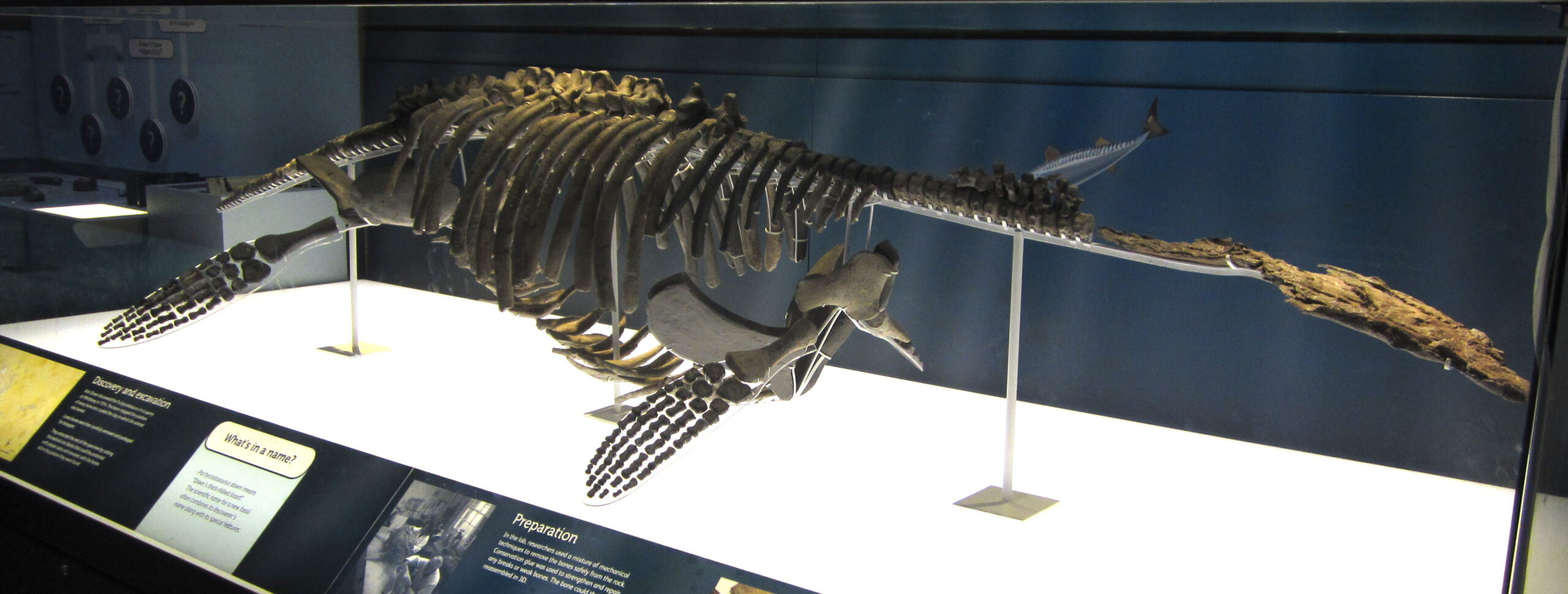
Pachycostasaurus
Pachycostasaurus is approximately 3.1 meters long. Its rib cage and vertebrae exhibit thickened bone (Cruickshank et al. 1996) a condition termed pachyostosis. This heavy ossification is unusual in plesiosaurs (another exception may include Kronosaurus), although it is common in basal sauropterygians, especially pachypleurosaurs. Pachycostasaurus probably used the extra ballast provided by its heavy bones to […]
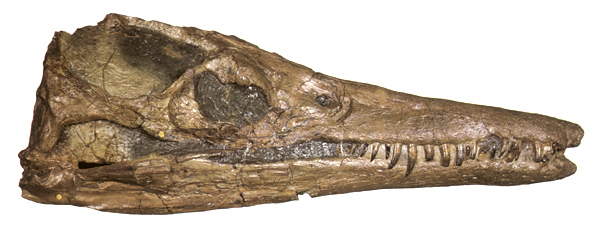
Peloneustes
Peloneustes is one of several pliosaur genera from the Oxford Clay Formation in the UK. It is one of the better known pliosaurs from this horizon, represented by 12 nearly complete skulls and several skeletons. It is also the most abundant pliosaur from the Peterborough Member of the Oxford Clay Formation (Ketchum and Benson 2011b). […]


Simolestes
Simolestes has variously been allied with the Pliosauridae and the Rhomaleosauridae. The most noticeable difference between Simolestes and the other pliosaur taxa from the Oxford Clay (Liopleurodon, Peloneustes, Pachycostasaurus), is its much shorter snout and mandibular symphysis, a character is shares with the Rhomaleosauridae. However, this is probably a convergent character. Older descriptions of this […]
Stenorhynchosaurus
Under construction
Several pliosaurid genera are considered nomina dubia or are regarded as junior synonyms of other genera. The following names are therefore invalid:
- 'Stretosaurus' = Liopleurodon?