Anningasaura
A. lymense
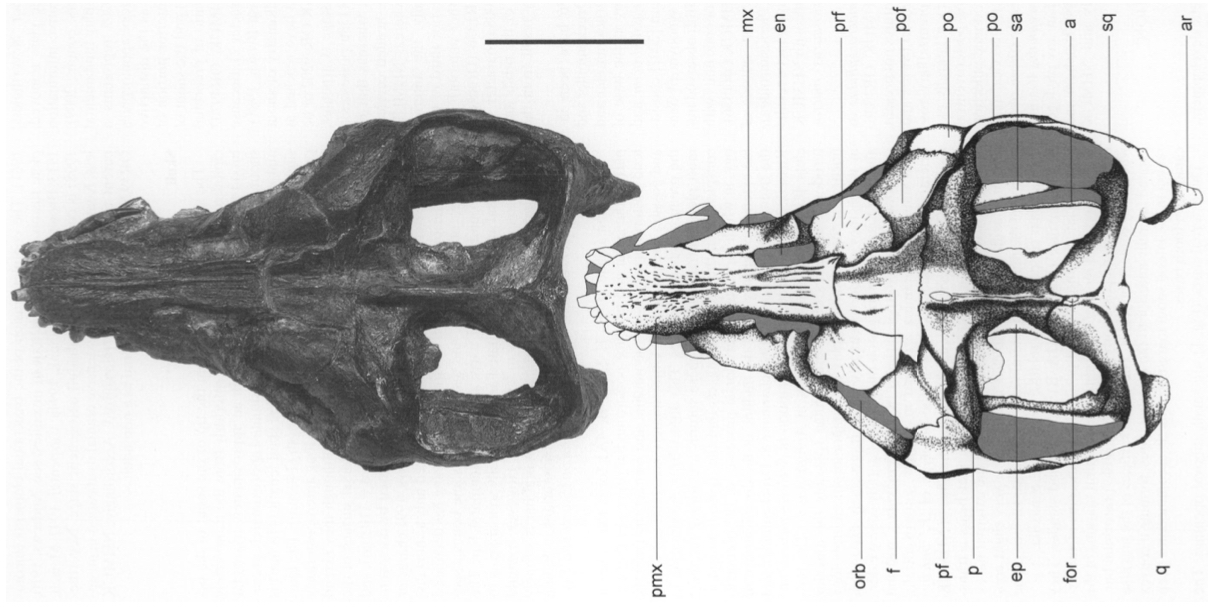
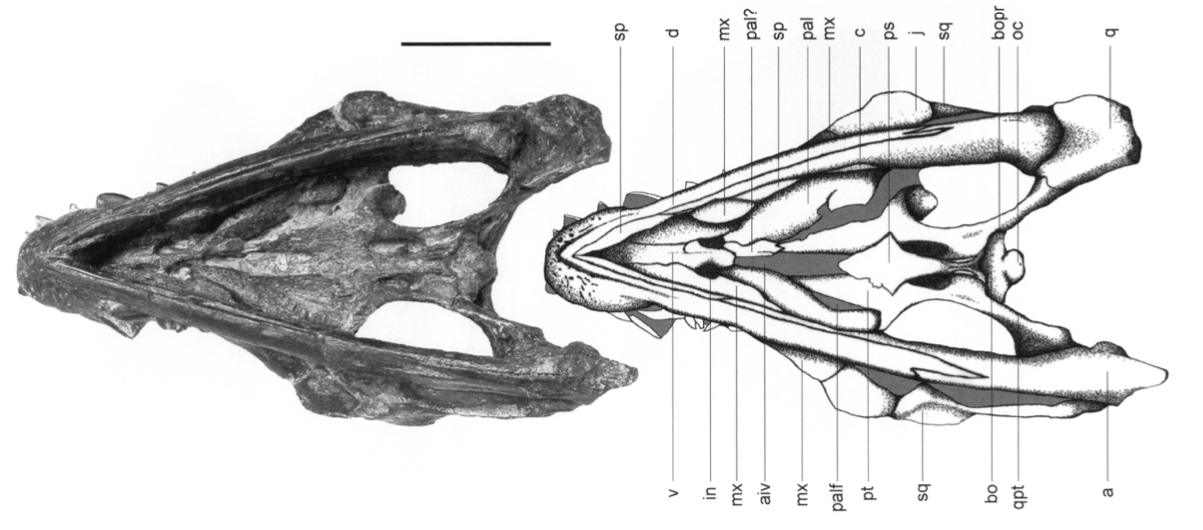
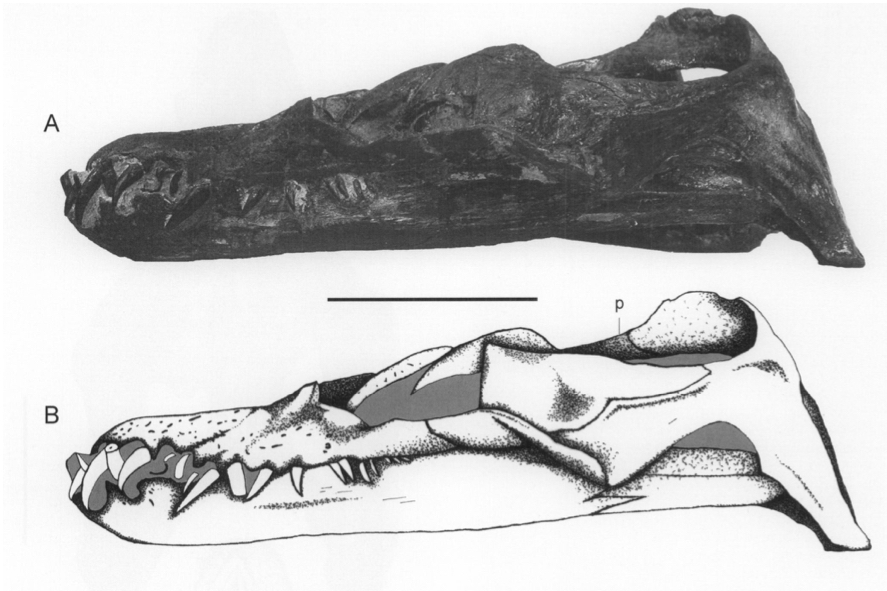
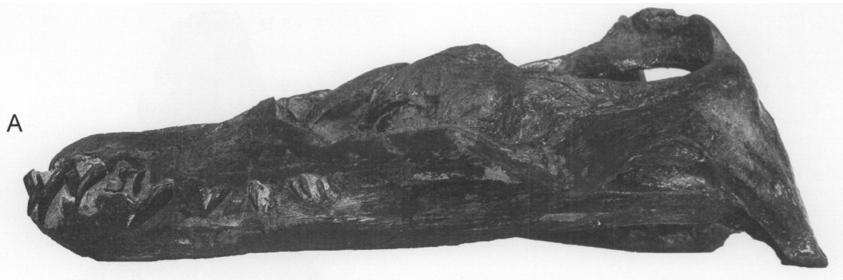
Anningasaura is a basal plesiosaur from the Lower Jurassic of Lyme Regis, UK, known from a single three-dimensionally preserved skull. The specimen, NHMUK OR49202, was originally described and figured by Andrews (1896), who referred it to ‘Plesiosaurus‘ macrocephalus. It was redescribed and named as the holotype of Anningasaura lymense by Vincent and Benson (2012).

The genus name honours Mary Anning, the first female palaeontologist, and the species name refers to Lyme Regis, where the holotype skull was found.
The genus is diagnosed by six autapomorphies (unique characters): the posteromedial processes of premaxillae (or possibly anterior portion of the frontal) form dorsoventrally thick, mediolaterally expanded platform with concave, anteroposteriorly striated dorsal surface; small foramen penetrates the parietal sagittal crest posteriorly; pterygoids do not extend anteriorly as far as the posterior end of the vomers and so the pterygoid-vomerine contact is absent; absence of contact between the pterygoids in the palate; cultriform process of the parasphenoid is wider mediolaterally than the combined posterior interpterygoid vacuities; and two closely spaced foramina in the lateral surface of the exoccipital. In addition, it has unique combination of other characters (Vincent and Benson 2012).
Phylogenetically, it is a very basal plesiosaur. Ketchum and Benson (2010) recovered NHMUK OR49202 in a group with Archaeonectrus rostratus and Macroplata tenuiceps, in a sister relationship with all other Plesiosauria, and Benson et al. (2012) recovered it as the most basal plesiosaur in an analysis focused on Jurassic plesiosaurians.