
Albertonectes
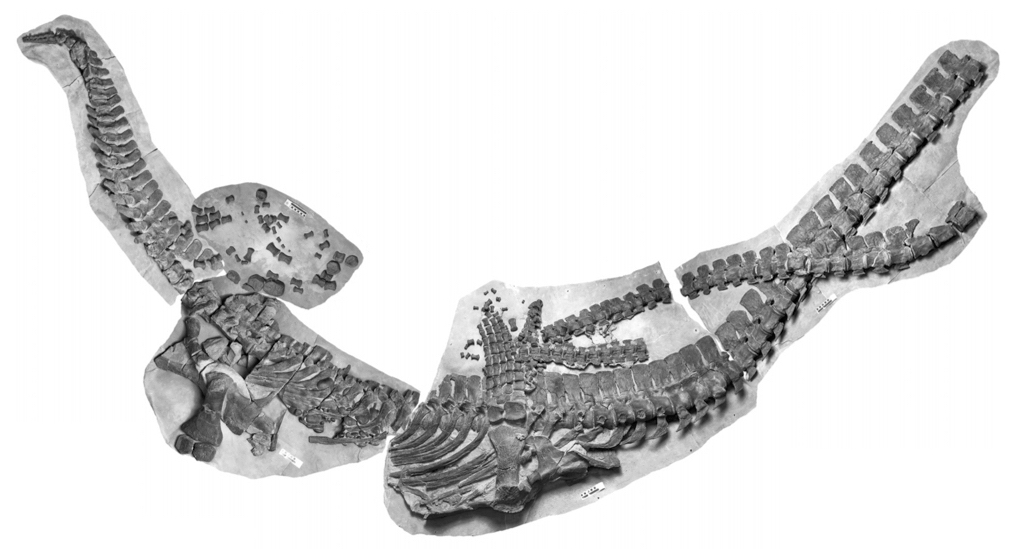
A. vanderveldei
Albertonectes is a very long-necked elasmosaurid from the Late Cretaceous of Alberta, Canada. The holotype specimen (TMP 2007.0110001) consists of an almost complete skeleton lacking a skull (Kubo et al. 2012). The neck contains 76 cervical vertebrae, which is a unique character of Albertonectes vanderveldei and the highest number of neck vertebrae known for any plesiosaur, surpassing the previous record-holder (Elasmosaurus) by four vertebrae.

The distal-most caudal vertebrae (27th to 33rd) of Albertonectes are fused into a pygostyle-like structure.
In popular culture, an Albertonectes plesiosaur called Poppy is the main character in the children’s picture book, The Plesiosaur’s Neck. The book explores the many different explanations for the plesiosaur’s extremely long neck. I’ve written a few articles about it on the Plesiosaur Bites blog.
