
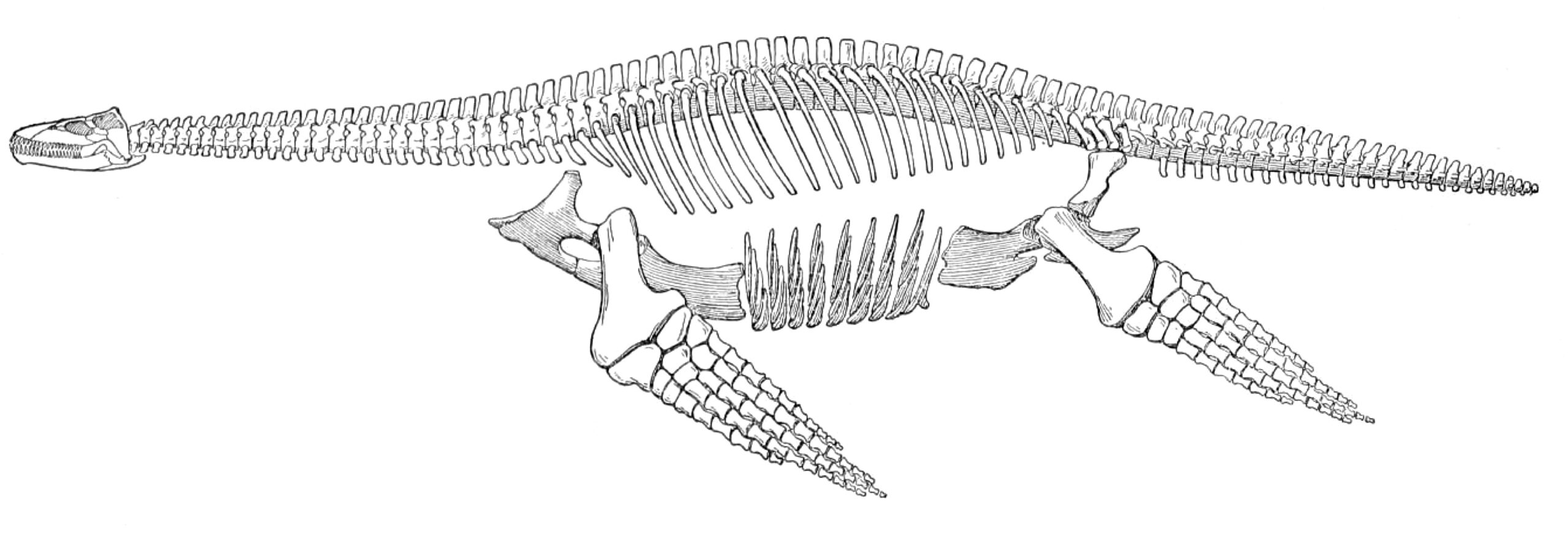
The family Cryptoclididae contains a variety of moderately sized long-necked plesiosaurs.
Genera included in this family vary depending on the classification, but the family is now well established with Cryptoclidus, Tricleidus, Pantasaurus, Tatenectes, Kimmerosaurus, Vinialesaurus, Muraenosaurus, and Colymbosaurus included within this group. Some authors have included the derived Cretaceous plesiosaurs Aristonectes and Kaiwhekea within the Cryptoclididae (Cruickshank and Fordyce 2002).

However, more recent studies have classified these Cretaceous taxa as elasmosaurids (Gasparini et al. 2003a), so cryptoclidids are absent from Late Cretaceous strata and mostly restricted to the Jurassic. The range of Colymbosaurus (or other closely related colymbosaurines) may extend the stratigraphic range of typically Jurassic cryptoclidids into the early part of of the Cretaceous Period.
In recent years, some Early Cretaceous probably cryptoclidids have been found. Opallionectes from the Early Cretaceous of Australia is “either an aberrant aristonectine elasmosaurid or, more likely, a late-surviving cryptoclidid” (Kear et al. 2018 p. 463-464), and Abyssosaurus from the Early Cretaceous of Russia has been referred to the Cryptoclididae, making it the youngest known representative of the group (Benson and Druckenmiller 2014, Berezin 2018).
Synapomorphies (shared unique characters) for this group include a narrow vertical jugal bar, an enlarged orbit, and a deeply excavated ventral cheek margin (Brown and Cruickshank 1994).
Classification
Phylogeny
The following internal relationships for cryptoclidids were found by Roberts et al. (2020). They did not identify specific Cryptoclidinae or Muraenosaurinae (=Muraenosaurinae) clades.
After Roberts et al. (2020)
Gasparini et al. (2002) conducted a small cladistic analysis to assess the position of the cryptoclidid Vinialesaurus. They placed Muraenosaurus outside of Cryptoclididae.
After Gasparini et al. (2002)
Cryptoclidid genera
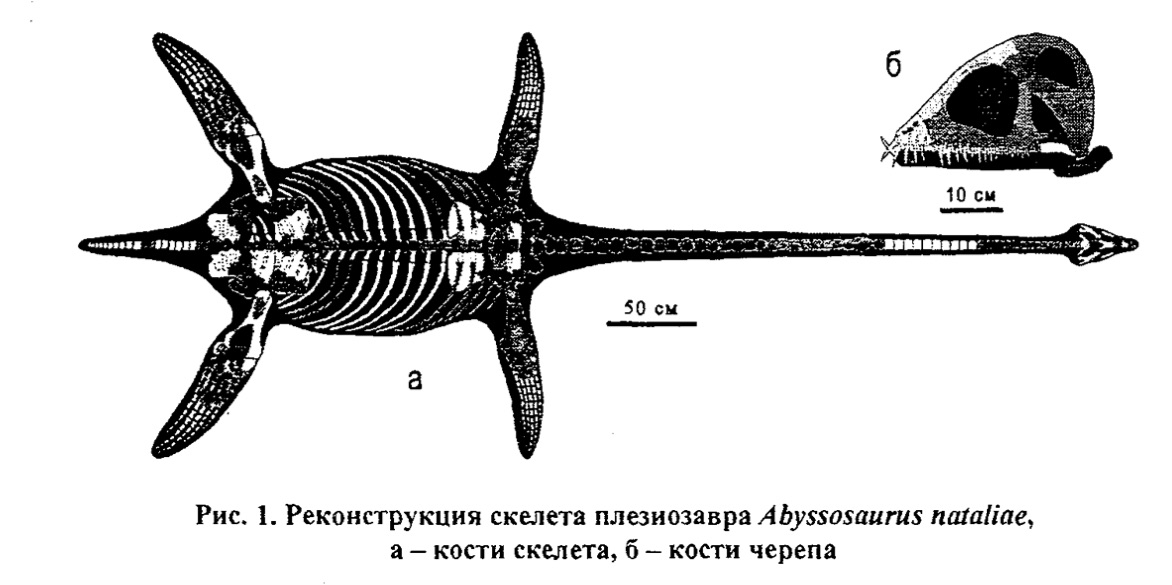
Abyssosaurus
Abyssosaurus is a derived cryptoclidid plesiosaur from the Upper Hauterivian (Lower Cretaceous) of the Menya River, Chuvashia, Russia. It was named and described in 2011 by Alexander Yu Berezin (Berezin 2011). A partial skull associated with the holotype specimen (MChEIO, no.
Apractocleidus
The genus and species ‘Apractocleidus teretipes‘ was erected by Smellie (1916) for a specimen now regarded as old-adult individual of Cryptoclidus. The specimen was collected by Alfred Leeds and acquired by the Hunterian Museum, Glasgow.
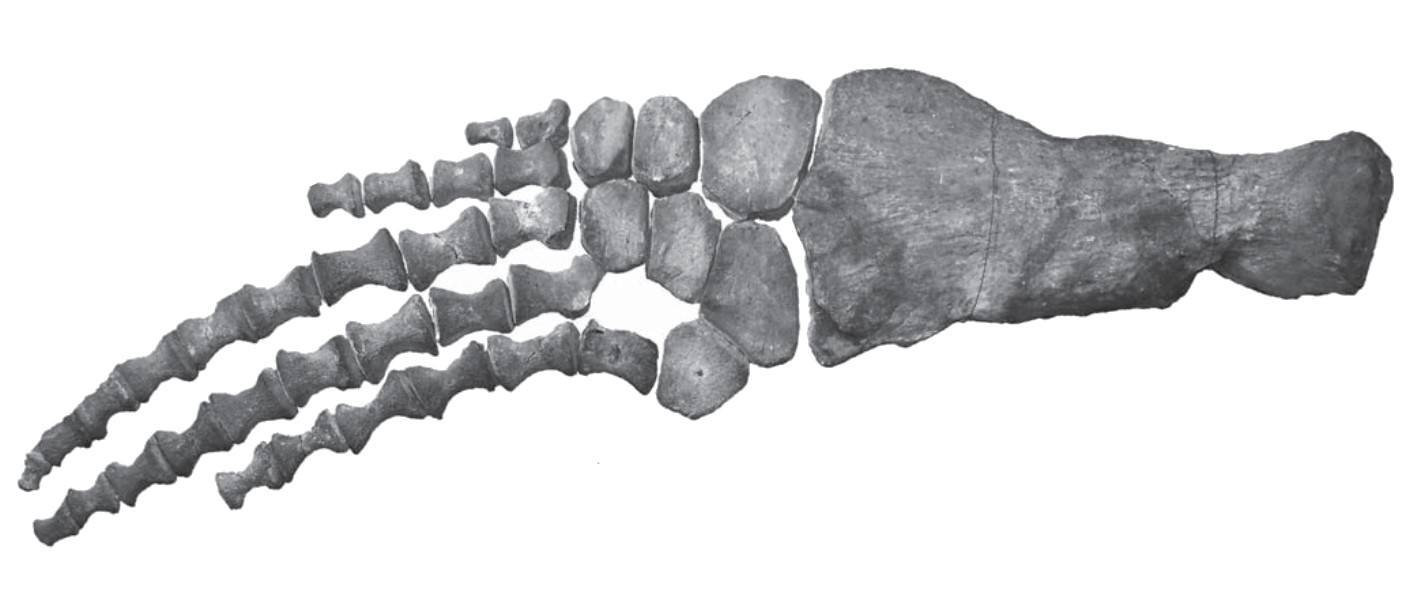
Colymbosaurus
Colymbosaurus is a colymbosaurine (derived cryptoclidid) from the Late Jurassic of the UK and Svalbard, Norway. Two valid species are known, C. megadeirus from the UK, and C. svalbardensis from Svalbard, Norway.

Cryptoclidus
Cryptoclidus, often wrongly spelled ‘Cryptocleidus’ after Andrews (1909), is a moderately sized plesiosaur with adults about four metres long (Brown 1981). It is known from a large number of individual specimens from the Oxford Clay Formation.
Djupedalia
Under construction

Kimmerosaurus
Kimmerosaurus is a poorly known cryptoclidid plesiosaur known only from skull and neck material (Brown 1981, Brown et al. 1986). It differs from other plesiosaurs in the large number of needle-like teeth in its jaws, and in the form of its teeth, which are completely smooth and lack the longitidinal ridges present in other plesiosaurs.
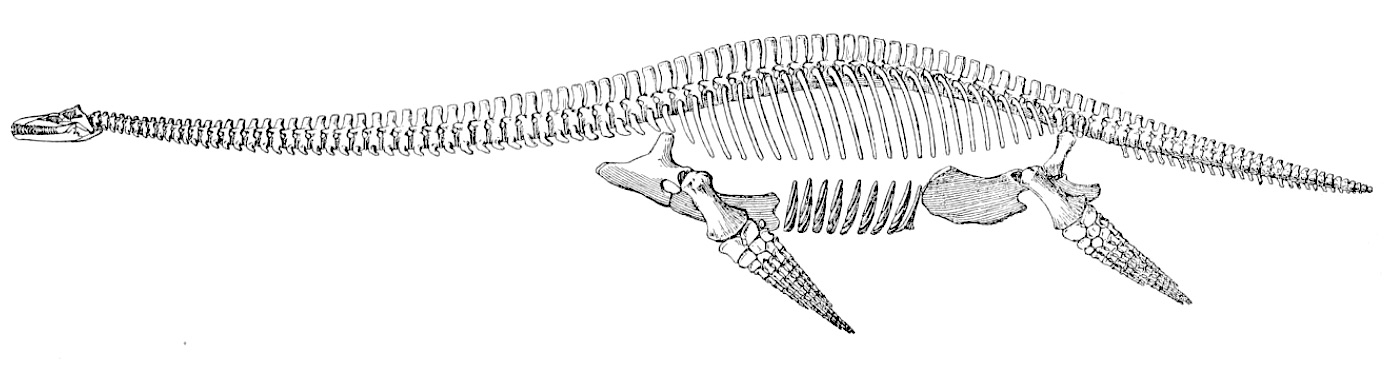
Muraenosaurus
Under construction
Restoration of the skeleton of Muraenosaurus in lateral view. From Andrews 1910.
Posterior cervical (neck) vertebra of Muraenosaurus in lateral and posterior view. From Andrews (1910).
Dorsal vertebra of Muraenosaurus in anterior view.

Opallionectes
Opallionectes is a large, around 5 m long, derived cryptoclidid plesiosauroid from the Early Cretaceous of South Australia. It is known from a partial opalised skeleton, which is mounted for display in the South Australian Museum.